
Infantino’s $20B FIFA stake plan collapses, and UEFA moves to oust him
After FIFA proposed selling 20% of future profits, UEFA says it has lost confidence and pushes a full review.
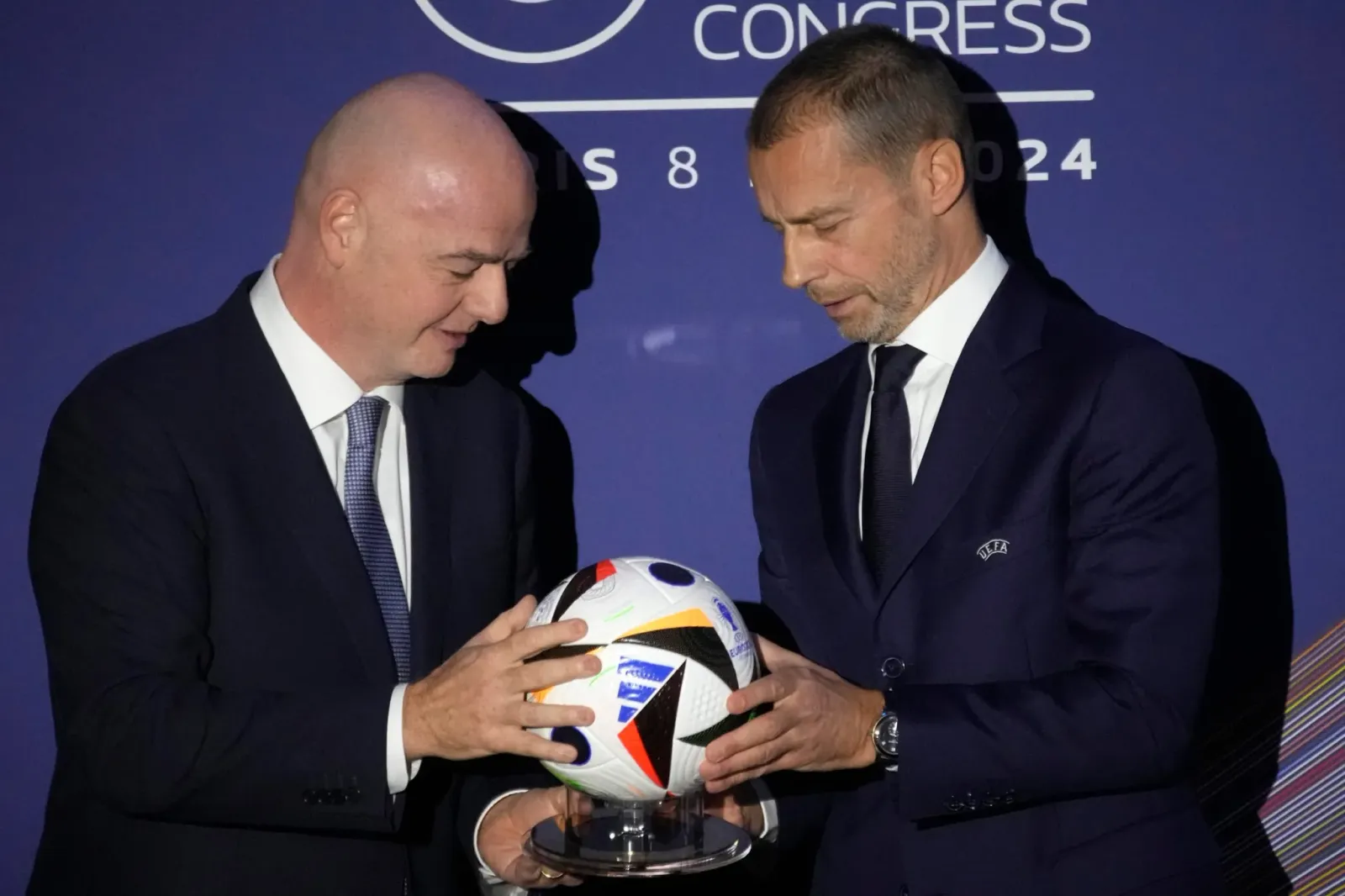
Gianni Infantino’s FIFA scrapped a $20 billion plan to create FIFA Forward Enterprise (FFE) and sell investors about 20% of future profits. UEFA responded with a boycott threat and a loss-of-confidence statement, escalating the risk of a European-led mutiny before the next election race.
Gianni Infantino just blew up his own $20 billion FIFA stake plan. On Saturday, he announced he was abandoning the project after a European-led backlash intensified, including FIFA officials’ claims that he deceived people and threats from European soccer to boycott FIFA competitions until the plan was dropped.
The specific deal at the center of the fight is hard to miss: FIFA proposed raising $4.2 billion by selling investors stakes amounting to about 20% in a newly structured, money-making unit called FIFA Forward Enterprise (FFE). The “anchor investor” would have been Thrive Eternal, launched by Joshua Kushner (with Jared Kushner a son-in-law of Trump). FIFA also offered national federations $20 million each, with an expected path to $22 million each through 2034 and $24 million to 2038, using revenue largely tied to the World Cup just ended, and funded over the record $15 billion FIFA revenue stretch from 2023-26. Infantino’s pitch sounded like financial rocket fuel. Europe and many others treated it like a governance grenade.
To understand why this matters beyond soccer Twitter, zoom out for a second on FIFA’s structure and incentives. FIFA is a not-for-profit soccer body under Swiss law, and the 211 national member federations effectively function as owners. Those federations have their own priorities, and not all of them see the World Cup as the start of a new capital markets era. The proposal, by carving out profit-making activities like running tournaments, selling broadcasting and sponsorship, and tickets and hospitality into FFE, would have normalized something that is already common in European club soccer: deep-pocketed capital hunting for returns. But the World Cup, the sport’s ultimate prize, is culturally framed as glory first and money second. That clash of identity plus economics is the combustible mix.
The backlash did not stay in one lane. A key move Thursday was UEFA vowing to boycott all FIFA competitions until Infantino dropped the plan. Europe’s teams dominate and win FIFA trophies like the men’s World Cup and Club World Cup, which are also FIFA’s biggest revenue earners. UEFA and many European soccer bodies feared private investors would seek value from more games and bigger competitions, which could destabilize the balance of global soccer and squeeze attention and revenues for club soccer, including the Champions League. In other words: this was not just about whether someone would get paid. It was about who controls the sport’s calendar when broadcast and sponsor money is not unlimited and elite players are already at their limits.
Infantino’s timeline also made the backlash sharper. He had been trying to lock in support for his next reelection, collecting letters pledging election backing from about 200 of FIFA’s 211 national member federations when he left New York City last week. That support matters because he has been the seemingly untouchable president. But even after he scrapped the divisive investment project, his backing was described as unclear at best, and several high-profile internal blows landed before or during the unraveling.
Senior figures moved publicly against the plan. Infantino’s senior adviser, former Goldman Sachs banker Carlos Cordeiro, resigned and called it a bad deal. FIFA chief operating officer Kevin Lamour issued a stinging defense of colleagues in a statement to The Associated Press that, in effect, invited Infantino to fire Cordeiro. Then there was the scale-of-opposition question, which was not a fringe thing. The source reports that European soccer federations, the soccer bodies of Asia and North America, Britain’s Prime Minister, the global group of national leagues, and a lot of fans worldwide lined up against the proposal. In other words: “mutiny” is not hyperbole here. It reads like a coalition.
So what now for Infantino, and how does it reshape the next FIFA chess move? UEFA announced on Saturday that it had lost confidence in Infantino and that “no option should be off the table” as it will pursue a full review of his now abandoned plan. FIFA’s next presidential election timeline is already concrete: Nov. 18 is the deadline for candidates to enter the contest, exactly four months ahead of the vote in Rabat, Morocco, where FIFA has its African headquarters. Infantino was reelected unopposed in 2019 in Paris and again in 2023 in Kigali, Rwanda, and FIFA statutes allow him one more four-year term. But the political math shifts when a major bloc openly signals it is willing to consider alternatives.
Does Infantino have credibility to stay after these interventions? The record suggests he will be tested. The FFE spinoff was also widely interpreted as a way to create a commissioner-like role beyond 2031, potentially paying much more than his current annual salary and bonus deal of more than $6 million. That sort of personal upside can look very different when the surrounding governance process feels opaque. It also explains why he went from “likely reelection coronation next March” to scrambling through a multi-region legitimacy problem.
Finally, the risk for other FIFA power players is not only about Infantino as a person. It is about precedent and board dynamics. If a capital-structured path to future revenue can be blocked by UEFA’s coalition and public internal resignations, then future FIFA leaders will have to treat European football not as a stakeholder but as a veto player, regardless of how attractive the money looks on paper. For executives and board members anywhere in sport or regulated global institutions, the second-order lesson is brutal: when governance and identity clash with profit engineering, even a record revenue story can end in a public reckoning.
This story's Key Insights and Take-aways are locked.
Create a free account to unlock Executive Actions for one credit.
Register to UnlockAlways free for Executives Club members. Join the Club
More in Business

Anthropic’s Levant Alpöge cracks the Jacobian conjecture after 87 years
A Harvard valedictorian used Claude to hit a 1939 breakthrough, but the missing “why” is the real problem.

Uber buys Delivery Hero for nearly $15B, vaulting to top food delivery outside China
The deal doubles Uber's dual-services footprint and pushes a ride-and-eats bundling play into 50 more markets.

Epic and Google drop settlement bid, forcing rival Android app stores by July 22
Google told the court it is ready to carry third-party app stores starting Wednesday, July 22.