

Intel confirms data center layoffs as Lip-Bu Tan restructures, shares rally up to 8%
The job cuts are unspecified, but the timing matters: investors are rewarding a turnaround while Intel retools AI and Xeon.
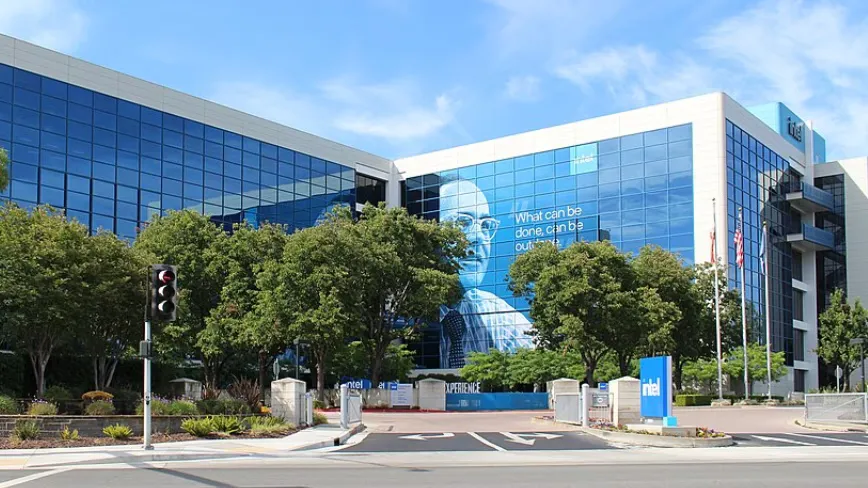
Intel confirmed Tuesday that it will cut an unspecified number of jobs in its data center group, part of a broader restructuring led by CEO Lip-Bu Tan. The move comes as Intel shares rose as much as 8 percent in early trading, extending a rally tied to perceived turnaround momentum.
Intel confirmed Tuesday that it will cut an unspecified number of jobs in its data center group. This division is responsible for Xeon server processors and AI-related hardware, and the cuts are being framed as part of a broader restructuring under CEO Lip-Bu Tan.
The timing is the real signal for decision-makers. In early trading, Intel shares rose as much as 8 percent, extending a rally that has been building on turnaround momentum. In other words, the market is not waiting for a perfect execution story. It is rewarding the direction of travel, even while layoffs add visible friction for the teams building the very products investors want to see scale.
To understand why the stock can rally on a restructuring headlined by job cuts, it helps to zoom out on how this game is usually played. Server and AI hardware businesses are capital-heavy and schedule-sensitive. When performance, roadmaps, and cost structure do not line up, companies often move fast to protect future competitiveness. That frequently means reshuffling resources, tightening spending, and making staffing decisions that look harsh in the near term but are intended to stop bleeding and accelerate focus.
Intel's data center group sits at the center of that tension. Xeon is its core for enterprise and cloud servers, and AI-related hardware has become a second pillar where buyers increasingly expect systems that are ready for modern workloads. When a company tells the market it is reorganizing and resizing the workforce inside that same unit, investors interpret it as a willingness to make tough trade-offs. The market then asks a simple question: does this restructuring improve the odds that Intel can deliver on the next generation of platform competitiveness?
That question lands in a boardroom context, because layoffs are more than a cost line. They are also a governance signal. A CEO leading a restructuring is effectively telling the board that the current operating approach needs to change. Even when the number of jobs is unspecified in the public confirmation, the existence of the decision gives the board a tangible outcome to monitor: savings, execution speed, and product roadmap discipline.
There is also a stakeholder and regulatory dimension, even when the source does not mention regulators directly. In many jurisdictions, mass layoffs can trigger consultation requirements, notice periods, and additional public disclosures. Companies usually manage this through defined processes and internal timelines, which can limit how quickly workforce changes show up in financial reporting. That means the market's immediate reaction, the 8 percent rally in early trading, is driven more by expectations of future improvement than by any near-term earnings impact.
Second-order implications are where executives should focus. First, talent concentration risk grows when cuts hit a unit responsible for both legacy server revenue and new AI-related hardware development. If the restructuring shifts priorities, it can also reshape which engineers, product managers, and manufacturing partners are closest to the roadmap. That can help focus, but it can also create bottlenecks if transitions are not carefully managed.
Second, investors are watching whether Intel's turnaround momentum is real or just narrative. A rally can extend for a while when the market believes restructuring will translate into better operational outcomes. But if execution falters, the same layoffs that were initially interpreted as discipline can turn into a credibility problem. The data center group is the proving ground, since it touches both Xeon deployments and AI-adjacent buyer demand.
For peers and leadership teams across the semiconductor stack, the message is blunt: capital intensity does not forgive drift. Intel's confirmation of layoffs in its data center group, tied to CEO Lip-Bu Tan's broader restructuring, shows how companies try to reset cost structure while the stock market watches for momentum. In practical terms, other executives should treat this as a reminder that markets can reward decisive direction early, but long-term approval will depend on whether the reworked data center organization can deliver the next hardware cycle better than the last.
This story's Key Insights and Take-aways are locked.
Create a free account to unlock Executive Actions for one credit.
Register to UnlockAlways free for Executives Club members. Join the Club
More in Business

Anthropic’s Levant Alpöge cracks the Jacobian conjecture after 87 years
A Harvard valedictorian used Claude to hit a 1939 breakthrough, but the missing “why” is the real problem.

Uber buys Delivery Hero for nearly $15B, vaulting to top food delivery outside China
The deal doubles Uber's dual-services footprint and pushes a ride-and-eats bundling play into 50 more markets.

Epic and Google drop settlement bid, forcing rival Android app stores by July 22
Google told the court it is ready to carry third-party app stores starting Wednesday, July 22.