

Intel’s Q2 2026 earnings flip the tone, with revenue up to $16.1B
Tan and CFO David Zinsner point to stronger Foundry performance and demand, while costs and supply realities still bite.
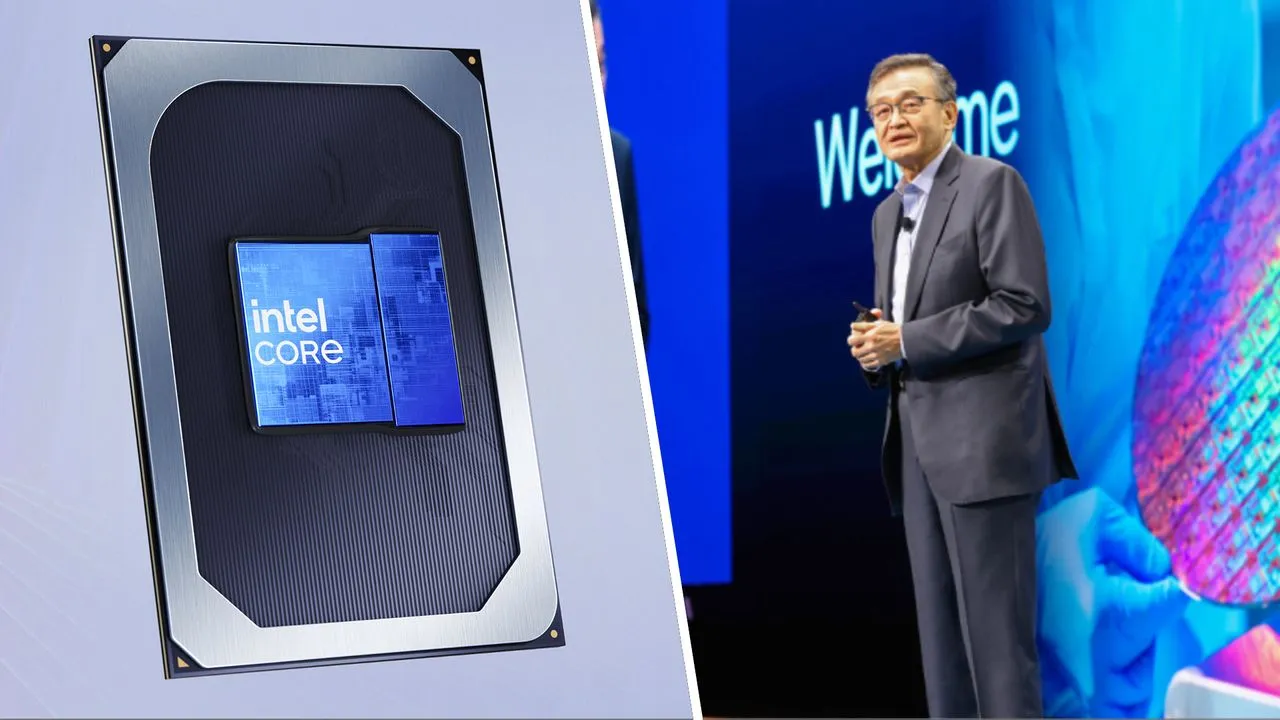
Intel CEO Lip-Bu Tan and CFO David Zinsner delivered an unexpectedly upbeat Q2 2026 earnings report. The consequence for decision-makers: Foundry progress looks more real than 12 months ago, but Intel still faces expensive losses and a supply-demand gap.
Intel’s Q2 2026 earnings didn’t just beat expectations. They changed the vibe.
In the latest report, Intel (and especially CEO Lip-Bu Tan) sounds markedly more confident than it did 12 months earlier, with revenue rising to $16.1 billion. Intel CFO David Zinsner also flagged that revenue is up 25% versus the same quarter last year, and the company hit what management describes as stronger growth momentum. That figure matters because Intel’s last year has been defined by existential questions: whether its foundry ambitions could survive, whether it would keep funding expensive process leaps, and whether the company was in turnaround mode or a slow-motion rewrite of its own strategy.
The story’s centerpiece is Intel Foundry, Intel’s manufacturing arm, and it’s where the tone shift gets grounded in operations. When Tan joined about a year ago, he publicly set a hard edge around advanced process nodes. He threatened to halt development of cutting-edge process nodes if a big customer was not found or internal goals were not met, saying, “There are no more blank checks.” That kind of language reads like a company bracing for cuts.
Today, Tan’s message is essentially the opposite: his confidence has grown. “My confidence in our foundry process roadmap has grown significantly since joining over a year ago,” Tan says in the earnings call. During Q2, Intel reports that its factories across Intel 7, Intel 3 and Intel 18A exceeded internal volume targets, citing improving yields, better cycle times, and increasing wafer starts. That also implies that the manufacturing grind is working at least enough to pass internal benchmarks, even if the bigger war is still against industry-leading rivals.
The most watched node here is Intel 18A, because it is used for Core Ultra 3 “Panther Lake” chips. Intel is claiming it is moving in the right direction, and the call also points outward, with Tan saying progress extends to Intel 14A. Looking beyond 18A, he is “encouraged by our progress on Intel 14A,” and Intel says it is targeting risk production in the second half of 2027 and high-volume production in 2028. In other words, the roadmap still has legs, and it is not simply a case of “we tried and hope.”
But anyone tracking the foundry space knows there’s no such thing as a free win. The economics are still rough. Intel Foundry work remains “very expensive,” and Intel reports an operating loss of $2.1 billion in Q2 alone. Even so, management positions it as an improvement: that operating loss is up from the previous quarter by $348 million (so, in plain terms, the bleeding got less bad quarter-over-quarter). For executives and boards, that’s an important signal. It suggests the company is still willing to invest, and it may be buying time with operational improvements rather than only financial concessions.
Intel’s broader results also show why the market (and internal stakeholders) might be listening. Zinsner reports revenue up to $16.1 billion, rising from $13.6 billion in Q1, and up 25% year-over-year. The company also says this is its best growth since 2011. In Q2 2025, Intel’s revenue was $12.9 billion, and management tone was much less upbeat at that time. The source also notes that in 2025 Intel made sweeping cuts to employee counts, and Tan said, “Let’s say, I also know that turning the company around will take time and require patience.” In the latest call, the tone changes again, with Tan thanking employees and emphasizing pace of execution, early results, and renewed interest in both foundry and Intel’s own products.
There’s another lever in this earnings report, and it’s demand, which is both the best headline and the worst operational constraint. Zinsner covers Intel’s Client Computing and Physical AI Group, noting $8.9 billion in client revenue, up 15% from last quarter, and describing it as “better than our expectations.” Yet he also cautions that demand is outstripping supply even though Intel exceeded expectations for wafer outs in the quarter. Then comes the blunt supply note executives hate to hear: “we can’t fulfill the demand.” Zinsner says Intel will pivot as much of the production as possible over to CPUs and data centers to catch up to a “pretty significant difference” between supply and demand.
That matters for two reasons. First, demand strength gives Intel foundry business a reason to exist beyond long-term bets. The source also says management points to a customer lined up for its foundry service, Fortinet, this week, reinforcing that the foundry narrative is not just internal theater. Second, the supply-demand gap forces allocation decisions that ripple through product timelines and customer satisfaction, which then affects future credibility. And with the memory crisis still gripping PC gaming hardware, Intel expects client-side demand to soften later in the year even as server-chip supply drives growth.
So is Intel back on best form? Not exactly. The source is clear that Intel still has a long way to go to outcompete TSMC, AMD and Nvidia in various ways. But the tone shift is real and consequential, and it’s hard to imagine an Intel in this state being treated as a serious acquisition target by 2024’s rumored logic. For executives at rivals, partners, and investors, the takeaway is uncomfortable and useful: Intel’s foundry pitch just got louder, losses are improving, and operational signals are improving enough that strategy teams now have to treat Intel’s roadmap as something more than a slide deck.
This story's Key Insights and Take-aways are locked.
Create a free account to unlock Executive Actions for one credit.
Register to UnlockAlways free for Executives Club members. Join the Club
More in Business

Anthropic’s Levant Alpöge cracks the Jacobian conjecture after 87 years
A Harvard valedictorian used Claude to hit a 1939 breakthrough, but the missing “why” is the real problem.

Uber buys Delivery Hero for nearly $15B, vaulting to top food delivery outside China
The deal doubles Uber's dual-services footprint and pushes a ride-and-eats bundling play into 50 more markets.

Epic and Google drop settlement bid, forcing rival Android app stores by July 22
Google told the court it is ready to carry third-party app stores starting Wednesday, July 22.