

Intel’s revenue jumped 25% as AI buyers returned to CPUs
In the latest quarter, Intel hit its fastest growth in 15 years, powered by AI firms buying central processing units.
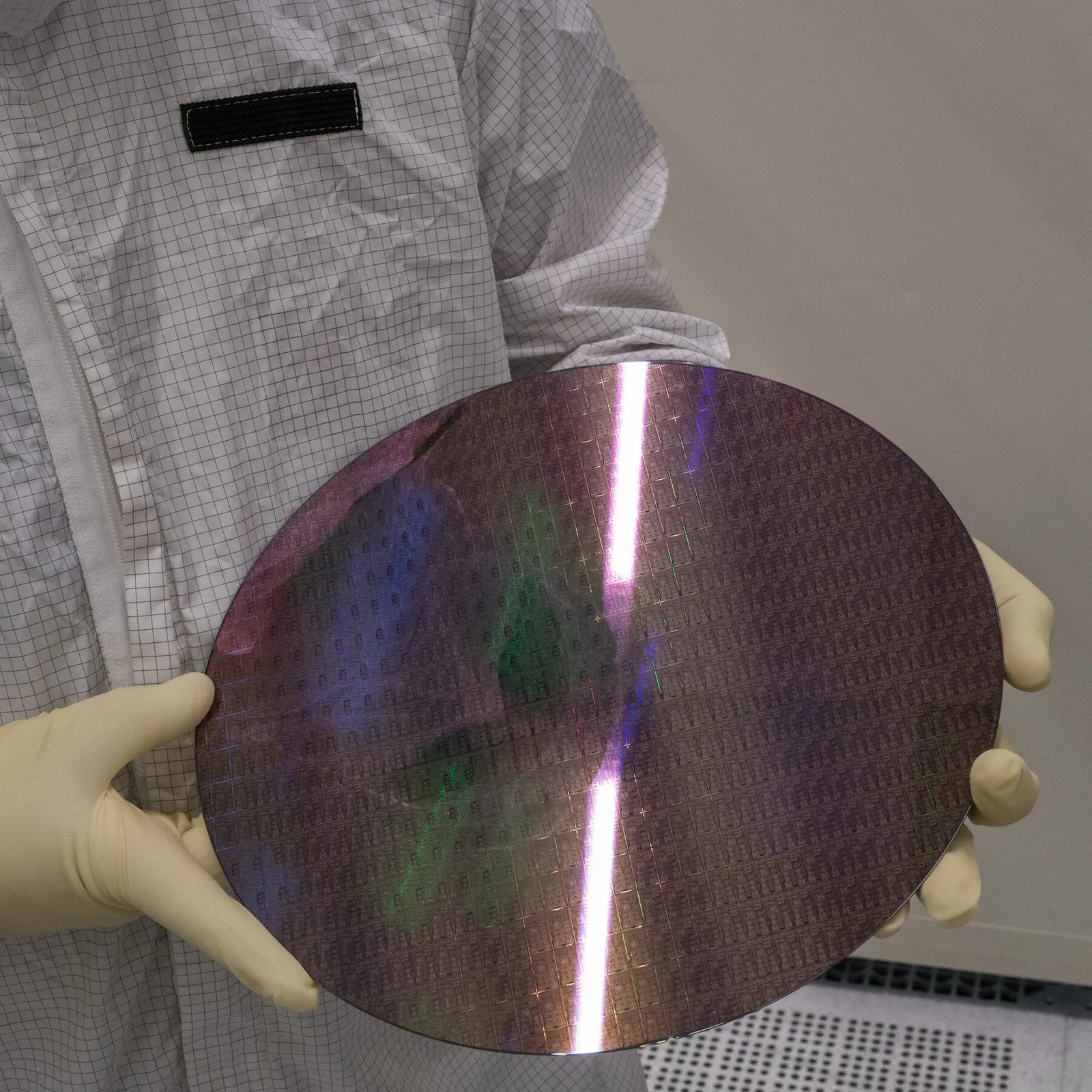
Intel’s latest-quarter revenue rose 25 percent, marking its fastest growth in 15 years. The shift is driven by AI firms increasingly buying chips Intel classifies as central processing units, not just specialized accelerators.
Intel is having one of those quarters that quietly reorders how people think about AI hardware. The Silicon Valley chipmaker’s revenue rose 25 percent in the latest quarter, its fastest growth in 15 years, as AI firms increasingly bought chips known as central processing units.
That headline number matters because it tells you where real purchasing is flowing. A 25 percent revenue jump is not a vague “demand improving” story. It is a signal that AI builders are allocating more of their budgets toward CPUs, the general-purpose compute workhorses, even as the industry has spent years fixating on the most exotic AI accelerators.
To understand why this is interesting, it helps to remember what AI spending typically looks like. Teams do not just buy one type of chip. They assemble systems. Those systems need orchestration, control-plane tasks, data movement, and workloads that do not always fit perfectly into a single specialized device category. CPUs have historically played that role, and the latest quarter suggests AI firms are leaning harder into that “plumbing” layer.
This also reframes an ongoing tension in the chip market: whether AI compute demand is mainly a story about specialized throughput or a broader compute-stack story. If more AI firms are increasingly buying CPUs, then the category beneficiaries are not limited to the most talked-about accelerator suppliers. That is a big deal for decision-makers running infrastructure budgets, because it means AI procurement may be less “either-or” than “more balanced than expected.”
From Intel’s perspective, “fastest growth in 15 years” is a timing and momentum statement, not just a performance headline. It implies the company is benefiting from a cycle shift where buyers are both expanding spend and revising what they consider necessary. When growth accelerates like that, it often changes board conversations around capacity planning, inventory posture, and near-term roadmap priorities. Even if the quarter is the result of multiple factors, the visible driver here is AI firms increasingly purchasing central processing units.
Now, tie this back to incentives and capital allocation. Chip companies live and die by manufacturing scale, product mix, and how quickly they can convert demand into revenue. If AI buyers are moving additional purchasing to CPUs, it can improve revenue visibility and give CFOs more confidence in planning. It can also influence pricing power indirectly, because a company that is positioned as a core component of AI systems can become harder to displace.
There is also a second-order implication for peers and competitors. When a major supplier like Intel posts the fastest growth in 15 years on the back of AI-driven CPU purchasing, it can pressure rivals that assumed AI spending would concentrate elsewhere. Boards at other hardware companies may need to revisit their assumptions about how AI demand distributes across compute categories, especially as “system-level fit” becomes more important than single-chip performance.
Finally, consider what this means for AI builders and the executives who sign off on their infrastructure. If AI firms are increasingly buying CPUs, then those teams are probably optimizing beyond just raw model training. They are likely balancing performance with operational needs, integration constraints, and workload diversity. For decision-makers, the strategic stake is straightforward: if your procurement strategy ignores CPUs, you risk over-indexing on the most headline-grabbing accelerator purchases while missing the hardware that is actually driving quarterly revenue for a major supplier.
In short, Intel’s 25 percent revenue jump in the latest quarter is more than a one-off beat. It is a measurable data point that AI spending is broadening, and the “CPU comeback” is not just an idea. It is showing up in the financials.
This story's Key Insights and Take-aways are locked.
Create a free account to unlock Executive Actions for one credit.
Register to UnlockAlways free for Executives Club members. Join the Club
More in Business

Anthropic’s Levant Alpöge cracks the Jacobian conjecture after 87 years
A Harvard valedictorian used Claude to hit a 1939 breakthrough, but the missing “why” is the real problem.

Uber buys Delivery Hero for nearly $15B, vaulting to top food delivery outside China
The deal doubles Uber's dual-services footprint and pushes a ride-and-eats bundling play into 50 more markets.

Epic and Google drop settlement bid, forcing rival Android app stores by July 22
Google told the court it is ready to carry third-party app stores starting Wednesday, July 22.