

IOC declares LA28 ahead of every prior Olympics at the same planning stage
The IOC says LA28 is further along than any previous organizing committee, and it changes how boards should read the risk curve.
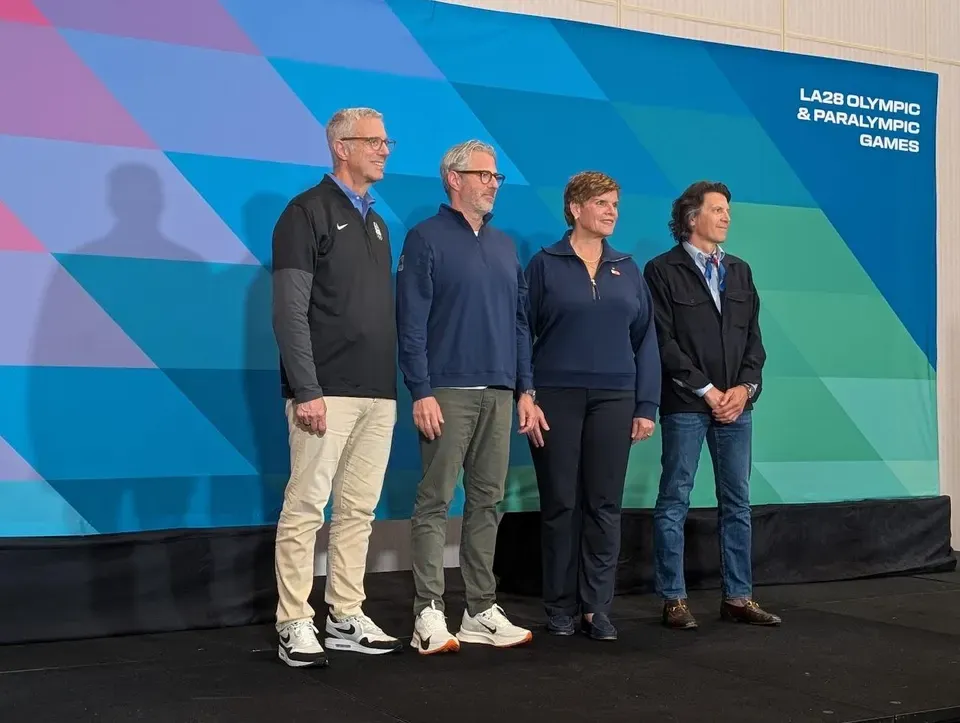
IOC leaders said in a press conference that LA28 is further ahead than any previous Olympic organizing committee at the same point in the planning cycle. For decision-makers, that signals stronger execution momentum, not just a ceremonial milestone.
IOC leaders this week said, in a press conference, that LA28 is further ahead than any previous Olympic organizing committee at the same point in the planning cycle. That is the headline. It matters because the Olympics are not usually won in public moments. They are won in the unglamorous middle, where project planning, stakeholder alignment, and delivery discipline either compound or quietly unravel.
To put the IOC statement into plain English: at an equivalent time in the run-up to the Games, the LA28 organizing effort is ahead of past efforts. The IOC framed this as progress versus the historical baseline of previous host preparations. That positioning does two things at once. First, it tells investors, sponsors, and partners that the organizing committee is not lagging behind the norm. Second, it reduces the “unknown unknowns” that tend to appear when planning stretches and governance friction shows up late.
Why does a line like “further ahead than any previous organizing committee at the same point” matter beyond sports? Because the Olympics function like a mega-program with a long tail of dependencies. Even if most executives are not funding stadiums directly, they are funding risk. Sponsors want credible timelines. Governments want cost containment and schedule certainty. Contractors want stable scopes. Communities want clarity on disruption and legacy. The earlier an organizing committee can line up governance, permitting pathways, venues, and operational planning, the less it has to scramble later. And scrambling is where budgets get stress-tested.
That scramble is also where regulators and oversight bodies tend to pay attention. Olympic delivery often runs through multiple layers of public policy: procurement rules, safety standards, environmental requirements, labor frameworks, and local permitting. In many jurisdictions, the earlier stakeholders can confirm the compliance pathway, the fewer late-cycle redesigns are triggered. The IOC’s claim is not a legal document. But it is a signal that, at this planning stage, LA28 appears to have avoided the historical pattern where issues surface too late to absorb without expensive changes.
There is also a corporate governance angle. When an international body like the IOC highlights a host city’s planning progress relative to every prior organizing committee, it is implicitly benchmarking performance. Boards and executive teams at sponsor companies, suppliers, and infrastructure partners take those benchmarks seriously because they affect what committees are willing to approve. If the “expected” trajectory shifts upward, leadership teams often move from contingency-mode planning toward commitments. That can mean accelerating commercial negotiations, locking in vendor arrangements, or adjusting internal risk provisioning. The second-order effect is that the earlier the momentum, the more likely partners treat the program as bankable.
Of course, “ahead” is a comparative word, not a finish line. The Olympics still have years of execution ahead. But in program management, being ahead early is not just a morale boost. It compresses the timeline in which you can discover bottlenecks. It gives more iterations of planning before the hard deadlines arrive. It also improves stakeholder confidence. And stakeholder confidence is a scarce asset in large public events because it governs cooperation: approvals, permits, land use agreements, and the political will to keep funding flowing when headlines get loud.
So what should executives reading this do with it? First, treat the IOC’s statement as a risk narrative update, not as marketing copy. If LA28 is truly further along than any prior organizing committee at the same stage, peers should expect fewer surprises than they would have under earlier historical baselines. Second, use it to recalibrate how you think about timing and governance. When schedules tighten, the teams that benefit are the ones with disciplined decision-making and clear accountability lines. Third, remember that institutional credibility is cumulative. The IOC is telling the market it sees LA28 as ahead, and that reputational lift can influence partner behavior long before the first ticket is sold.
Ultimately, this is why the story has bite for decision-makers outside sports. The Olympics are a stress test for public-private coordination. The IOC’s press conference framing suggests LA28 is clearing early hurdles at a higher rate than before. If that holds, the Games move closer to being a deliverable program rather than a perpetual contingency. For executives evaluating exposure to Olympic-adjacent markets, that shift in planning momentum changes the conversation from “should we worry?” to “how do we capitalize on the odds without getting complacent?”
This story's Key Insights and Take-aways are locked.
Create a free account to unlock Executive Actions for one credit.
Register to UnlockAlways free for Executives Club members. Join the Club
More in Business

Anthropic’s Levant Alpöge cracks the Jacobian conjecture after 87 years
A Harvard valedictorian used Claude to hit a 1939 breakthrough, but the missing “why” is the real problem.

Uber buys Delivery Hero for nearly $15B, vaulting to top food delivery outside China
The deal doubles Uber's dual-services footprint and pushes a ride-and-eats bundling play into 50 more markets.

Epic and Google drop settlement bid, forcing rival Android app stores by July 22
Google told the court it is ready to carry third-party app stores starting Wednesday, July 22.