

iRobot co-founder Colin Angle says the Roomba’s “bump and suck” logic sparked a robot revolution
A real origin story, with iRobot’s Colin Angle tracing how a simple home robot turned vacuums into a lovable category.
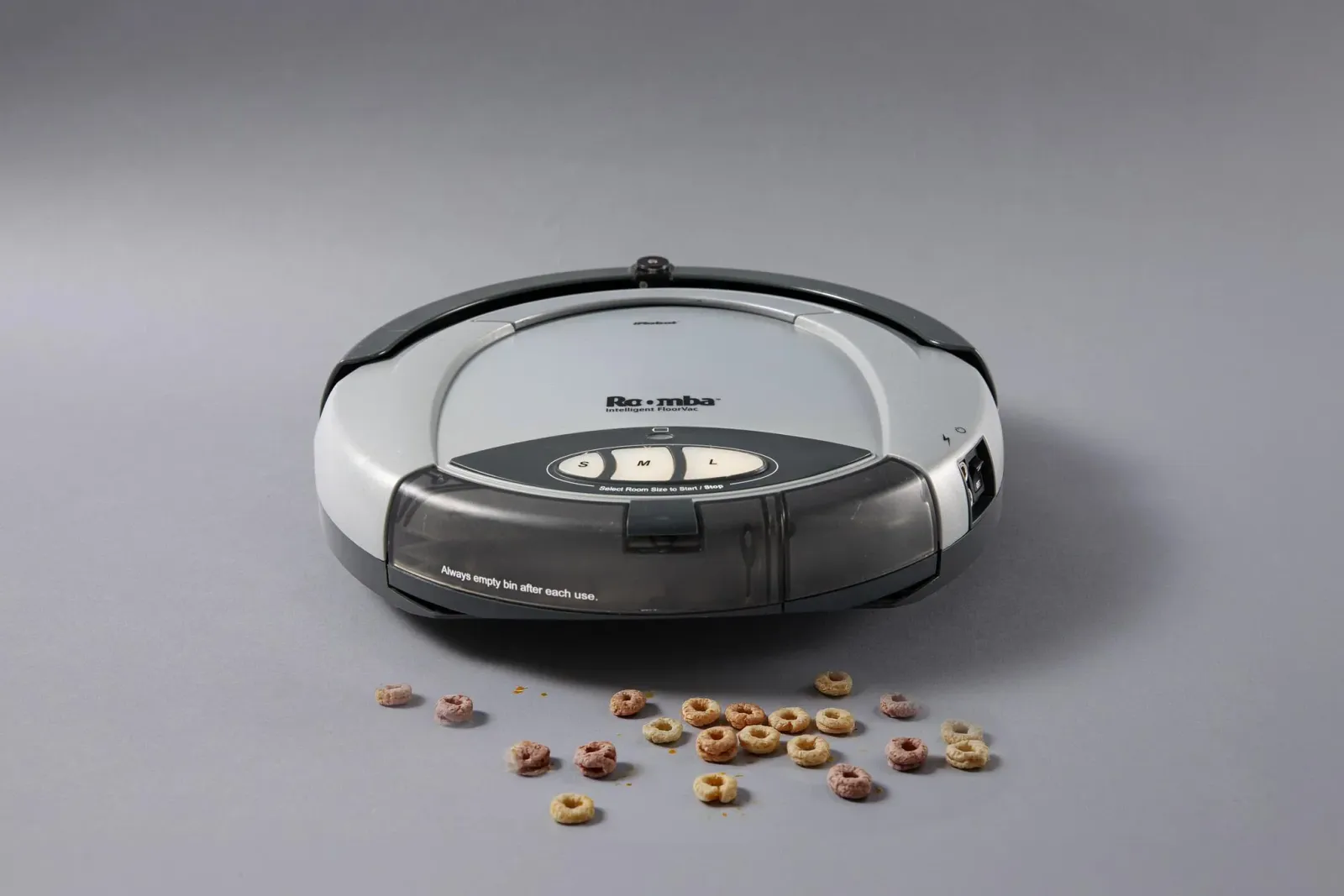
iRobot co-founder and former CEO Colin Angle joins The Verge’s David Pierce and Jennifer Pattison Tuohy to trace the Roomba’s origins and the robovac revolution. For decision-makers, the lesson is how an intentionally simple product can still unlock a whole market.
Ask most people when the “robot vacuum” era began, and you might get a fuzzy answer. But The Verge’s Version History episode anchors it to a concrete starting point: the original Roomba was, by design and by capability, unsophisticated. It bumped around your house looking for something to suck up, then stopped when its battery died or its tank filled up. In other words, it did not behave like a modern autonomous device with careful mapping or precise navigation. It behaved like a persistent little errand that wore out the mess until it gave up.
The surprise is that this lack of sophistication did not kill the product. It helped create the emotional hook. In the episode, iRobot co-founder and former CEO Colin Angle is part of the conversation as The Verge’s David Pierce and Jennifer Pattison Tuohy trace how the Roomba made vacuums lovable. “Lovable” is a weird word for a machine that bumps into furniture, but it is also the point: users did not just see a tool. They named it, smiled at it, and kept bringing it back. The early Roomba was not trying to impress you with intelligence. It was trying to reduce friction and make cleaning feel like less of a chore.
That origin matters beyond nostalgia, because it flips a common product assumption for founders and operators. Many teams equate “robot” with “advanced.” Sensors, autonomy, and software that feels magical are expensive to build and even more expensive to maintain. But the Roomba story suggests another path to adoption. Start with a behavior that works well enough in real homes, then let customers supply the rest of the story through delight and habit. Angle, Pierce, and Pattison Tuohy are essentially tracing the robovac revolution back to its beginning, where the value proposition was concrete and immediate: it would run, it would pick up dirt, and it would keep going until it hit a hard limit.
Now zoom out to the market context that leaders should care about. Categories do not become categories because one day a product becomes perfect. They become categories when enough people try it, talk about it, and keep using it even when it is imperfect. Early Roombas had obvious constraints, like their small tank and limited runtime. Yet those constraints were part of the user experience, not only the shortcomings. Batteries die, bins fill, and people learn the rhythm. Once a household builds a rhythm around a device, the next upgrade is easier to justify. That is how an early “bump and suck” approach can serve as the wedge for more sophisticated robotics later.
If you are sitting on a board or allocating capital, the second-order implication is about risk management. Simple systems can be easier to scale quickly, test broadly, and iterate based on user behavior rather than relying on long development cycles for perfect autonomy. The Verge’s episode frames the robovac revolution as an origin story, not a sudden leap. That framing matters for decision-makers because it highlights the compounding effects of iteration, distribution, and consumer attachment.
There is also an operational angle. A robot vacuum is not just a hardware problem. It is maintenance, cleaning, reliability, and the day-to-day realities of living with a device in a home. Early Roombas that “just” bump around still require sensors that detect obstacles, motors that can handle debris, and software that can manage the stop and restart loop. Even in a basic product, there is still an engineering discipline underneath. The episode’s emphasis on tracing the revolution back to its origins with engineers involved signals that the breakthrough is not a single patented trick. It is the cumulative work of building a machine people will actually use.
Finally, consider strategic stakes for peers. If you are building robots, consumer hardware, or any product that depends on user adoption rather than raw capability, the Roomba lesson is uncomfortable in the best way. You can win with a simpler experience if it creates repeated value and genuine affection. In the episode, the narrative is clear: the Roomba did not need to be sophisticated to start a movement. It needed to make cleaning feel easier, and it needed to earn a place in the home. That is how a “fairly unsophisticated machine” turned into the spark of a robot revolution.
This story's Key Insights and Take-aways are locked.
Create a free account to unlock Executive Actions for one credit.
Register to UnlockAlways free for Executives Club members. Join the Club
More in Technology

Nvidia's $89B data center quarter: the 9 companies cashing in
The AI buildout is minting fortunes beyond GPUs, and memory, cloud, and cooling suppliers are riding the same wave.

Google quietly links your phone number to every Android account on your SIM
Adding a SIM now ties your phone number to all Google accounts - and future accounts inherit it. Here's the security and privacy stakes.

Hijacker AI 'Skynet mode' runs 100,000 attack steps against exposed models
Symantec caught a criminal AI agent that borrows other models, steals data, and mines crypto; the only relief is no confirmed victims yet.