
Israeli troops killed seven-month-old Sam Fahd Abu Haikal in Hebron after firing on a car
A seven-month-old died and one parent was injured in Hebron, despite the family’s car complying with a stop order.
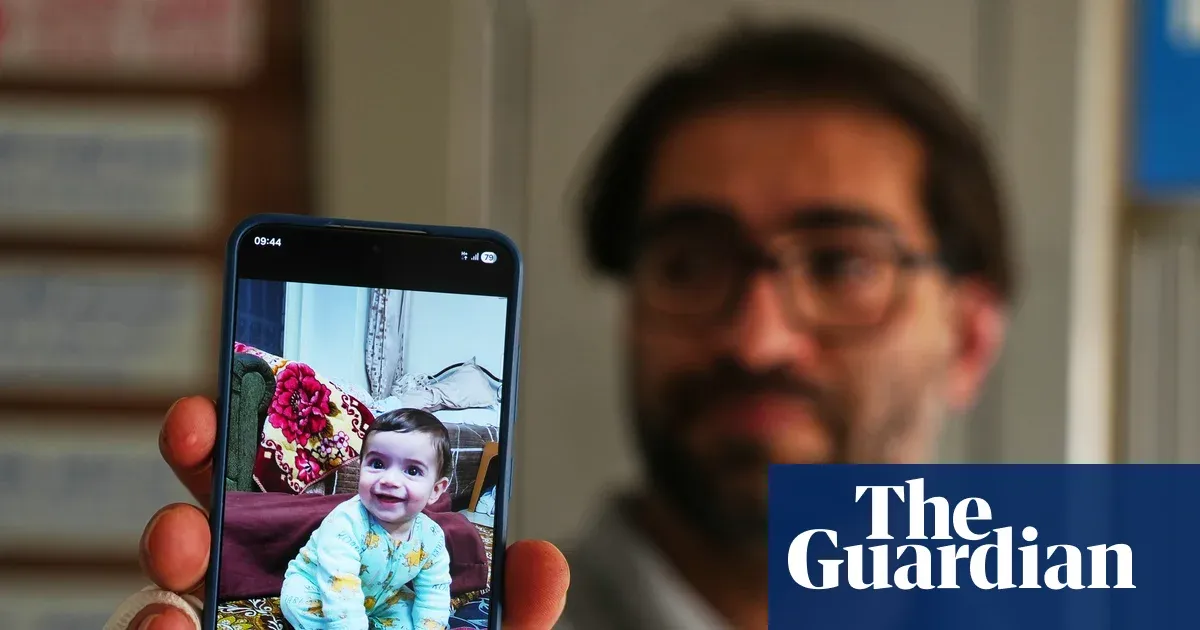
Israeli troops opened fire in the Tel Rumeida area of Hebron on Friday on a car carrying seven-month-old Sam Fahd Abu Haikal and his parents. The shooting killed the infant after he was evacuated in critical condition and injured one of the child’s parents.
Israeli troops opened fire on Friday in Hebron on a car carrying a seven-month-old Palestinian baby, Sam Fahd Abu Haikal, while he was in his mother’s arms, according to The Guardian - Middle East. The infant was critically injured, evacuated in critical condition to a hospital, and later died. The shooting also injured one of the child’s parents.
The incident matters because the family’s car had complied with an order to stop, yet soldiers still fired. In Tel Rumeida, a flash of compliance did not prevent the outcome, turning a routine traffic-like moment into an irreversible tragedy for an entire household.
To understand why this lands so hard far beyond the immediate loss, look at how security operations typically work in occupied and disputed territories. Vehicles are often approached as potential threats, and stop orders are meant to reduce risk by forcing predictable behavior: slow down, stop, wait. When an order to stop does not stop gunfire, it raises the most uncomfortable question for decision-makers: what part of the process failed. Was it miscommunication, an incorrect threat assessment, a breakdown in escalation protocols, or a discipline problem under stress? The source does not answer those specifics, but it does give one concrete anchor for scrutiny, the car complied and still came under fire.
This kind of event also has ripple effects on governance and international oversight. In high-scrutiny environments, incidents become fast-moving political evidence, and they tend to trigger requests for investigations, documentation of rules of engagement, and renewed pressure on relevant authorities. Even when formal accountability mechanisms are slow, the operational record moves quickly through legal briefs, media cycles, and advocacy channels.
For executives and boards, the second-order implications may sound distant, but they are not. Corporate and investment decision-makers increasingly have to model geopolitical and human-rights risk, not as abstract “reputation,” but as a practical variable that can affect regulation, procurement, and litigation exposure. When a death occurs during an enforcement action described as happening after compliance with a stop order, it strengthens the narrative that controls may not be functioning as designed. That narrative then travels across borders because it can be used to question credibility of safeguards.
There is also a stark incentive mismatch that often follows tragedies like this. Operational teams can be trained to act decisively under perceived danger, while oversight bodies and affected communities measure success by whether lethal force was avoidable. That mismatch can push systems toward harsher reactions if the environment rewards speed over verification. After incidents, organizations and institutions often review whether their escalation ladder and verification steps were sufficient, but the consequences are permanent for families, which makes every procedural debate feel inadequate.
For anyone responsible for compliance in complex conflict-adjacent jurisdictions, the practical takeaway is to treat “policy exists” as different from “policy works.” The source describes a stop order being complied with, then firing still occurring. When that gap appears in real life, it becomes evidence that the control system may not match the real-world behavior on the ground. Even if businesses are not the ones holding the weapon, risk managers still have to account for the likelihood of heightened scrutiny and downstream legal and regulatory costs when incidents are widely reported.
Strategically, for leaders in any role touching public authority, defense policy, humanitarian logistics, or cross-border operations, the stakes are clear: incidents like this can accelerate political pressure, intensify demands for investigations, and widen compliance expectations. The only thing that does not change is the human cost. Sam Fahd Abu Haikal was seven months old. He was taken by ambulance to a hospital in critical condition, and he later died, leaving a family with injuries and a question that cannot be answered by assurances alone: if the car complied with a stop order, how did the shooting still happen?
This story's Key Insights and Take-aways are locked.
Create a free account to unlock Executive Actions for one credit.
Register to UnlockAlways free for Executives Club members. Join the Club
More in Business

Anthropic’s Levant Alpöge cracks the Jacobian conjecture after 87 years
A Harvard valedictorian used Claude to hit a 1939 breakthrough, but the missing “why” is the real problem.

Uber buys Delivery Hero for nearly $15B, vaulting to top food delivery outside China
The deal doubles Uber's dual-services footprint and pushes a ride-and-eats bundling play into 50 more markets.

Epic and Google drop settlement bid, forcing rival Android app stores by July 22
Google told the court it is ready to carry third-party app stores starting Wednesday, July 22.