

Jaguar Land Rover to cut 4,000 jobs as profits slump, cyberattack and tariffs bite
Britain's biggest carmaker opens voluntary redundancy for salaried staff after a triple blow of weak sales, a cyber-attack, and Trump's trade war.
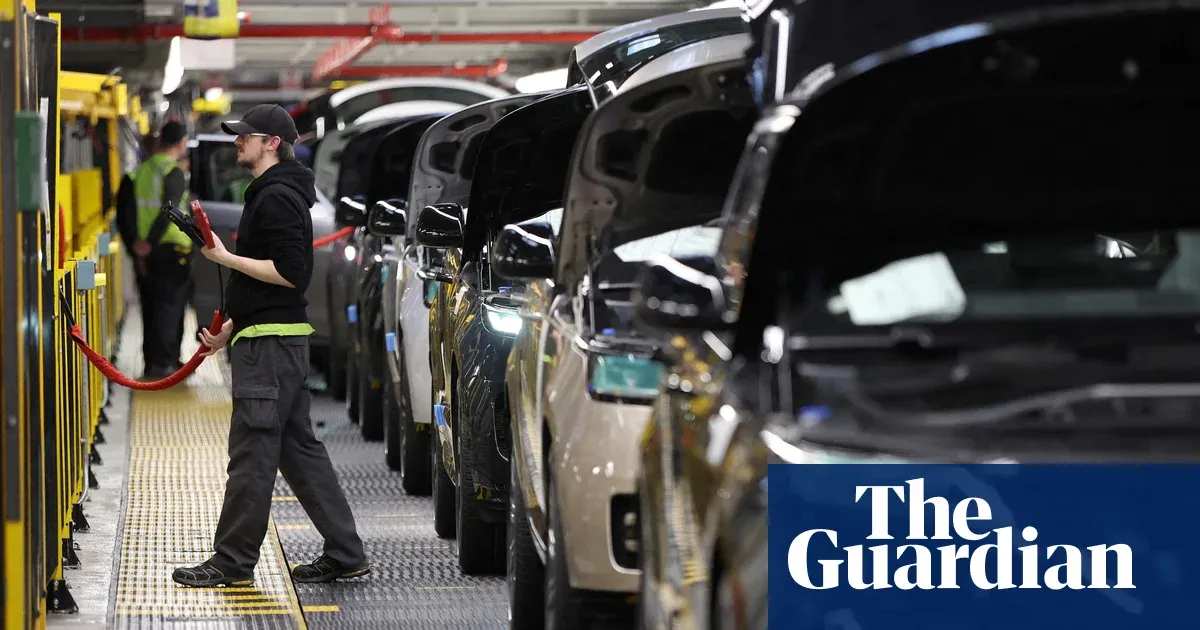
Jaguar Land Rover (JLR) is opening a voluntary redundancy programme for salaried and management staff, with up to 4,000 jobs at risk over two years. The move follows a profit slump driven by falling sales, a cyber-attack, and US tariffs, signalling deeper pressure on Britain's largest carmaker.
Jaguar Land Rover is cutting up to 4,000 jobs. Britain's largest car manufacturer told workers and unions on Saturday that it will open a voluntary redundancy programme for salaried and management team members, according to the BBC and Sunday Times. The decision comes after a brutal stretch for the company, which has been hit by falling sales, a cyber-attack, and Donald Trump's tariffs on imported vehicles. For a business that employs tens of thousands in the UK, this is not a minor trim. It is a strategic retreat under fire.
The triple threat is worth unpacking. First, sales are sliding. The global auto market has softened, and JLR's premium brands - Jaguar, Land Rover, Range Rover, Defender - are feeling the squeeze as consumers tighten budgets. Second, a cyber-attack disrupted operations, adding operational costs and uncertainty at a time when margins were already thin. Third, Trump's tariffs on foreign-made cars have raised the price of JLR vehicles in the US, one of its most profitable markets. Together, these forces have crushed profits, and the company is now looking to cut costs fast.
The voluntary nature of the redundancy programme is a telling detail. JLR is not forcing people out the door - at least not yet. By asking salaried and management staff to volunteer, the company is trying to avoid the reputational and morale damage of compulsory layoffs. But the scale is significant: 4,000 positions over two years. That is roughly 10% of JLR's UK workforce, depending on the exact headcount. For a company that has long been a flagship of British manufacturing, the signal is unmistakable: the good times are over, and the adjustment is just beginning.
This is not happening in a vacuum. The global auto industry is undergoing a painful transition to electric vehicles, and JLR is investing heavily in that shift. The company has committed to going all-electric by 2030, with a new generation of EVs on the way. But that transformation requires massive capital spending, and a profit slump makes it harder to fund. Tariffs on EVs and components only add to the cost. Meanwhile, Chinese EV makers are aggressively expanding into Europe and the US, putting pressure on legacy brands like JLR to compete on price and technology. The redundancy programme is, in part, a way to free up cash for that fight.
The cyber-attack is a reminder of a new vulnerability. Automakers are increasingly digital, with connected cars and complex supply chains. A single breach can halt production, delay deliveries, and erode customer trust. JLR has not disclosed the full impact, but the fact that it is cited as a reason for job cuts suggests the damage was material. For other executives in the industry, this is a warning: cyber risk is no longer just an IT issue. It is a board-level threat to profitability and jobs.
For the UK economy, the implications are broader. JLR is a major employer in the Midlands, with plants in Solihull, Castle Bromwich, and Halewood, plus an engine plant in Wolverhampton. Thousands of jobs in the supply chain depend on its production. A reduction of 4,000 roles will ripple through local communities and the national industrial base. It also puts pressure on the government, which has been courting investment in electric vehicles and battery manufacturing. If JLR is cutting jobs, other carmakers may follow, and the UK's ambition to be a leader in EV production looks shakier.
For decision-makers in similar roles, the lesson is clear. Diversify your markets, harden your cyber defences, and keep a close eye on trade policy. JLR was hit by all three at once, and no company is immune. The voluntary redundancy programme is a controlled response, but it is also a sign that even the strongest brands can be brought low by forces outside their control. The next few quarters will show whether this is a temporary setback or the start of a longer decline.
JLR's move is a bellwether. If the profit slump deepens, compulsory layoffs may follow. If sales recover and tariffs ease, the voluntary programme might be enough. But for now, the message to the market is stark: the era of easy growth in the premium auto segment is over. Companies that want to survive must cut costs, invest in the future, and brace for more turbulence. The 4,000 jobs on the line are just the first visible casualty.
This story's Key Insights and Take-aways are locked.
Create a free account to unlock Executive Actions for one credit.
Register to UnlockAlways free for Executives Club members. Join the Club
More in Business

Death sentence for TV presenter Sarah Khalifa: Egypt's drug case hits media
The sentencing of Sarah Khalifa and 11 others underscores the severity of Egypt's anti-drug laws and the exposure of public figures to capital punishment.

Tim Cook steps down as Apple CEO, stays on as chair with $45M equity
The 'Trump whisperer' keeps his White House and Beijing access as Apple navigates tariffs and a $4.6 trillion market cap.

Snowflake shares surge as AI data demand crushes estimates, lifting full-year forecast
Stocks jumped on stronger-than-expected guidance, signaling enterprise AI workloads are accelerating faster than Wall Street priced in.