

James Macdonald says China malls are shifting from shopping to hanging out
Developers are redesigning retail into time-spend destinations with greenery, water features, and sky walkways.
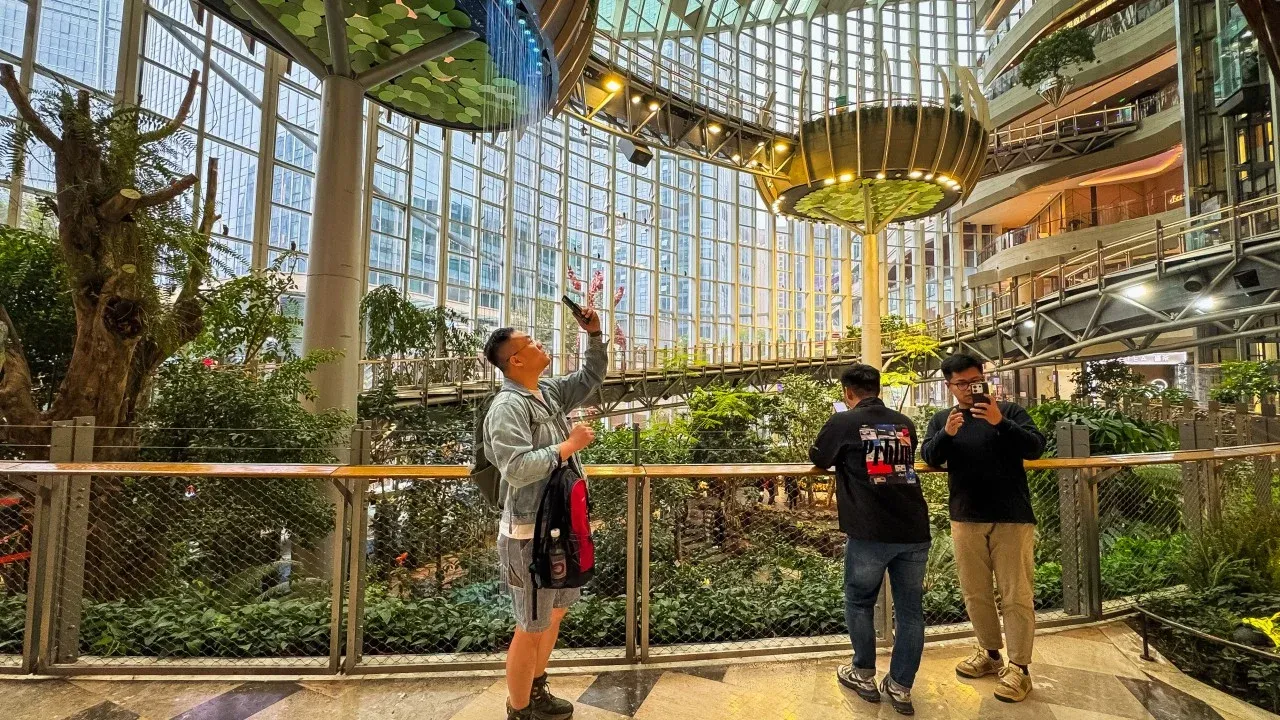
James Macdonald, head of research for China, says consumers increasingly see retail destinations as places to spend time rather than just buy products. Mainland China property developers are responding by building shopping centres with lush greenery, gardens, water features, and even sky walkways.
Mainland China developers are quietly redesigning malls into something closer to public parks, complete with lush greenery, gardens, water features, and sky walkways. SCMP reports this is not an aesthetic detour. It is an attempt to make shopping centres more attractive to both shoppers and retailers than conventional high-density malls.
The reason is captured in the quote from James Macdonald, head of research for China: "Consumers increasingly view retail destinations as places to spend time rather than simply places to buy products." That shift matters now because it is directly linked, in his framing, to two forces colliding in the physical world: the continued growth of online retail, and changing lifestyle preferences. In other words, the mall is fighting for the customer’s calendar, not just their wallet.
To understand why this specific kind of mall is gaining momentum, you have to look at the incentives on both sides of the lease. Retailers can buy foot traffic with marketing, discounts, and location. But they cannot easily buy dwell time. When online retail is expanding, customers can satisfy more purchase needs without leaving home. So brick-and-mortar has to win on something the internet typically cannot provide in the same way: an experience, a place to meet, and an environment that makes lingering feel normal.
Developers, meanwhile, do not just build for today’s shoppers. They build for tenant confidence and leasing durability. A mall that blends greenery, gardens, and water features can be positioned as a destination, not just a corridor with stores. When a centre becomes part of how people spend an afternoon, it can support a more stable retailer mix and create a stronger case for brands that want footfall, not just transactions.
This trend is also a signal about how the industry is interpreting consumer behavior. Macdonald’s line points to a broad redefinition: retail is shifting from consumption to time. That might sound like marketing-speak, but the SCMP description makes it tangible. Instead of relying solely on dense foot traffic from surrounding residential blocks, malls are increasingly using design to pull people in and keep them there. Sky walkways and park-like landscaping are the physical version of that promise.
There is also a regulatory and planning angle that sits behind these design choices, even if the SCMP excerpt does not spell it out. In China, large-scale development typically involves coordination among local authorities, land use planning, and permitting for construction, safety, and operations. So when developers invest in elaborate visitor-oriented features, they are not doing it casually. Those amenities have to clear approval hurdles and fit into broader master-planning. The fact that these spaces are being built anyway suggests developers believe the experience premium can survive the friction of approval timelines and capital deployment.
For executives and boards in real estate, retail, and consumer-adjacent businesses, the second-order implications are straightforward. If consumers increasingly treat retail as leisure, then performance metrics change. Foot traffic alone is less revealing than engagement indicators like length of visit, repeat visitation, and retailer sales that correlate with time spent. That reshapes how leasing strategies, tenant incentives, and tenant mixes get negotiated. A developer that leans into forests, waterfalls, and sky walkways is also implicitly underwriting a different operating model for the centre.
It is also a warning to peers who still think of malls as distribution channels for inventory. Online retail growth reduces the value of convenience alone. The physical format has to compete on something more sensory and social. When customers see a destination as a place to spend time, the mall becomes a competitor to other leisure activities. That can expand the addressable market for retailers, but it also raises expectations. If the experience does not deliver, it is not just a loss of shoppers. It is a hit to the centre’s credibility as a destination.
So the strategic stakes are clear. As Macdonald frames it, this is a response to online retail growth and changing lifestyle preferences. The bet by mainland China developers is that greenery, gardens, water features, and sky walkways can convert malls from transactional stops into habitual hangouts. Boards should treat this as a real shift in how retail assets create value, not a one-off design fad. The malls that win will be the ones that turn time into revenue, and experience into a reason to return.
This story's Key Insights and Take-aways are locked.
Create a free account to unlock Executive Actions for one credit.
Register to UnlockAlways free for Executives Club members. Join the Club
More in Business

Anthropic’s Levant Alpöge cracks the Jacobian conjecture after 87 years
A Harvard valedictorian used Claude to hit a 1939 breakthrough, but the missing “why” is the real problem.

Uber buys Delivery Hero for nearly $15B, vaulting to top food delivery outside China
The deal doubles Uber's dual-services footprint and pushes a ride-and-eats bundling play into 50 more markets.

Epic and Google drop settlement bid, forcing rival Android app stores by July 22
Google told the court it is ready to carry third-party app stores starting Wednesday, July 22.