
James Robert Woods’ one-person filmmaking turns a luxury farmstay into a privilege reckoning
The Birthday Trip, Woods’ debut, weaponizes dialogue to trap well-off couples in power games, not parties.

James Robert Woods wrote, directed, produced, shot, and edited The Birthday Trip, and set it on a luxury farmstay in New South Wales’ southern highlands. For decision-makers and creators alike, it’s a reminder that conversation-driven stories can still become appointment viewing, without spectacle.
James Robert Woods basically did everything on The Birthday Trip. He wrote it, directed it, produced it, shot it, and edited it. And somehow, despite that near-total control, the film never feels mechanized. It feels like a pressure cooker built out of dialogue, where well-off middle-class couples keep talking, then talk themselves into worse and worse corners.
That choice matters because The Birthday Trip is not trying to sell you wealth. It is set on a luxury farmstay in the New South Wales southern highlands, but the movie’s real target is entitlement and the power imbalances that hover just beneath “polite” conversation. Woods also leans into a distinct flavor of black comedy, one that is more tart and more uneasy than the glossy banter style you might associate with prestige watercooler hits. The point is immediate: this is chamber-sized, character-driven tension, not a grand vacation fantasy.
The film is, according to Woods, influenced by The White Lotus, Triangle of Sadness, and Melancholia. That trio is an unmistakable blueprint: stories where privilege under pressure is the engine, and the discomfort is the payoff. The Birthday Trip uses that same thematic wiring. It is not interested in wealth as an aesthetic. It is interested in how money changes the rules people think they deserve, and how those assumptions strain relationships until the social surface cracks. In other words, when the film looks “accessible,” it is because the staging is disarmingly approachable. But the underlying unease stays. Like a polite smile that does not reach the eyes.
If you have any taste for media strategy, the headline insight is quietly valuable: films do not need Greek gods or costumed heroes to get people talking. The source compares the idea to the success of The Invite, described as a buzzy watercooler production, and uses that as a reminder that conversation itself can be the product. The second-order implication for boards, producers, and investors is that audience attention is still a dialogue economy. A movie that gives people something to debate, quote, or dissect can outperform bigger spectacle when distribution and marketing manage to land the right promise.
There’s also a craft angle that reads like a governance model. When one person takes on multiple roles, as Woods does here, the incentives are different. You get speed, coherence, and a single creative spine. But you also remove some of the “checks” that can happen when different hands stress-test tone, pacing, and risk. The Birthday Trip signals that kind of hyphenate control by keeping dialogue at the center stage. That is not a neutral stylistic choice. It is a structural commitment that puts pressure on every beat: if the dialogue is weak, the whole thing collapses. If the dialogue is strong, the unease lands with precision.
The film’s specific setup, a luxury farmstay, functions as a social lab. Luxury environments do not just add production value. They concentrate status markers and reduce plausible deniability. Guests know they are being observed, and hosts know they are in charge. Woods then uses tense bickering between well-off middle-class couples to show how quickly “nice” becomes transactional, and how quickly transactional becomes confrontational. The result is a black comedy with a sharper edge, one that keeps the audience aware of the power imbalance behind the jokes.
So for executives and operators thinking beyond filmmaking, The Birthday Trip offers a transferable lesson: pressure does not have to be external and cinematic to be compelling. It can be interpersonal and conversational. In industries where strategy often defaults to scale, this is a reminder that intimacy can be a lever. If you can make people feel the stakes inside a contained structure, you can earn repeated attention without relying on costly spectacle.
Strategically, the stakes for peers are simple: if conversation-driven projects can still break through, then creative risk is not only about budgets or blockbuster ingredients. It is about whether the work understands what audiences are hungry to process. The Birthday Trip suggests that what sells is not just what happens, but how characters talk while things are falling apart. That is the kind of pressure that keeps rooms full, feeds debate, and turns a debut feature into a reason to come back to the same conversation tomorrow.
This story's Key Insights and Take-aways are locked.
Create a free account to unlock Executive Actions for one credit.
Register to UnlockAlways free for Executives Club members. Join the Club
More in Entertainment

'It's a Magic Trick': Ballet Experts Say Rosalía's SNL Pose Is Impossible
Three ballet experts tell Rolling Stone Rosalía's gravity-defying SNL stillness shouldn't be possible - and why the debate is now part of the show.

Activision CMO: GTA 6 Will Boost Call of Duty, Not Bury It
Activision's top marketer says Rockstar's blockbuster will drive players back to consoles and into Modern Warfare 4, even as the company admits its recent strategy failed.
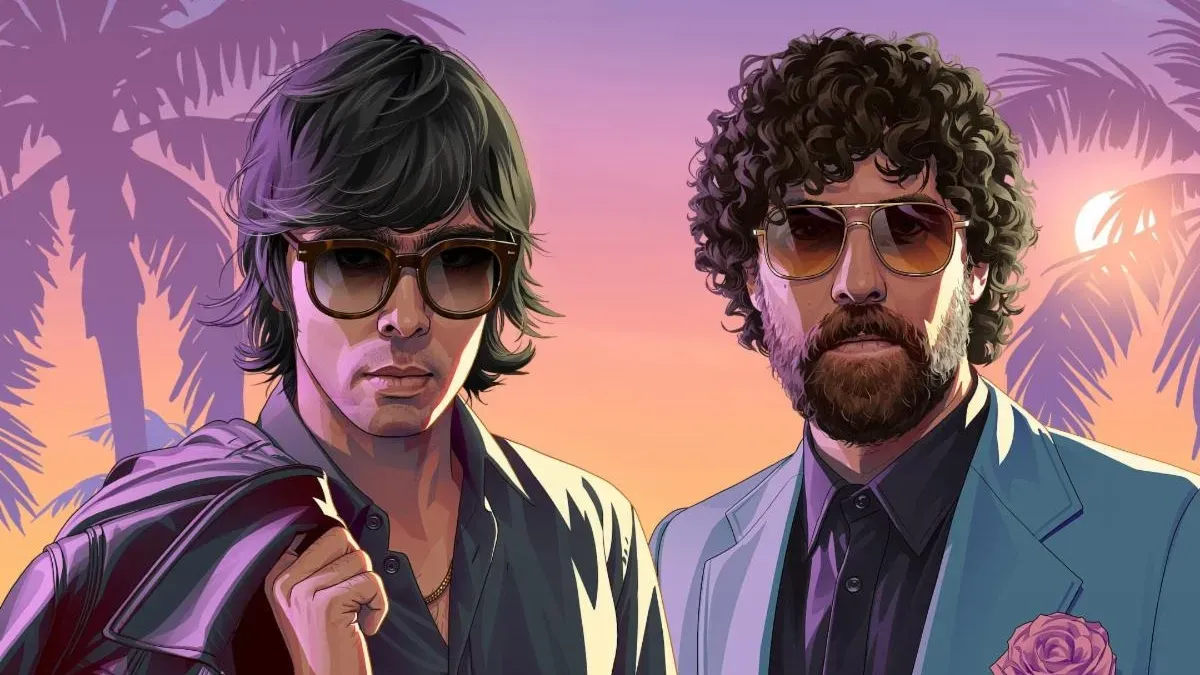
Justice to Score GTA 6, Share New Song with Tame Impala, SZA, King Gizzard
Rockstar taps the French duo for the GTA VI score, and the first taste is a genre-melting collab with Tame Impala, SZA, and King Gizzard & The Lizard Wizard.