
Jamie Laing says creator brands will build the next Fortune 500
Candy Kittens founder argues creators win with speed, authenticity, and acquisitions like Graze's £36m deal.
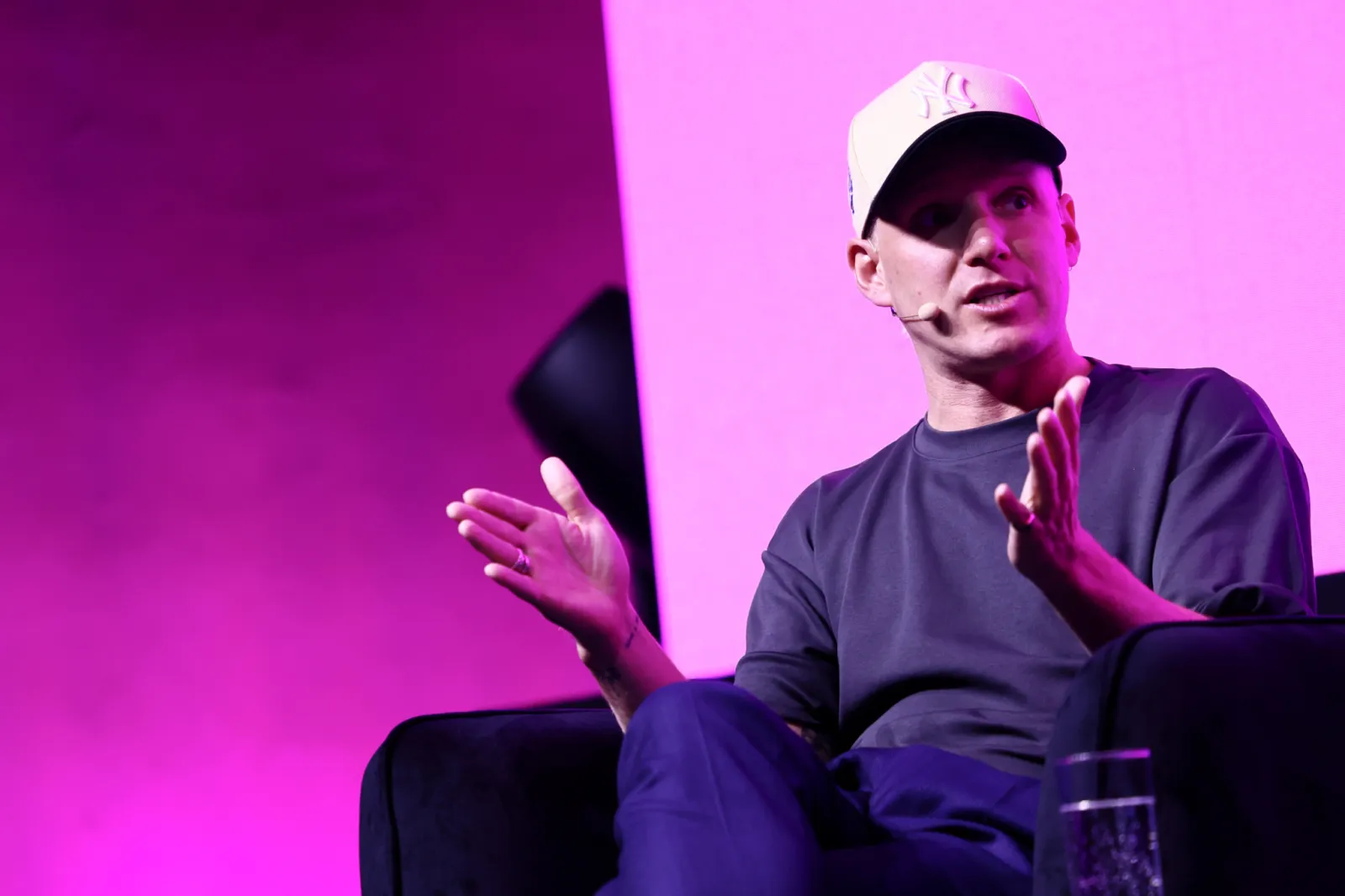
Jamie Laing, co-founder of Candy Kittens and reality star turned entrepreneur, tells Fortune that the next big business owners will be content creators. His $-and-£-friendly proof: Candy Kittens, now reported at £15m annual revenue, bought Graze from Unilever for £36m and is using creator-like agility to outcompete legacy giants.
Jamie Laing is making a prediction that sounds like it belongs on a podcast, not a Fortune desk: tomorrow’s Fortune 500 will be built by content creators. Laing, the reality star turned sweet entrepreneur, tells Fortune, “The next big business owners are going to be content creators,” and adds that even Coca-Cola can’t come up with what’s next without creator help building the brand.
If that claim feels like brand talk, Fortune backs it with a real-world test case. Laing founded Candy Kittens with business partner Ed Williams 15 years ago. The brand reportedly generates £15m in annual revenue, selling colorful, cat-shaped vegan gummies through mainstream retailers including Tesco and Sainsbury’s. In the same market where conglomerates have historically dominated, Candy Kittens is proving you can win shelf space and attention without behaving like a corporate megaphone.
The key move came in late 2025, and it is specific: Candy Kittens reportedly snapped up snack brand Graze from Unilever for £36m. Deals like that are usually read as “big company buy small thing.” But the subtext here is different, because Laing frames it as a gap created by corporate ownership. In the source, he argues that big corporations “aren’t agile at all” and are “stuck in their ways,” while Candy Kittens can move from idea to shelf in a matter of months.
That speed matters because FMCG success is often described as a long game, but it is actually a short game dressed up as long. You need to notice what consumers want now, not what they wanted when the last campaign went out the door. When a brand lives inside a giant portfolio, it can become a footnote, and footnotes rarely get the kind of constant attention required to stay culturally relevant. Laing’s comments about Graze are pointed: for a business the size of Unilever, it was “a mere footnote,” and he says it “had kind of lost its sparkle.” His argument is that the brand needed “love, nurturing and energy” that a larger parent could not deliver in the way a smaller, creator-led operator can.
This is where the uncomfortable boardroom question hits. The source notes that Nestlé owns more than 2,000 brands globally and is cutting the number of brands receiving media support from more than 400 to just 150 in 2026, according to its latest investor report. Whether the conglomerate is shedding brands it cannot nurture, or buying more assets in pursuit of critical mass, the practical result is similar: some portion of the portfolio is not getting the attention it needs. Creator-led brands, in Laing’s telling, are positioned to exploit that exact mismatch.
Laing also connects the strategy to a fundamental shift in how people relate to brands. He argues that consumers trust content-led brands more because they have “personality and authenticity.” The source backs the trend with two research inputs: LTK found 73% of Gen-Z consumers rely on creators when making purchasing decisions, and an Adobe survey found that two-thirds of Gen-Z shoppers have bought from a creator-founded brand. Importantly, the source does not claim traditional brands are disappearing. Instead, it suggests younger shoppers are especially receptive, while legacy companies may be slower to adapt to the way marketing and trust now work.
In Laing’s framing, the problem is not distribution or taste. It is selling behavior. He says consumers “don’t really like being sold to,” and describes the creator approach as a “jab, jab, jab, hook technique,” meaning you give, give, give, then invite your audience to build something alongside you, because they already believe in you. For executives at large consumer goods firms, that reads like a cultural operating system change. Advertising can still move product. But when earned loyalty is built through sharing, entertaining, and letting an audience in, the marketing cost curve and the trust curve can shift in ways a traditional media machine cannot easily replicate.
Regulation adds another layer to the incentives. The source references “new U.K. advertising restrictions on high-fat, sugar, and salt products.” If consumer goods brands in those categories face tighter promotional constraints, that can make pivots harder for legacy players, especially those with large fixed costs and entrenched product lines. A smaller challenger brand, Laing’s model implies, can adjust faster because it does not have to rebuild an entire corporate marketing machine to test a new message.
Still, the source makes room for skepticism, and it is worth taking seriously if you are a decision-maker trying to separate hype from durable business building. Creator-led brands can shift products and punch above their weight, but what happens when the founder steps back, or when the cultural moment changes? Investors also face a valuation challenge: how do you value a business built around a personality? Laing says people questioned Candy Kittens’ longevity, calling it “a fad” that didn’t have “legs.” The source also notes that European investors have historically been more cautious about personality-driven businesses than the American counterpart.
Laing’s ultimate ambition, according to the source, is to acquire McVitie’s, a biscuit brand originally built by his own great-great-grandfather before it was absorbed into a conglomerate. It might sound like a posh-boy profile line designed for attention, but within the logic of the article, it represents something larger: brand ownership may be starting to reverse. For most of the last century, it has flowed away from founders toward corporations with the capital to grow them. Candy Kittens, plus the reported Graze acquisition, suggests a different direction is possible, where creator-led operators can win by moving fast, staying culturally attuned, and using mainstream retail credibility without inheriting the inertia of a portfolio giant.
If you are sitting on a board, running strategy, or funding the next wave of consumer businesses, the stakes are simple and non-negotiable. The question is not whether creators can sell candy. It is whether the center of gravity in brand-building is moving from mass campaigns to ongoing audience trust, and whether large portfolios will keep treating promising products as footnotes or find a way to re-earn the agility they outsource to smaller brands.
This story's Key Insights and Take-aways are locked.
Create a free account to unlock Executive Actions for one credit.
Register to UnlockAlways free for Executives Club members. Join the Club
More in Business

Anthropic’s Levant Alpöge cracks the Jacobian conjecture after 87 years
A Harvard valedictorian used Claude to hit a 1939 breakthrough, but the missing “why” is the real problem.

Uber buys Delivery Hero for nearly $15B, vaulting to top food delivery outside China
The deal doubles Uber's dual-services footprint and pushes a ride-and-eats bundling play into 50 more markets.

Epic and Google drop settlement bid, forcing rival Android app stores by July 22
Google told the court it is ready to carry third-party app stores starting Wednesday, July 22.