

Japan’s 140MW robotics AI factory specs: 13,750 Vera CPUs and 27,500 Rubin GPUs
Nvidia and a Japanese industrial consortium lay out a national-scale “physical AI” data center with unusually concrete hardware counts.
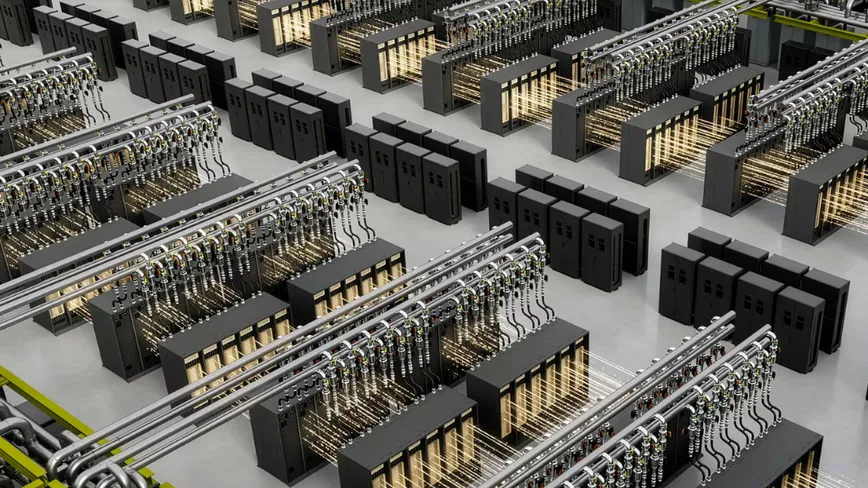
Nvidia and a Japanese industrial consortium are building what Nvidia calls the world’s first national AI infrastructure for physical AI. The plan targets 140 megawatts of data center capacity with 13,750 Nvidia Vera CPUs and 27,500 Rubin GPUs.
Japan is building a 140MW AI factory aimed at robots, and Nvidia is supplying all of it. In a rare example of a “big AI infrastructure” announcement that actually lists hardware numbers, Nvidia says the system will run 13,750 Nvidia Vera CPUs and 27,500 Rubin GPUs across 140 megawatts of data center capacity. That is not just a vibe. It is a procurement and capacity plan that, if delivered as described, turns “AI for robots” from a pilot-era concept into something closer to national utility infrastructure.
The phrase Nvidia uses is “national AI infrastructure for physical AI,” and the implied punchline is straightforward: physical AI needs more than cloud compute for chatbots. It needs high-throughput compute that can keep up with sensing, perception, planning, simulation, and control loops that robots actually depend on. By tying those goals to a fixed data center footprint, Nvidia and the Japanese consortium are effectively choosing engineering certainty over marketing ambiguity, at least on the hardware side. For executives, that matters because the fastest way to kill AI programs is to leave compute capacity fuzzy until late in the roadmap. Here, the roadmap is being pinned down early.
To understand why this is a big deal for decision-makers, zoom out to how the robotics and AI stack usually funds itself. Robotics has historically been expensive and slow to iterate: fleets are harder to train than virtual data, and real-world environments are messy. AI compute, meanwhile, is typically sourced either through general-purpose GPU clusters or through bespoke arrangements that can change as model demands shift. A “140MW” framing signals a different strategy: treat compute like industrial infrastructure. Not a temporary boost. Not an experimental cluster. Something that can be scaled, governed, and relied on.
This is also where Nvidia’s pitch gains leverage. Nvidia is not merely selling accelerators; it is positioning its platform as the backbone of a specific kind of workload. The hardware counts are unusually concrete for an announcement like this, which suggests the consortium has enough clarity on requirements to commit to a large, standardized build. In practice, that can reduce procurement friction and speed up deployment, because the system has a defined target configuration. For the rest of the market, it sets a reference point: if “physical AI” is going national, then the compute stack for that category becomes a strategic asset, not a commodity.
There is a second-order effect boards and investors will care about: standardization. When a consortium converges on one vendor’s CPU and GPU mix at scale, it narrows the set of architectures competitors can offer without re-architecting. Even if other vendors can technically participate in physical AI pipelines, the ecosystem effect of a national infrastructure can make Nvidia's platform the default for partners building robotics software and training workflows. That can shift bargaining power over time, because integration partners tend to optimize for the infrastructure that gets deployed earliest and at the largest scale.
Another angle is governance and regulatory framing. AI infrastructure at this scale inevitably attracts attention around energy, data center buildout, and operational resilience, even if those specific details are not spelled out in the source. What is clear is that a 140MW footprint is a “real-world” commitment, not a small experiment. For regulators and policymakers, physical AI also carries a different set of concerns than software-only AI, since robots interact with people and environments. National infrastructure can mean tighter coordination on standards, safety expectations, and deployment pathways, even if the story here is primarily about compute and hardware.
Finally, there is the market signal. If Nvidia and a Japanese industrial consortium are building what Nvidia calls the world’s first national AI infrastructure for physical AI, then other regions will ask the same question: are we treating the “compute for robots” problem as a one-off project, or as industrial infrastructure? The strategic stakes are obvious. Whoever wins the early deployment cycle can influence the tooling, the training standards, and the integration patterns that follow. In other words, this is less about a single data center and more about who sets the baseline for physical AI at scale.
For peers in similar roles, the takeaway is not that every company needs a 140MW plan. It is that the bar for physical AI is moving. When hardware configuration and capacity targets get this specific, it raises expectations for delivery timelines, system reliability, and performance consistency. The winners in physical AI will be the ones that can translate ambitious AI goals into concrete compute commitments early enough to matter.
This story's Key Insights and Take-aways are locked.
Create a free account to unlock Executive Actions for one credit.
Register to UnlockAlways free for Executives Club members. Join the Club
More in Technology

Google quietly links your phone number to every Android account on your SIM
Adding a SIM now ties your phone number to all Google accounts - and future accounts inherit it. Here's the security and privacy stakes.

Hijacker AI 'Skynet mode' runs 100,000 attack steps against exposed models
Symantec caught a criminal AI agent that borrows other models, steals data, and mines crypto; the only relief is no confirmed victims yet.

Nvidia's AI-financier shift faces its first big test as neoclouds stumble
A rout in neocloud stocks is forcing investors to weigh Nvidia's hidden exposure as both supplier and lender to the AI buildout.