
Jason Isbell Sues Suno, Claims AI 'Built to Extract Musicians' Identities'
The country star leads a class action alleging Suno encodes artists' personas as tokens, letting users conjure their identities with a name prompt.

Jason Isbell, alongside David Lowery, Guy Forsyth, and Ed Calle, filed a class action lawsuit against AI music service Suno, alleging it violates artists' rights of publicity by encoding their identities as tokens. The case seeks damages for a class that could number in the millions, and it could reshape how AI platforms handle artist names and likenesses.
Jason Isbell is leading a new class action lawsuit against Suno, the AI music generator, accusing it of being "built to identify musicians by name" and encoding their entire musical personas as tokens. The complaint, filed Monday and obtained by Billboard, alleges that Suno's system treats a musician's name as a "retrieval key" for a set of performer-specific representations, allowing users to generate songs, descriptions, and artwork that evoke that artist's identity. "Suno's system recognizes 'Jason Isbell' as far more than a mere text string; it is a retrieval key for a set of performer-specific representations that it can use to generate a response associated with that musician," the lawsuit reads.
The lawsuit, filed alongside Camper Van Beethoven's David Lowery, blues singer Guy Forsyth, and jazz saxophonist Ed Calle, argues that this violates artists' rights of publicity under state statutes in New York, California, and Tennessee. Unlike copyright law, which is the basis of separate litigation against Suno by major record labels, rights of publicity protect an individual's ownership over their name, image, and likeness. The plaintiffs say that even if labels have licensing deals with Suno, artists retain their own claims over name-specific prompting. Isbell, who has previously made known his distaste for Suno, is now putting that sentiment into legal action.
As an example, the complaint says typing "Jason Isbell" into Suno produced an Americana song called "Paper Bell," imitating his characteristic clear male vocals and country twang. Suno has publicly stated its goal is to "help people create something new, not imitate someone else's work," and says it employs filters to block artist-name prompts. But the lawsuit alleges these filters are easily defeated by inserting spaces between letters, such as "m i c h a e l j a c k s o n," which generated a pop song called "Glovebox Moonwalk" with an image of Michael Jackson's signature white glove. The workaround is trivial, the complaint argues, and the filters are not a genuine barrier.
The lawsuit also cites prompts for "t a y l o r s w i f t" producing a breakup song in her style, and "b a d b u n n y" generating a Spanish-language reggaeton urbano track. "The platform is built to identify musicians by name and generate identity-evocative output on command," the complaint reads. "This is its product." This is a direct challenge to Suno's business model, which has already faced multiple lawsuits from the music industry over training data and copyright infringement. The new case adds a distinct legal theory that could have broader implications for how AI platforms handle personal identity.
The case is distinct from the copyright litigation brought by major labels like Sony and Warner, which accuse Suno of "illegally harvesting" music to train its models. Rights of publicity claims are personal to the artist, meaning they cannot be licensed away by a record label. That's a crucial distinction: Warner Music Group inked a license with Suno last fall, and BMG followed last month, but those deals cover sound recordings, not the artists' names and likenesses. The lawsuit argues that artists have valid claims even if their labels have such licenses, because the right of publicity is an individual right that cannot be transferred to a label.
The proposed class could number in the "millions," according to the complaint, encompassing all musicians whose names have been accepted as Suno prompts. The plaintiffs seek unspecified financial damages. Suno did not immediately respond to a request for comment on Tuesday. This case adds to the mounting legal pressure on AI music platforms, which are already navigating a landscape of copyright suits, licensing negotiations, and now, personality rights claims. The outcome could set a precedent for how AI companies handle any individual's likeness, from musicians to actors to public figures.
For executives in the AI and music industries, this lawsuit signals that the legal frontier is expanding beyond copyright into the realm of personal identity. If the court recognizes rights of publicity claims against AI models that encode artist personas, it could force platforms to redesign their systems to avoid name-based prompting altogether, or to secure licenses directly from artists, not just labels. The strategic stakes are high: AI music services like Suno have built their products on the ability to generate artist-like output, and a ruling against them could upend that core value proposition. For artists and their representatives, the case offers a new avenue to assert control over how their identities are used in the age of generative AI, and it underscores the importance of understanding the full scope of intellectual property and personality rights when building or licensing AI tools.
This story's Key Insights and Take-aways are locked.
Create a free account to unlock Executive Actions for one credit.
Register to UnlockAlways free for Executives Club members. Join the Club
More in Business
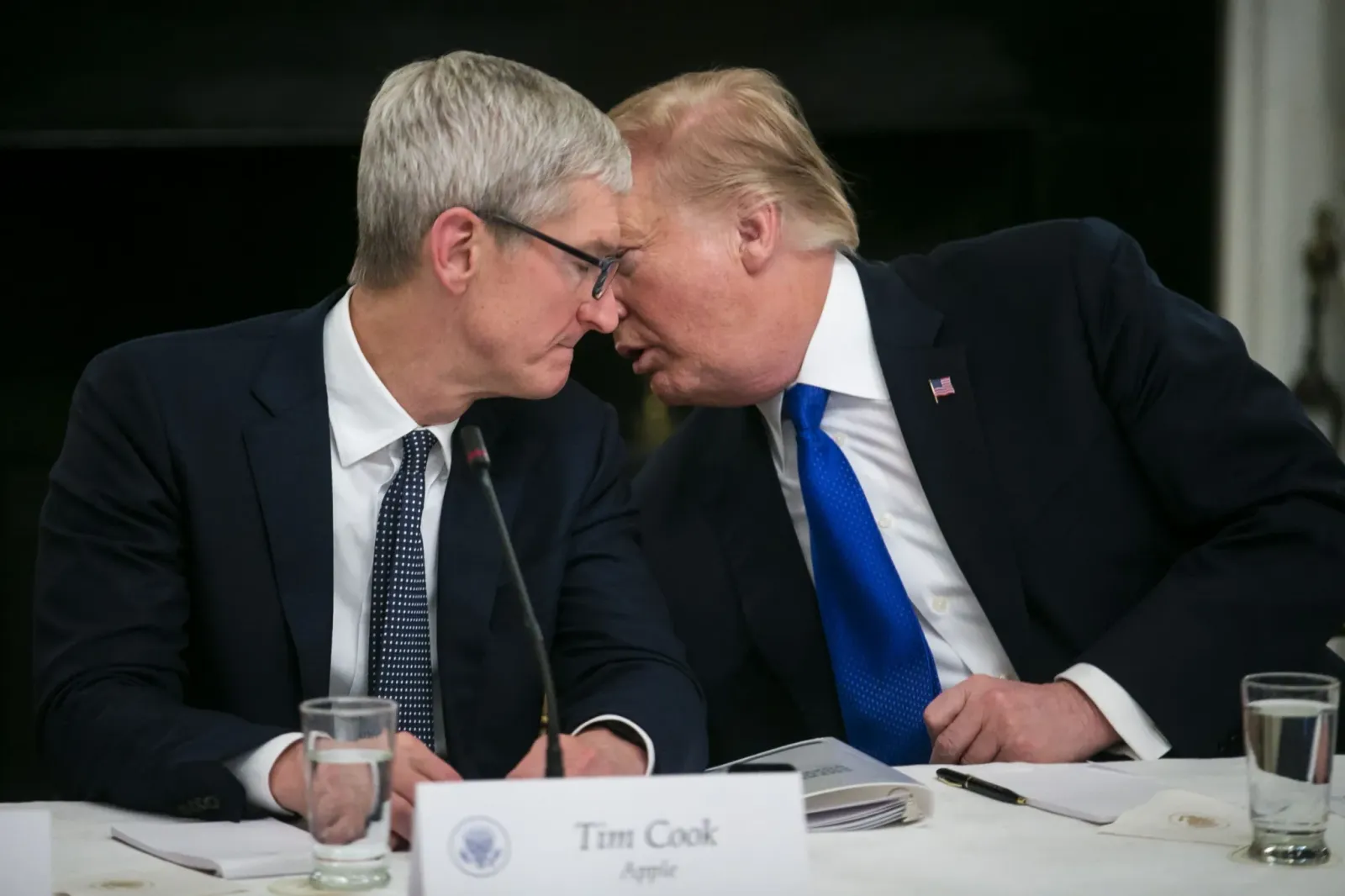
Tim Cook steps down as Apple CEO, stays on as chair with $45M equity
The 'Trump whisperer' keeps his White House and Beijing access as Apple navigates tariffs and a $4.6 trillion market cap.

Snowflake shares surge as AI data demand crushes estimates, lifting full-year forecast
Stocks jumped on stronger-than-expected guidance, signaling enterprise AI workloads are accelerating faster than Wall Street priced in.
Tim Cook's 15-year Apple CEO run ends: 3 lessons for any successor
After 15 years, Tim Cook hands Apple to John Ternus - here's how he turned a $350B company into a $4.6T juggernaut.