

JD.com puts an AI camera helmet on riders, speeding rivals Alibaba and Meituan
Why the race to AI-enabled delivery headgear is reshaping safety tech, logistics ops, and competitive positioning in China.
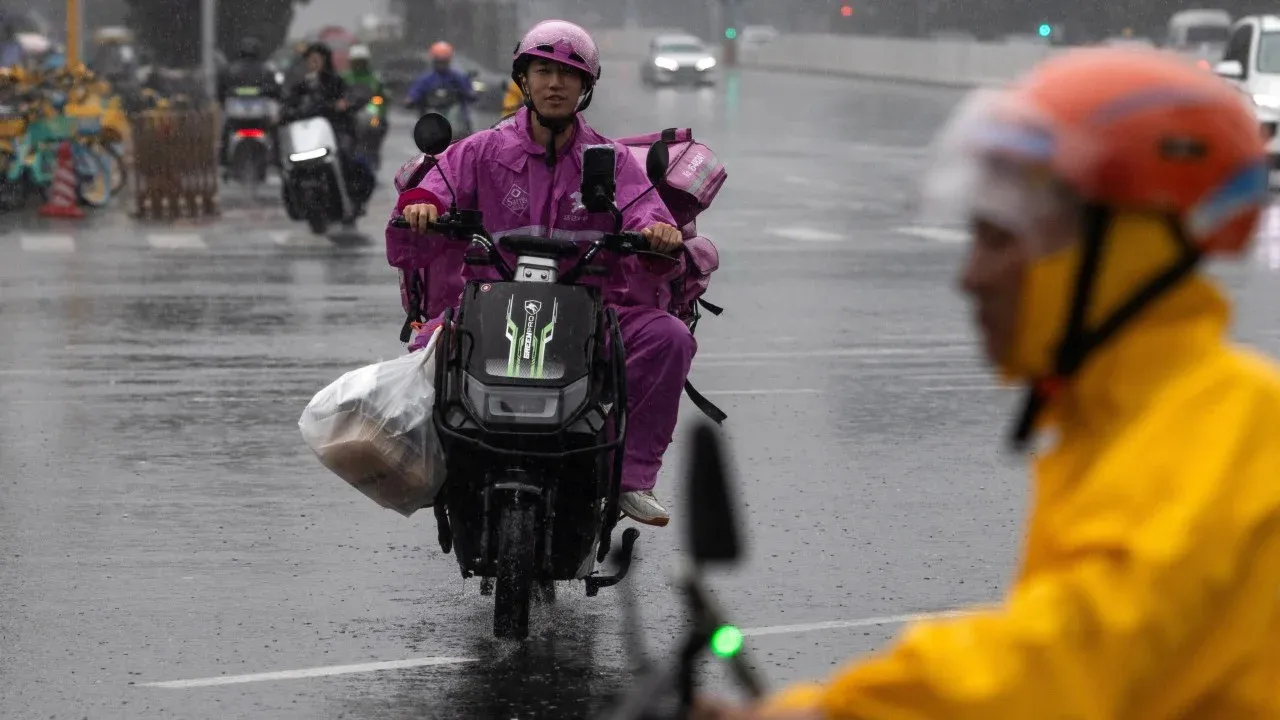
JD.com launched an AI-enabled smart helmet for food couriers, integrating a voice assistant and a camera that can “see” the surrounding environment. The move follows similar rollouts by Alibaba Group Holding and Meituan, as e-commerce and delivery players aim to improve rider safety and boost delivery efficiency.
JD.com is rolling out a smart helmet for food couriers, and it is not subtle about what it is trying to fix. The company’s food delivery unit announced on Monday that the helmet is enabled by artificial intelligence technology, combining an AI-driven voice assistant with a camera that can “see” the surrounding environment.
This matters because JD.com is not acting in isolation. The helmet launch follows similar rollouts by rivals Alibaba Group Holding and Meituan, putting China’s major delivery operators into a visible, fast-moving competition over how to make couriers safer and deliveries more efficient. In plain terms: riders are getting new tech on their heads, and the competitive advantage is likely to come from what that tech does during the trip, not just what it looks like on day one.
To understand why this race is heating up, start with the incentives that typically govern last-mile delivery. Food delivery is time-sensitive, routing-heavy, and operationally unforgiving. Small improvements in how quickly a courier can navigate, manage interruptions, or respond to hazards can translate into meaningful gains in throughput. At the same time, rider safety is not a “nice to have” category. It affects public perception, platform risk, and the long-term ability to staff delivery demand reliably. JD.com’s positioning, as described in the announcement, directly ties the helmet to both goals: minimizing safety issues and improving delivery efficiency.
The core technical pitch in the source is two-part. First, the helmet includes an AI-driven voice assistant. Second, it uses a camera that can “see” the surrounding environment. That combination is designed for real-world delivery moments: the rider needs hands-free interaction, and the system needs situational awareness that a rider might not catch quickly while moving through traffic and dense urban areas. Even without getting into specifics beyond the source description, the pattern is clear. These companies want to turn the courier into a node of intelligence, where the device can support tasks in motion and help reduce preventable problems.
There is also a strategic reason these launches look coordinated across competitors. When Alibaba and Meituan have similar rollouts, the market stops viewing AI safety devices as experimental and starts treating them as table stakes. JD.com’s launch therefore functions like more than a product update. It is a message that it is keeping pace in a category that is becoming operational infrastructure. If customers experience smoother deliveries or fewer safety incidents over time, those effects reinforce the platform advantages of whoever implements the best system at scale.
Regulatory and oversight dynamics are part of the backdrop for any rider-focused technology, even when the source does not name specific rules. Public safety issues tend to invite scrutiny, and AI-enabled cameras and voice assistants inevitably raise questions about how data is handled and how systems are governed. Executives at the companies involved will be thinking about compliance readiness, incident accountability, and what happens when device behavior fails in the field. Put differently: the helmet is not just a hardware rollout. It is also an operational and governance rollout.
Second-order implications for decision-makers are likely to show up in procurement, training, and metrics. Once couriers use an AI-equipped helmet, companies have to define performance outcomes beyond “it exists.” They need to measure whether the helmet actually improves delivery efficiency, reduces safety incidents, and meaningfully changes rider workflows. That means training programs for riders, tighter support processes for device issues, and internal dashboards that can attribute improvements to the technology rather than to other operational changes. Boards will also care about the cost curve. Scaling a hardware device across a fleet is expensive, and the business case has to survive real-world usage, not just pilot performance.
For peers, JD.com’s move tightens the competitive timing window. If Alibaba and Meituan are already testing similar approaches, JD.com is effectively saying it will not wait at the starting line. The winners in this kind of race tend to be the companies that can scale deployment quickly while maintaining safety outcomes and operational performance, turning a “smart helmet” into a reliable logistics advantage. The strategic stake for executives is simple: last-mile is a brutal environment, and whoever successfully integrates AI into the rider workflow could improve both safety and speed at the same time, making it harder for competitors to match without equal investments.
This story's Key Insights and Take-aways are locked.
Create a free account to unlock Executive Actions for one credit.
Register to UnlockAlways free for Executives Club members. Join the Club
More in Technology

doubleAI's Maxwell rewrites code while it runs, claims 38x speedups
The Tel Aviv startup's code execution model formally verifies optimizations, turning AI into an agent for the hardware itself.
Saudi military official paid to fly OpenAI bugging suspect's family out, prosecutors say
A court filing says a Saudi military official funded the family's exit and Riyadh offered bail, putting foreign-influence risk squarely on AI boards.

AI researcher's 26,000-word claim: Neural nets aren't tangled after all
Nick Cammarata's Goodfire post has the AI world split - if he's right, monitoring frontier models just got a lot easier.