
Jeff Tremaine says Jackass won’t continue, ending the franchise without a new cast
Why the director shut the door, citing brain injuries and footage from a moment that rattled the crew.
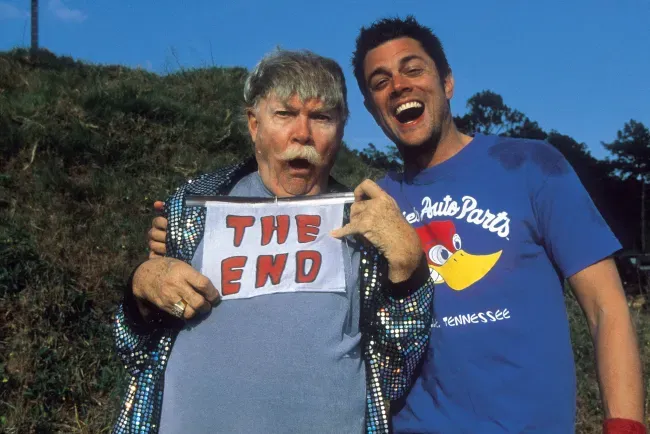
IndieWire reports that director Jeff Tremaine explains why Jackass will not continue with a new cast. The decision matters to decision-makers because it signals how physical-injury risk and on-set trauma can outweigh the upside of franchise continuation.
Jeff Tremaine is the one explaining why this time really is the end of Jackass, and his reasoning is not vague. IndieWire reports that the director says Jackass won’t continue with a new cast. In other words, this is not “we’re taking a break” or “we might revisit later.” The franchise is closing its doors, and Tremaine is putting real guardrails around why.
Part of that guardrail is brutally practical: brain injuries. IndieWire specifically frames Tremaine’s explanation around brain injuries, making the ending feel less like a creative decision and more like a risk-management one. If you’re an executive watching industries built on repeated high-risk behavior, the lesson is immediate. When the main product is stunts done for entertainment, the tolerance for cumulative harm can become a hard ceiling, regardless of what audiences want or what revenue you could generate with a new lineup.
The second thread IndieWire highlights is what Tremaine calls new footage of him being traumatized after thinking Johnny Knoxville died. That detail matters for a reason that goes beyond the emotional moment. On-set, the incentives can push people toward normalizing fear and danger. But this kind of incident breaks the script, turning the work from “performance” into something that leaves marks on how you see your co-workers, your own body, and the operation itself. When a director says the franchise is done, mentioning a trauma reaction signals that the decision is not only about future stunts. It is also about what the crew learned from what already happened.
To understand why this decision is consequential, you have to look at how stunts and franchises typically evolve. A long-running brand can refresh cast members, re-skin the premise, and keep the machine printing. The “new cast” model is often the default when a brand wants to extend without admitting the original formula is no longer safe, or no longer acceptable. Tremaine’s stance flips that logic. He is explicitly not taking the path that franchise management would usually choose: continue the brand with different people to lower risk while keeping the brand equity.
That pivot away from a new cast has second-order implications for everyone around the project. For production companies and investors, it changes the long-range forecasting model. If Jackass can end without replacing talent, then the franchise value is not purely transferable. It is tied to people, techniques, and a tolerance for injury and chaos that cannot be recreated on command. For boards and executive teams, that means you should treat “brand continuity” as a risk-bearing asset, not an automatic perpetual motion machine.
There is also a regulatory and legal framing that hovers over physical-comedy enterprises, even if IndieWire does not list specific rules in the excerpt. In general terms, repeated brain trauma risk in entertainment has drawn increasing scrutiny across industries, and that scrutiny tends to intensify with public attention and incident history. When the director itself foregrounds brain injuries as part of why the franchise ends, it reads like the company is responding to the same underlying reality that safety standards, insurers, lawyers, and regulators respond to: outcomes matter, not just intent.
And for leadership, the financing angle is just as real. Physical-risk brands rely on a chain of responsibilities: contracts, waivers, safety protocols, medical support, and operational oversight. When Tremaine points to brain injuries, he is effectively acknowledging that the operational chain cannot reduce risk to a level that makes continuation worth it. The moment you hear “brain injuries” alongside “won’t continue,” the math changes. The upside of another season must compete with the possibility of long-term harm, reputational fallout, and the internal cost of knowing the organization could keep rolling but chooses not to.
Second-order effect: this kind of ending can influence other creators and studios in adjacent categories, like action-comedy formats, reality stunt competitions, and influencer-driven spectacle. If a flagship director chooses to stop rather than “find the next cast,” executives elsewhere learn that audience demand does not override injury risk forever. The business lesson is not that every brand must end. It is that the threshold for what leaders consider acceptable risk can move abruptly, especially when the humans making the content have to live with what happened.
For peers considering long-lived series with physical danger at the center, Tremaine’s message is a clear strategic stakes update. The franchise is ending, not because the brand ran out of ideas, but because the risk and the human impact crossed a line. When the director cites brain injuries and pairs that with footage of him being traumatized after thinking Johnny Knoxville died, it turns the decision into something sharper than “creative differences.” It becomes an operational verdict: the cost of continuing is too high.
This story's Key Insights and Take-aways are locked.
Create a free account to unlock Executive Actions for one credit.
Register to UnlockAlways free for Executives Club members. Join the Club
More in Entertainment

Marjane Satrapi dies at 56, ending a Persepolis-era cultural force worldwide
The death of the Franco-Iranian author and film director ripples beyond art, touching how culture funds and travels globally.
Oliver Tree’s family builds a foundation to fund grants for artists
After the singer’s death, a new grants mechanism aims to send money back to artists, not heirs.

Netflix scrapped The Boroughs, then rushed Avatar: The Last Airbender Season 2-3 back-to-back
The move signals a high-conviction fantasy strategy after cancellations, forcing execs to rethink greenlight and timing bets.