
Jefferies finds only 12GW of 24GW planned for 2026 datacenters is under construction
For boards betting on AI power demand, “announced capacity” may be a mirage: delays, grid issues, and duplicative counting.
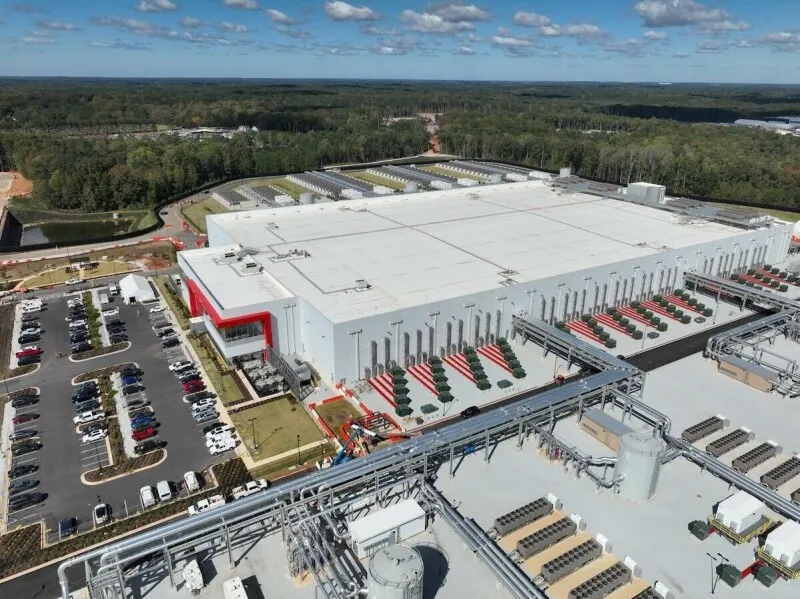
Financial analyst Jefferies tells The Register that only 12 GW of 24 GW of US datacenter capacity scheduled for 2026 is under construction. The gap between announced builds and actual completion threatens power planning, financing timelines, and growth expectations across the sector.
The US datacenter build-out for 2026 looks a lot less certain than the hype cycle suggests. In a research note shared with The Register, financial analyst Jefferies reports that only 12 GW out of 24 GW of datacenter capacity scheduled for 2026 is currently under construction. Translation: half of the capacity the market expects to come online in 2026 is still not actually being built yet.
And if you zoom out, it gets even uglier. Jefferies says 2027/2028 could be worse, with substantial construction of as much as 80 percent of the planned capacity not appearing to have started yet. In datacenter land, that is the difference between hitting a customer’s timeline and missing it by a year, two years, or more, which then cascades into revenue schedules, contract terms, and financing models.
Why the disconnect between “planned” and “under construction”? Jefferies points to a familiar list of bottlenecks that show up again and again in US infrastructure: zoning and or permitting challenges, interconnection setbacks, problems accessing energy supply, labor shortages, and the signing of commercial contracts with end users. Those aren’t abstract risks. They are the operational choke points that decide whether cranes move, whether transformers get installed, and whether campuses can actually absorb new load.
Power is the big headline in the background here because data centers are power-hungry in a way that turns grid timing into a board-level issue. Jefferies highlights that grid connection setbacks have grown severe enough that reports cite seven-year delays. The policy response has followed: the US Energy Secretary directed the Federal Energy Regulatory Commission (FERC) to implement new rules aimed at speeding the process for customers such as datacenters.
Even with regulatory pressure, the market’s estimating problem may be partly self-inflicted. Jefferies highlights duplicative counting that can inflate planned capacity totals, including a dynamic where hyperscalers make multiple requests to various energy utilities. If several utilities are treating early requests as “new build” demand, the pipeline can look bigger than the eventual, committed requirement. Jefferies says it therefore does not expect the majority of the extra load forecast for 2026 and 2027/2028 to materialize.
This is where strategy meets skepticism. Some investor expectations do not reflect real-world constraints, the report says, and Jefferies suggests a more realistic build pace of 15-20 GW of capacity coming online per year, compared with the 40+ GW forecast by some for 2027-28. That gap matters because it changes how fast operators can turn capex into operating income. If the market is pricing growth based on optimistic schedules, the first company to slip on power availability can get stuck paying for downtime while competitors still secure grid access or finalize construction.
So what are operators doing while the grid, permits, and labor catch up? Jefferies points to strategies that aim to bypass or reduce dependence on the slowest part of the system. Behind-the-meter and hybrid models are positioned as solutions to the power problem. “Hybrid” here means datacenters tend to take all they can get from the grid first, then later turn to behind-the-meter sources, typically on-site power generation. The goal is not just resilience, it is to avoid being stuck waiting for interconnection or upgrades to be completed before serving customers.
Jefferies also says the build pipeline is increasingly shifting toward regions with more attractive interconnection and permitting options. The report calls out Texas specifically, noting that Texas had 14 GW of new capacity announced in the second quarter of this year alone. That is the kind of regional reallocation that can reshape local competition, land values, and utility planning. It also signals that “where you build” may matter as much as “how much you announce.”
For executives and boards, the second-order takeaway is blunt: announced capacity should not be treated as a reliable proxy for campus load growth. Jefferies says better indicators include off-take agreements, permitting progress, financing, and a realistic construction timeline. In other words, the market needs to grade the pipeline by execution signals, not by press releases. In a sector where power timing can take years, pretending the timeline is straight-line is how you end up with stranded assumptions, delayed revenue, and angry customers.
This story's Key Insights and Take-aways are locked.
Create a free account to unlock Executive Actions for one credit.
Register to UnlockAlways free for Executives Club members. Join the Club
More in Business

Anthropic’s Levant Alpöge cracks the Jacobian conjecture after 87 years
A Harvard valedictorian used Claude to hit a 1939 breakthrough, but the missing “why” is the real problem.

Uber buys Delivery Hero for nearly $15B, vaulting to top food delivery outside China
The deal doubles Uber's dual-services footprint and pushes a ride-and-eats bundling play into 50 more markets.

Epic and Google drop settlement bid, forcing rival Android app stores by July 22
Google told the court it is ready to carry third-party app stores starting Wednesday, July 22.