
Jensen Huang: 0% chance AI destroys humanity by 2030
Nvidia's CEO calls doomsday warnings 'irresponsible' and explains why he's betting on AI's upside.
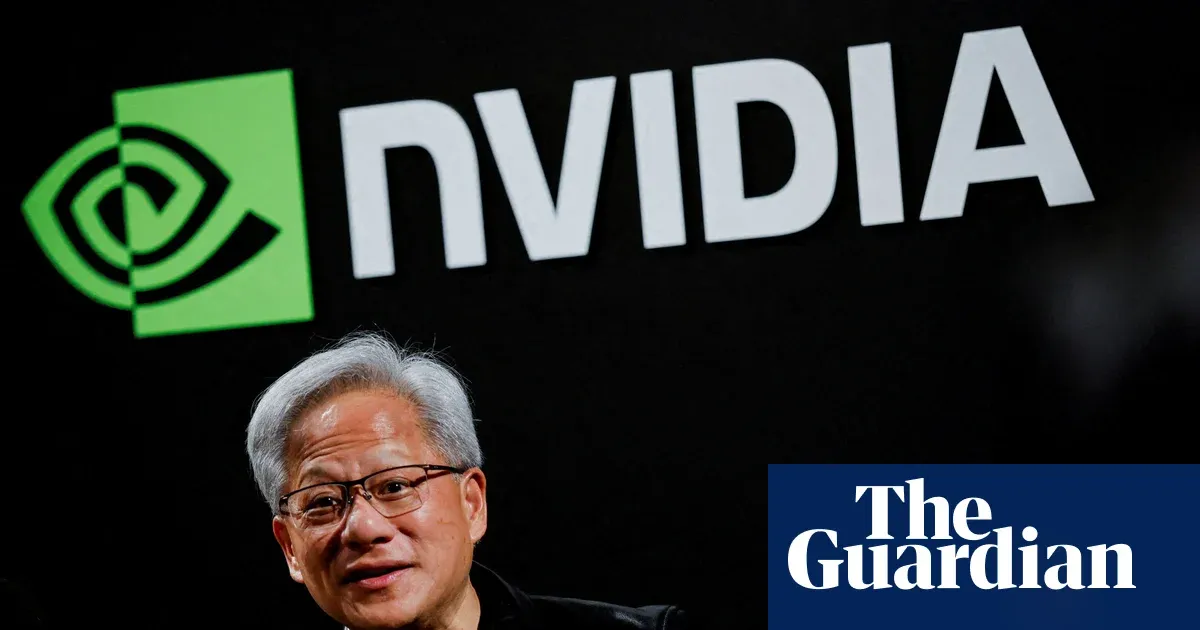
Nvidia CEO Jensen Huang dismissed claims that AI could wipe out humanity by 2030, calling them 'doomsday narratives' and 'irresponsible.' His stance, from the helm of a $5tn chipmaker, signals continued confidence in AI's commercial trajectory despite safety concerns.
Nvidia CEO Jensen Huang has a simple answer for those predicting AI will end humanity within the decade: 0% chance. In a dismissal that cut through the noise, Huang, co-founder and chief executive of the $5tn AI chipmaker, rejected what he called "doomsday narratives" as overblown and "irresponsible." His target: warnings from former Anthropic researcher Jacob Coxon, who has claimed on social media that AI could become "superhuman" and kill off humanity before 2030.
Huang's blunt assessment is more than a personal opinion. It is a strategic signal from the executive whose company supplies the silicon powering the AI boom. Nvidia's chips are the foundation for everything from ChatGPT to autonomous vehicles, and Huang's business case depends on AI being a force for good, not a terminal threat. By publicly dismissing the extinction scenario, he is also defending the industry's most valuable asset: investor confidence.
The clash highlights a widening rift in the tech world. On one side are safety researchers like Coxon, who argue that advanced AI systems could outpace human control and pose an existential risk. On the other are industry leaders like Huang, who see such warnings as distractions from the tangible benefits AI already delivers. Huang's language was pointed: he called the claims "irresponsible," a word that carries weight when spoken by a man whose company is valued at $5tn.
For context, Nvidia's market cap has soared as demand for its GPUs has exploded, making it one of the most valuable companies on Earth. Huang's dismissal of doomsday scenarios aligns with his fiduciary duty to shareholders, but it also reflects a genuine belief that AI's trajectory is manageable. His comments come as Nvidia's $5tn valuation reflects the market's bet on AI's continued growth, and any crack in that narrative could ripple through the entire sector.
The debate is not merely academic. For boards and executives, the question of AI risk shapes everything from hiring to regulation. If doomsday predictions gain traction, they could trigger stricter oversight, higher compliance costs, and a chilling effect on investment. Huang's counter-narrative provides cover for companies to push forward with AI adoption, but it also raises the stakes: if he is wrong, the consequences are catastrophic. Yet Huang's confidence is backed by his company's position at the center of the AI ecosystem, giving him a unique vantage point on the technology's capabilities.
For decision-makers, the takeaway is nuanced. Huang's "0% chance" is a bold claim, but it is also a business position. Executives should weigh his optimism against the caution of researchers who have studied AI safety for years. The truth likely lies somewhere in between, but the market is listening to Huang. Nvidia's stock price, and the broader AI sector, will react to every twist in this narrative.
Ultimately, Huang's dismissal is a bet on human control. He is staking his reputation and his company's future on the idea that AI will remain a tool, not a master. For peers in technology and beyond, the message is clear: the AI revolution is not slowing down, and those who hesitate may miss the wave. But the cost of being wrong is not just financial - it is existential. That is why the debate matters, and why Huang's words will be scrutinized for years to come.
This story's Key Insights and Take-aways are locked.
Create a free account to unlock Executive Actions for one credit.
Register to UnlockAlways free for Executives Club members. Join the Club
More in Technology
AI researcher's 26,000-word claim: Neural nets aren't tangled after all
Nick Cammarata's Goodfire post has the AI world split - if he's right, monitoring frontier models just got a lot easier.

A Chinese rocket deorbited over Minnesota and landed in a farmer's cornfield
Experts tied the fragment to LandSpace's Zhuque-2E, which launched on September 15 and shed debris over the American Midwest after deploying 10 satellites.

JPMorgan Chase deploys first $5B into defense tech and hypersonic missiles
The bank is moving off its balance sheet to back robot factories, hypersonic missiles, and supply chains, signaling a new era of bank-backed military innovation.