

Jensen Huang says $7T AI data-centers will unlock six-figure plumbing and construction jobs
Nvidia’s CEO points to a $7 trillion infrastructure build-out as the antidote to AI’s white-collar job shakeup.
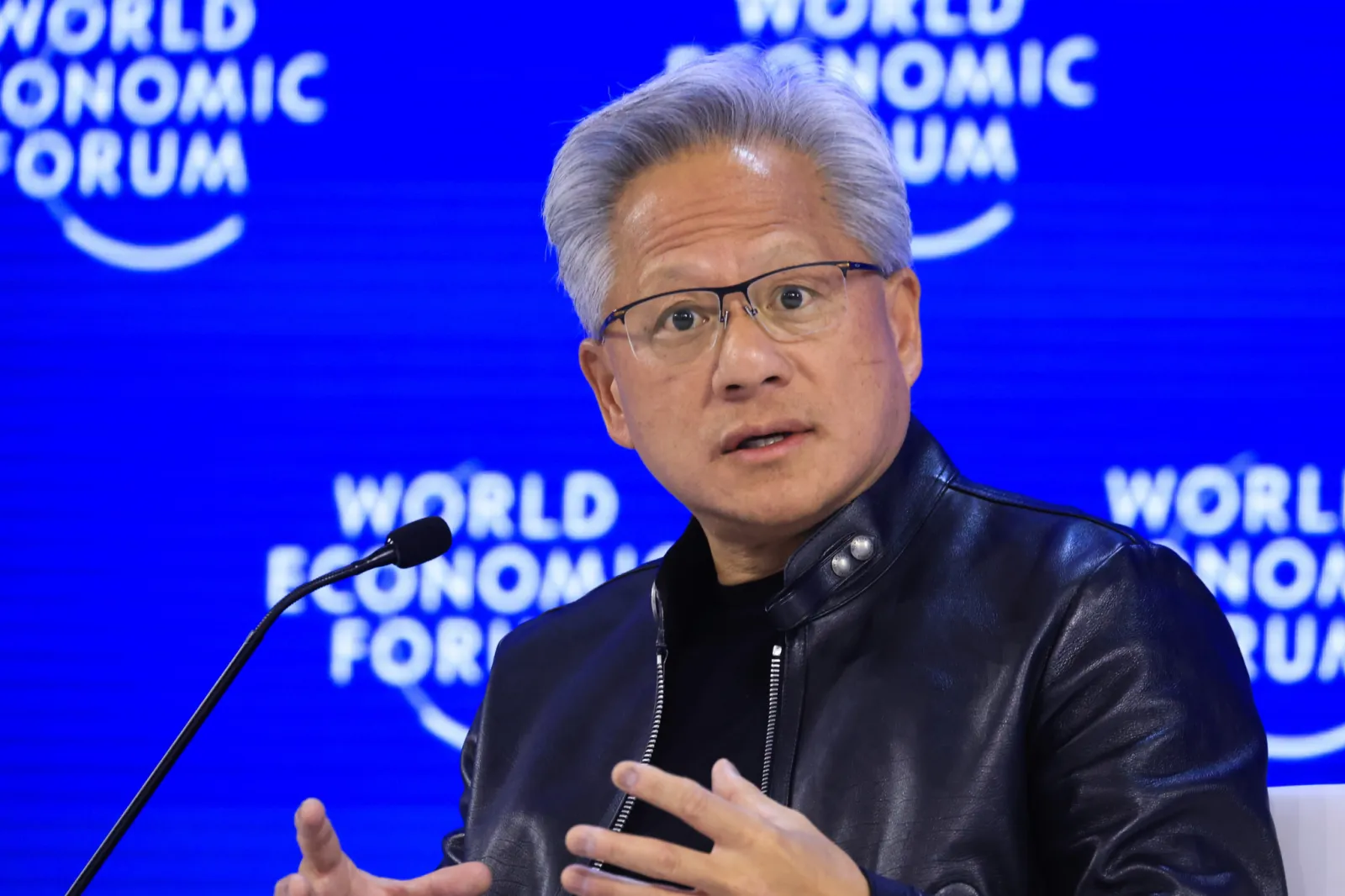
Nvidia CEO Jensen Huang says the race to build AI data centers will create “a lot of jobs” for trades like plumbers, electricians, and construction workers. For decision-makers, the bottleneck is no longer software hiring, but workforce capacity to build the physical AI stack.
Gen Z’s nightmare scenario has gotten louder: AI accelerating automation, corporate America tightening entry-level hiring, and white-collar career ladders looking less sturdy than last year’s intern program. Nvidia CEO Jensen Huang’s counterpunch is blunt and surprisingly physical. In a January conversation at the World Economic Forum in Davos, Switzerland, Huang told BlackRock CEO Larry Fink that “a lot” of six-figure opportunities will be unlocked for trades and construction as AI infrastructure expands.
Why does Huang think this is happening? The center of gravity is capital spending. The story lays out that tech giants are racing to build sprawling data centers, with total global capital outlays totaling $7 trillion by the end of the decade. Huang frames this as “the largest infrastructure build-out in human history,” and he ties the jobs directly to hands-on craft work: “We’re going to have plumbers and electricians and construction and steelworkers.” He also adds a practical point for anyone stuck on degree requirements: “You don’t need to have a PhD in computer science” to earn well, and he suggests many trade roles pay over $100,000 without requiring a college degree.
That framing matters because it tries to solve two problems at once. First, the macro job-market setup is complicated: tariffs, economic uncertainty, and AI are already reshaping hiring plans across corporate America. Second, the industry gap is not just “jobs exist.” It is “jobs exist, but the builders are scarce.” The piece notes shortages for the skills needed to construct what Huang calls chip, computer, and AI factories. And it backs the labor-demand claim with a McKinsey estimate for the U.S.: between 2023 and 2030, the country will need an additional 130,000 trained electricians, plus 240,000 construction laborers and 150,000 construction supervisors.
If you are an executive staring at budgets, procurement calendars, or labor schedules, this shifts the question from “Can we hire for AI?” to “Can we physically build what AI requires?” Data centers are not just software runs on a server. They are electrical grids, steel, construction timelines, and specialized installation work. That is why Larry Fink enters the story as more than a cameo. The article says Fink has echoed concerns about an impending bottleneck, specifically singling out electricity and the risk that labor shortages will cap how fast infrastructure can scale.
Fink’s view gets concrete at CERAWeek, an S&P Global energy conference hosted in Houston. The story says he told an audience there that he has even told members of the Trump team they will “run out of electricians” needed to build out AI data centers because “We just don’t have enough.” The piece also grounds expectations for growth in published labor data: it cites the U.S. Bureau of Labor Statistics saying electrician jobs are expected to grow 9% over the next decade. The implication is simple: demand is rising, timelines are compressed, and supply constraints are not theoretical.
This is where CEO optimism meets CEO realism, and the gap between them is the story. Huang has repeatedly argued that skilled craft work will boom. In 2025, he told Channel 4 News in the U.K. that “the skilled craft segment of every economy is going to see a boom” and that “You’re going to have to be doubling and doubling and doubling every single year.” That optimism stands in contrast to warnings from other top executives about AI hollowing out white-collar entry points.
Ford CEO Jim Farley is used as the counterweight. The article says Farley has cautioned that AI is hollowing out traditional entry points even as education systems funnel students toward four-year degrees. At the Aspen Ideas Festival in 2025, Farley said, “There’s more than one way to the American Dream, but our whole education system is focused on four-year [college] education,” and he argued hiring an entry worker at a tech company has fallen 50% since 2019. He also claimed AI is “gonna replace literally half of all white-collar workers in the U.S.” Farley’s concern is not just disruption. It is mismatch: he warns the country also lacks the blue-collar workforce needed to back a manufacturing and infrastructure revival.
The operational stakes are spelled out in Farley’s additional comments. In September 2025, he told Axios, “I think the intent is there, but there’s nothing to backfill the ambition,” and he asked, “How can we reshore all this stuff if we don’t have people to work there?” Then the story adds that in June of the same year, Farley said the U.S. was already short 600,000 factory workers and 500,000 construction workers. Read alongside Huang and Fink, the point is hard to miss: AI may create new demand for labor, but it also intensifies competition for scarce labor across multiple infrastructure categories.
For boards, CEOs, and investors evaluating AI as an economic engine, this is a second-order risk and opportunity rolled into one. The opportunity is that trades could be pulled back into the center of the growth story, with roles paying over $100,000 and pathways that do not rely on a four-year degree. The risk is that build-outs can hit ceilings if the workforce pipeline does not scale fast enough, especially in electrical and construction trades that data centers require at scale. In that world, AI strategy is partly a talent strategy, but also a build-rate strategy: how quickly can you convert capital into physical capacity, on time and within electrical constraints. Huang’s pitch to Davos is essentially that the physical build-out will create jobs and that those jobs will be six-figure. The deeper message for decision-makers is that “AI infrastructure” is now a labor market problem, not only a technology procurement problem.
This story's Key Insights and Take-aways are locked.
Create a free account to unlock Executive Actions for one credit.
Register to UnlockAlways free for Executives Club members. Join the Club
More in Business

Anthropic’s Levant Alpöge cracks the Jacobian conjecture after 87 years
A Harvard valedictorian used Claude to hit a 1939 breakthrough, but the missing “why” is the real problem.

Uber buys Delivery Hero for nearly $15B, vaulting to top food delivery outside China
The deal doubles Uber's dual-services footprint and pushes a ride-and-eats bundling play into 50 more markets.

Epic and Google drop settlement bid, forcing rival Android app stores by July 22
Google told the court it is ready to carry third-party app stores starting Wednesday, July 22.