

Jensen Huang tells Washington not to ban Chinese open-source AI like Kimi
Nvidia’s CEO argues “excellent” open models should be used, not restricted, because demand means more chips, data centers, and services.
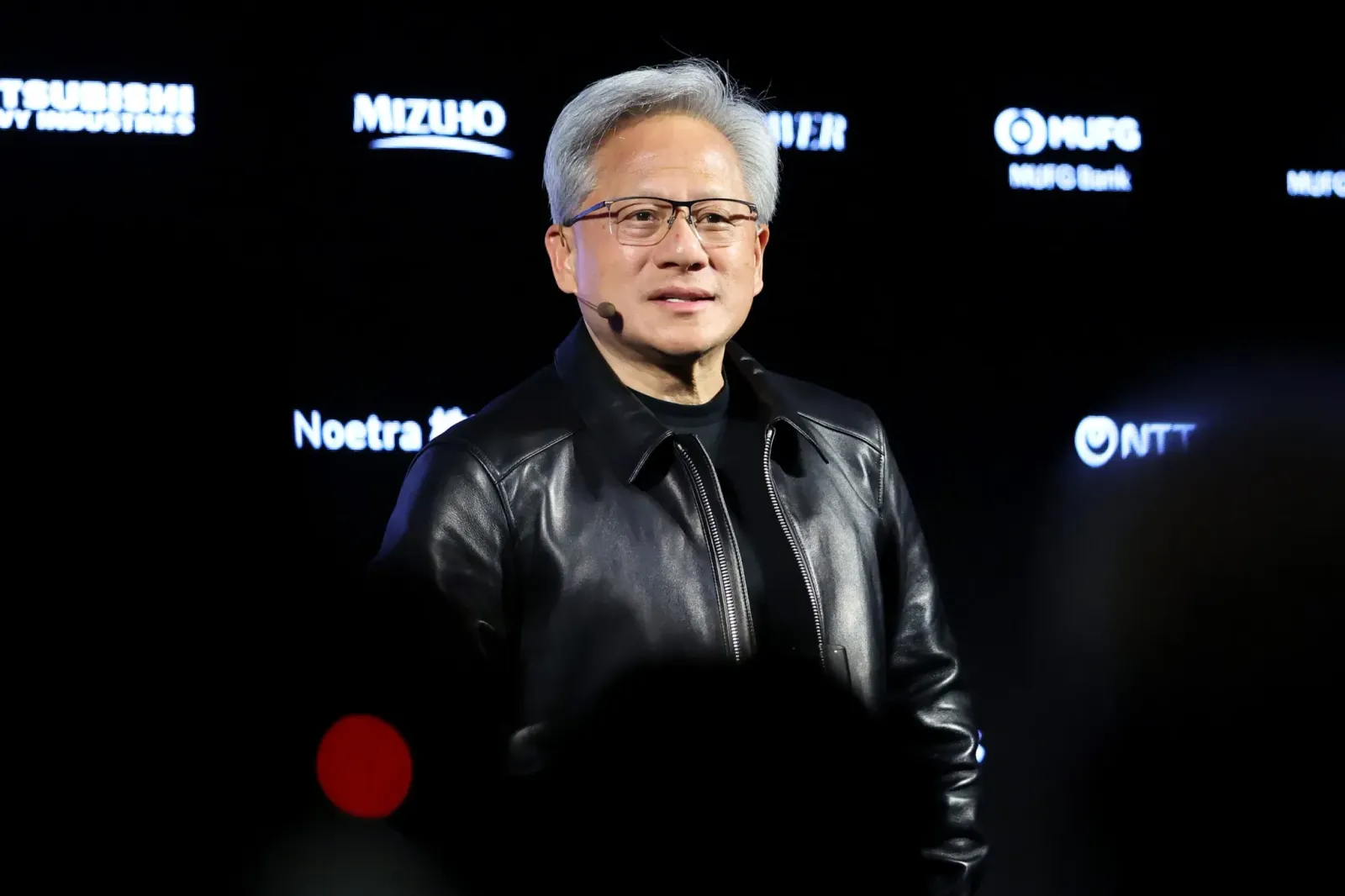
Nvidia CEO Jensen Huang, speaking to Axios Tuesday, urged the U.S. not to ban Chinese open-source AI models and called models like Moonshot’s Kimi “excellent.” His stance directly challenges a White House review reportedly considering restrictions and conditions on U.S. companies using Chinese AI.
Jensen Huang is pushing back against a U.S. panic over Chinese open-source AI, and he picked an unusually direct target: Washington’s idea that these models might need bans or special restrictions. In an interview with Axios Tuesday, Nvidia’s CEO said the U.S. should not ban “excellent” open-source models, specifically arguing that “Open-source models that are excellent should be used.”
The timing matters. Moonshot’s open-source model Kimi K3 raised alarms in the U.S. last week, prompting the question of whether open models are too risky to deploy at scale. Huang’s answer is blunt: he rejects the claim that these models are a backdoor for China’s government, calling it a “misconception,” and emphasizes that because models are downloadable and guardrails are customizable, the risk story is not as automatic as policymakers fear.
So what exactly is Washington worried about? Fortune reports that the White House has reportedly considered restricting the use of Chinese AI models in part over surveillance concerns, and also over the possibility that they could threaten the viability of homegrown AI companies. Axios reported that the White House considered using executive power to impose conditions on U.S. companies looking to use Chinese AI models, including forcing companies to guarantee security and accept liability if a breach occurs. Fortune also notes the White House did not immediately respond to Fortune’s request for comment.
Huang’s counterargument is not that security is irrelevant. It is that the premise for a ban is flawed. He stressed that these models are downloadable and that the guardrails that can be put on them are customizable. In other words, the same flexibility that makes open-source attractive to developers also gives adopters leverage to implement controls suited to their own environments, rather than relying on a one-size-fits-all policy that treats open models as uniquely dangerous.
But underneath the policy debate is an incentive story that matters to anyone funding, buying, or building AI systems. Huang argued that if open AI works, it will increase overall usage. “If there's great AI, even if it's open, wherever it comes from, there will be more use,” he said. “Whenever there's more use, you'll have to sell a lot more NVIDIA computers. We'll have to build more data centers. We'll have more services.” This is a market reality CEOs and CFOs understand instantly: more deployment translates into more compute demand, more infrastructure spend, and more adjacent services.
That point becomes concrete when you look at the cost comparisons Fortune included. The open-source model Kimi K3, released on July 16, is Moonshot’s most advanced open-source model to date. It has been able to compete in some coding tests with Anthropic’s most advanced publicly available model, Fable 5. Price is where the pressure really lands. Kimi K3 costs $15 per 1 million output tokens, while Anthropic’s Fable 5 costs $50. Another popular Chinese model, DeepSeek V4, costs 87 cents for the same output. Fortune previously reported those figures, and they help explain why U.S. companies, including AI coding startup Cursor, are increasingly turning to open-source alternatives from China to save on the high costs associated with American AI models.
The open versus closed model divide is also central to the operational tradeoffs Huang and others are implicitly weighing. Closed AI models like Anthropic’s Fable 5 or OpenAI’s GPT-5.6 Sol are controlled by the companies that create them. They typically offer users less freedom to inspect or modify how they work, but they can be easier to deploy because the developer operates and maintains the model. Open-source models, by contrast, can be downloaded and adapted for specific needs, but they require more time and money to set up. Companies may prefer open-source models because they can run them on their own systems, which can allow more control over sensitive data. At high usage, open models can be cheaper, but they can also require investment in powerful computers and ongoing maintenance.
This is where second-order consequences show up for boards and executives. If the White House moves toward conditions or restrictions on Chinese open models, it could slow adoption for some companies, but it will not necessarily stop the underlying demand for AI capabilities. It could instead push more buyers into hybrid strategies: using open models selectively, demanding contractual and security guarantees, or accelerating internal build-outs and deployment infrastructure to maintain control. Huang’s argument implies that even if Washington restricts the flow in some form, the category-level demand for “great AI” may still rise. And if adoption rises, Nvidia’s thesis is that compute, data centers, and services scale with it.
For decision-makers tracking the competitive landscape, Huang’s message lands as a direct challenge to the assumption that restricting open-source models reduces risk without reducing momentum. Huang insisted these Chinese models are “excellent” and that open models should be used when they are excellent. He also argued the world needs both open-source models and closed models made by OpenAI and Anthropic. In the short term, the U.S. policy debate will likely hinge on surveillance and liability concerns, including the reported idea of executive-power conditions. In the medium term, the business question is simpler and harder: will restrictions reshape where AI compute is bought, or will they primarily determine who bears the compliance and infrastructure cost while usage continues to expand?
This story's Key Insights and Take-aways are locked.
Create a free account to unlock Executive Actions for one credit.
Register to UnlockAlways free for Executives Club members. Join the Club
More in Business

Anthropic’s Levant Alpöge cracks the Jacobian conjecture after 87 years
A Harvard valedictorian used Claude to hit a 1939 breakthrough, but the missing “why” is the real problem.

Uber buys Delivery Hero for nearly $15B, vaulting to top food delivery outside China
The deal doubles Uber's dual-services footprint and pushes a ride-and-eats bundling play into 50 more markets.

Epic and Google drop settlement bid, forcing rival Android app stores by July 22
Google told the court it is ready to carry third-party app stores starting Wednesday, July 22.