
Jill Biden calls media coverage a “double standard” versus Trump during memoir Q&A
The former first lady says the press treated her husband differently, and it reveals how political narratives get policed.

Former first lady Jill Biden accused the media of a “double standard” in coverage of her husband, former President Biden, compared with President Trump. Her comments came during a Q&A while promoting her memoir last month.
Former first lady Jill Biden accused the media of applying a “double standard” in its coverage of her husband, former President Biden, compared with President Trump. She raised the issue during a Q&A session while promoting her memoir last month, after being asked about media coverage during her husband’s presidency.
What she said matters because it goes beyond personal grievance. Jill Biden framed the question as a test of consistency in how the press covers political leadership, with the implicit comparison that Trump and Biden were not held to the same standard of scrutiny. In a time when political reporting influences everything from donor confidence to election narratives, “double standards” is not just a talking point. It is a claim about the incentives powering coverage, who gets amplified, and who gets criticized.
To understand why this moment lands, zoom out to how presidential coverage works in practice. When a president is in office, media attention becomes a kind of public infrastructure. It shapes how quickly controversies spread, how long storylines stick, and what issues are treated as urgent versus routine. That system does not operate in a vacuum. Different outlets chase different signals: audience engagement, access to sources, and credibility with key constituencies. So when a prominent figure like Jill Biden argues the press is inconsistent, she is pointing at the gap between what journalists say they do and how political audiences experience outcomes.
Her memoir promotion adds another layer. Books are not just personal branding; they are also narrative control. By using a Q&A format, she did not simply make a broad accusation. She tied it directly to the period of “her husband’s presidency,” the exact timeframe where media frames can feel most consequential to supporters and opponents alike. And that is where the stakes for decision-makers show up, even for people not directly in politics.
In business and governance circles, leadership narratives are a real asset. Investors, regulators, and boards pay attention to perceived stability, seriousness, and competence. Media coverage is one of the pathways that turns events into reputational momentum. If an administration is repeatedly covered in a certain way, that can influence everything from how stakeholders interpret policy proposals to how quickly reputational risk becomes compliance risk. Even when no new regulation is announced in the moment, the tone around leadership can change how risk is priced.
This is also a story about how arguments travel from politics into broader institutions. Claims of “double standards” are often part of a larger fight over legitimacy. If one side convinces audiences that standards differ by political identity, it can make ordinary journalistic decisions look like political choices. That, in turn, can raise friction between media organizations, public officials, and the public. The result is a more polarized information environment, where trust becomes less about individual stories and more about whether the audience believes the overall system is fair.
There is a strategic implication for anyone running an organization with high public visibility. When prominent figures publicly question media fairness, the debate can pull in adjacent communities, including corporate communications teams, trade groups, and advocacy organizations. Boards and executives then have to manage not only the substance of decisions, but also the narrative surrounding those decisions. In a climate where media coverage is treated as a battleground, “perception management” becomes “expectation management,” and the cost of being slow or unclear can rise.
Finally, consider the second-order effect for peers in similar roles. Jill Biden’s comments are a reminder that former officials do not disappear after leaving office. They keep showing up, using platforms like memoir promotions and Q&As to shape how history is interpreted. For anyone who has to operate under intense scrutiny, the lesson is straightforward. Today’s headlines become tomorrow’s reference points, and the public fight over standards can outlast the news cycle.
The source confirms her core claim: Jill Biden accused the media of a “double standard” in coverage of her husband, former President Biden, compared with President Trump. She made that argument during a Q&A session while promoting her memoir last month, in response to a question about media coverage during her husband’s presidency.
This story's Key Insights and Take-aways are locked.
Create a free account to unlock Executive Actions for one credit.
Register to UnlockAlways free for Executives Club members. Join the Club
More in Politics
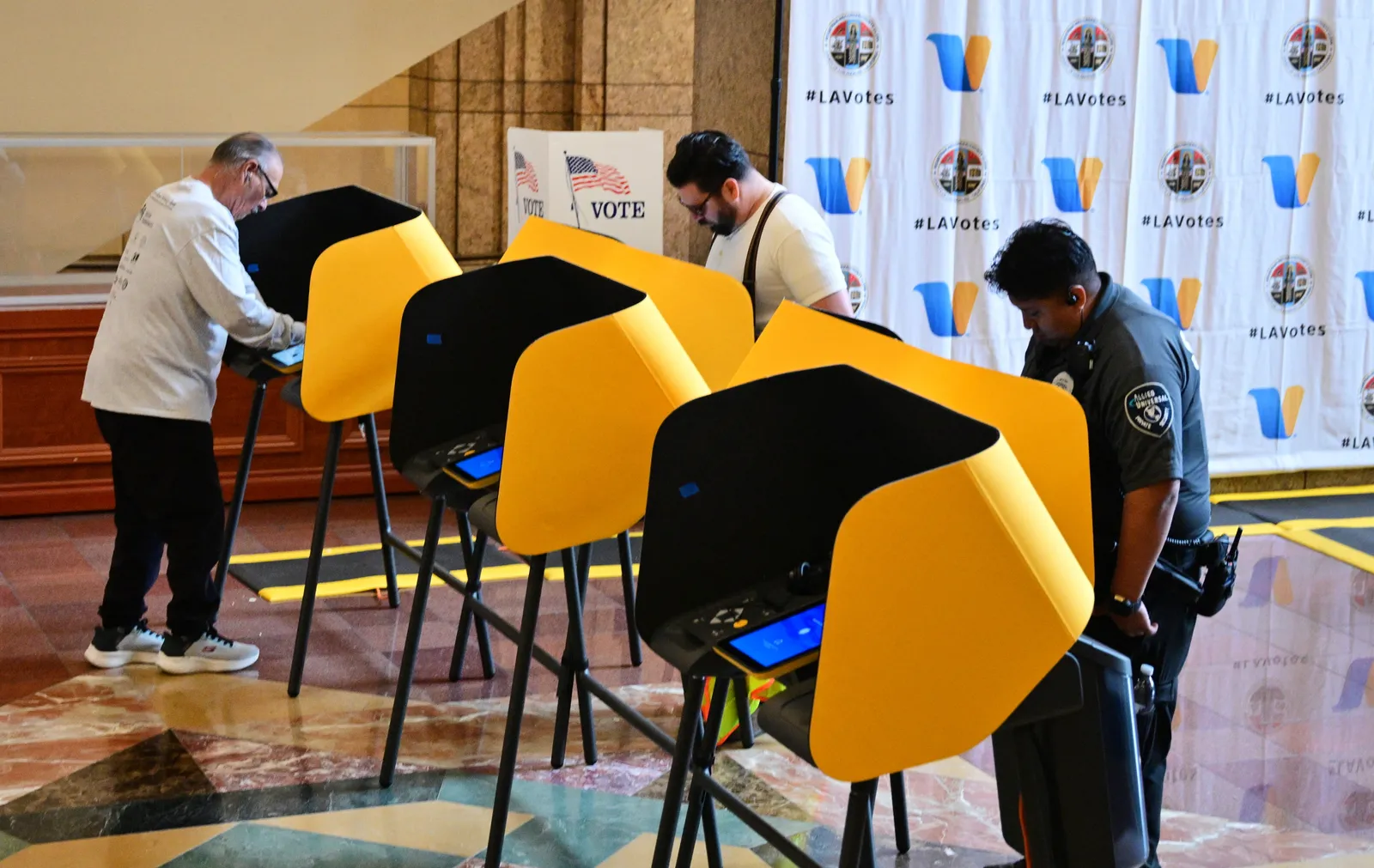
LA County: DOJ's 20,000 'noncitizen' voter list is 'unreliable,' includes U.S.-born
Preliminary review by Los Angeles County election officials finds errors in the federal list, raising the stakes for voter roll integrity ahead of November.
Trump's $1.5B Pentagon chip investment lands in North Carolina
A $1.5 billion defense infusion for North Carolina chipmaking signals a new era of Pentagon-backed reshoring - here's what it means for the industry.

Nigeria confirms first Ebola case in Abuja, a woman just off a Uganda flight
Health Minister Muhammad Ali Pate says the patient flew in from Uganda, putting Africa's latest outbreak on Nigeria's doorstep.