
Jim Bridenstine takes Quantum Space public for $1.2B to build spacecraft
A Maryland startup led by the former NASA chief is using a merger with a blank-cheque company to raise funding.
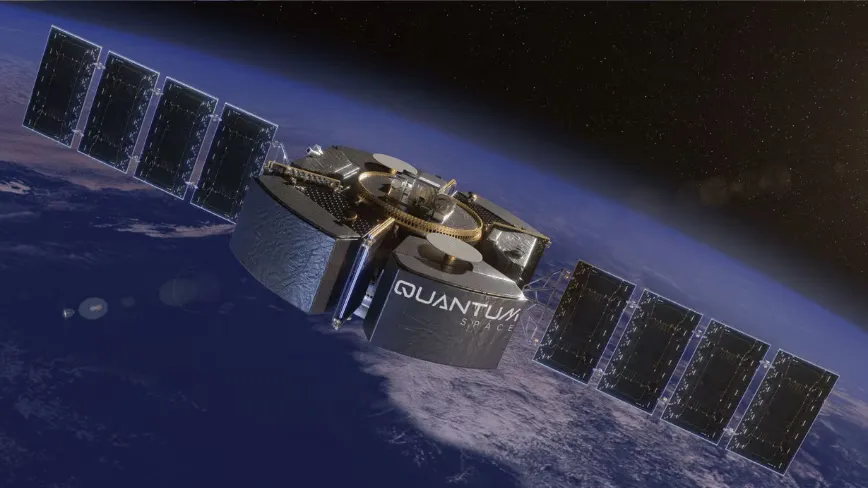
Jim Bridenstine, the former NASA chief now leading Quantum Space, is taking the Maryland spacecraft startup public via a merger with a blank-cheque company. The deal is structured at a $1.2 billion valuation, shifting space hardware financing from purely government contracts toward public-market capital.
Jim Bridenstine, the former NASA chief who previously shaped America's space ambitions, is now betting he can build the hardware for the next phase of the space race. The vehicle: Quantum Space, the Maryland startup he leads, is taking itself public through a merger with a blank-cheque company. The price tag being discussed is $1.2 billion, meaning public investors would be underwriting the shift from “who gets the contract” to “who funds the factory.”
For decision-makers, this is not just a space-industry headline. It is a capital-markets moment: a former top federal space executive is moving a spacecraft company into the public markets, with a capital injection logic that typically differs from government procurement timelines and budgeting cycles. In practice, that changes what matters in the next 12 to 24 months. Instead of only proving technical progress to agencies, Quantum Space would need to satisfy public-market expectations for milestones, funding runway, and execution discipline. If that sounds demanding, it is, and the $1.2 billion figure raises the stakes for how quickly the company can turn early momentum into credible manufacturing and flight-readiness.
Blank-cheque mergers are their own ecosystem. They are a pathway for a private company to access public-market liquidity without going through the classic IPO process. The reason boards and founders like them is speed and certainty around raising capital, but the trade-off is scrutiny: investors will quickly demand clarity on governance, shareholder alignment, and the ability to convert a mission into repeatable, fundable milestones. For a spacecraft builder, where development work can be long and expensive, the “story” has to match the “schedule,” because public shareholders do not wait quietly for years.
Bridenstine's leadership is the connective tissue between two worlds that usually move at different speeds. In his previous role running NASA, the priorities and rhythms were shaped by government strategy, procurement, and oversight. Quantum Space, by contrast, is targeting the “next space race” hardware buildout using public funding. That combination is strategically interesting because space is not just a technology problem. It is also a systems problem, a supply chain problem, and, increasingly, a financing problem. When public capital enters, it can accelerate scale if the company can industrialize. But it can also punish slippage if technical risk collides with market timetables.
There is also a board-level angle here. When a company goes public through a merger with a blank-cheque firm, the board composition and the deal structure matter, because they determine how responsibilities are allocated between the operating company and the public-market shell. For executives in adjacent sectors, the question is: does this deal raise the bar for governance and transparency in space hardware startups? If public investors are stepping in at a $1.2 billion valuation, then future investors may expect more standardized reporting on technical milestones, cost burn, and execution benchmarks.
Regulatory framing matters too, even when the story is primarily capital markets. Space hardware and launches sit at the intersection of technical regulation, export controls, safety requirements, and licensing pathways. While the source does not list specific regulatory steps, the broader reality is that regulatory complexity does not disappear when a company becomes public. If anything, going public tends to increase the need for formal compliance documentation, risk disclosure, and stakeholder reporting. That means Quantum Space would likely need to translate operational risk into investor-grade communication, in a way that government processes sometimes handle differently.
Second-order implications reach beyond Quantum Space and Bridenstine. A high-profile path like this can signal a broader appetite for space industrialization funded through public markets, not only through agencies and strategic partners. If the market rewards early signaling, it could encourage more spacetech founders to pursue similar routes. If it penalizes execution, it can make public capital more selective, potentially raising the bar for what qualifies as “investment-ready” in spacecraft manufacturing.
In short, this is a bet that the next space race does not have to be financed entirely through government budgets. Bridenstine is trying to turn a Maryland company into a public-market hardware platform at a $1.2 billion scale, and the merge with a blank-cheque company is the on-ramp. For anyone running, funding, or investing in the space stack, the question is now immediate: can the company deliver public-market discipline and spacecraft execution at the same time, or will technical risk and timeline reality take the wheel?
This story's Key Insights and Take-aways are locked.
Create a free account to unlock Executive Actions for one credit.
Register to UnlockAlways free for Executives Club members. Join the Club
More in Business

Anthropic’s Levant Alpöge cracks the Jacobian conjecture after 87 years
A Harvard valedictorian used Claude to hit a 1939 breakthrough, but the missing “why” is the real problem.

Uber buys Delivery Hero for nearly $15B, vaulting to top food delivery outside China
The deal doubles Uber's dual-services footprint and pushes a ride-and-eats bundling play into 50 more markets.

Epic and Google drop settlement bid, forcing rival Android app stores by July 22
Google told the court it is ready to carry third-party app stores starting Wednesday, July 22.