

Joan Birman and colleagues solve a century-old braid mystery by cracking Burau geometry
A 99-year-old mathematician and two coauthors produce a proof that reshapes how braids behave in space.
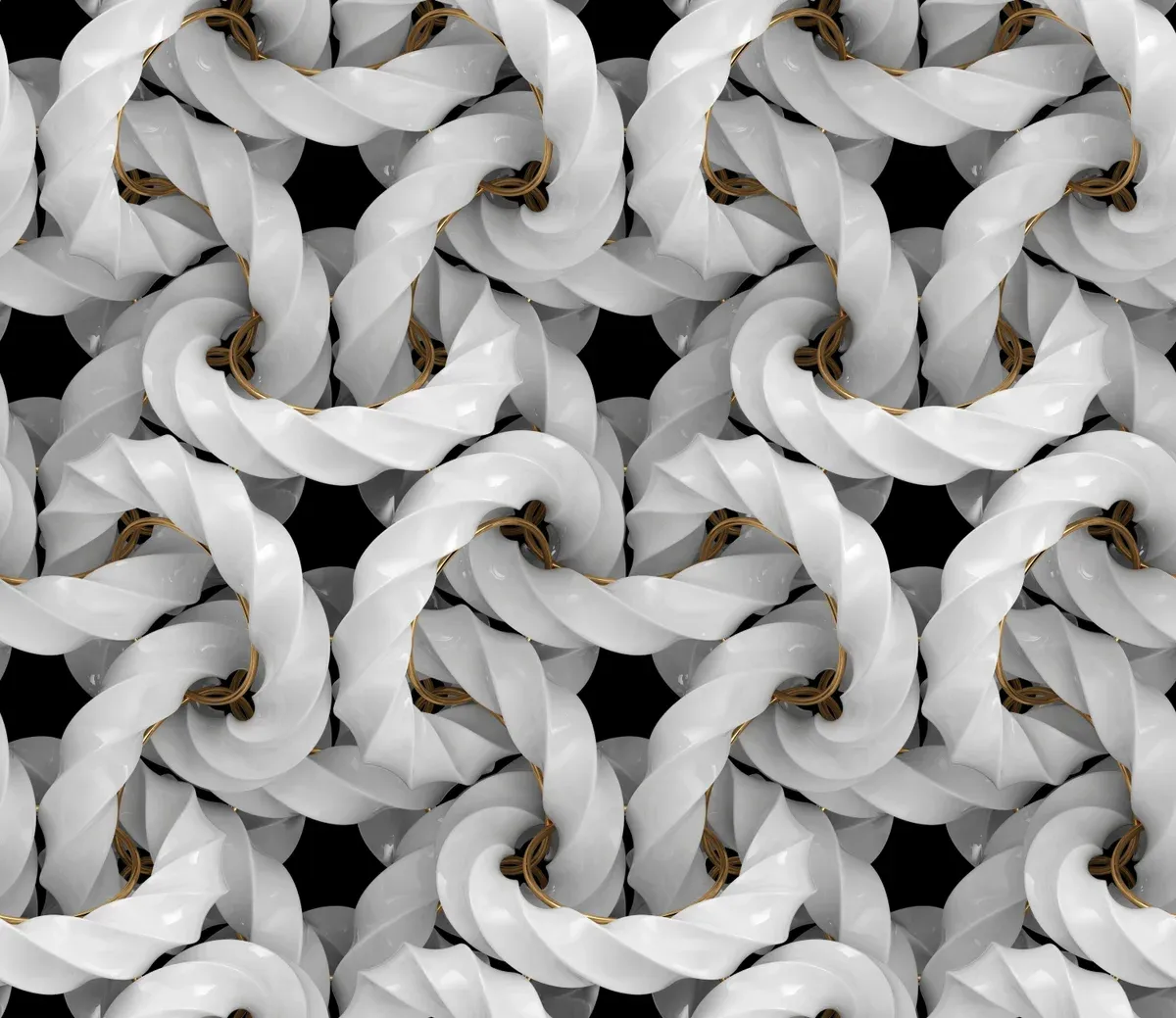
Joan Birman, who popularized the Burau representation problem decades ago, and two colleagues have a new proof. Their result reveals brand new insights into the geometry of braids and untangles a long-standing braid mystery.
Joan Birman is 99 years old, and she is still doing the kind of work that makes mathematicians rewire their mental models. Long ago, Birman popularized the Burau representation problem. Now she and two colleagues have a proof that reveals brand new insights into the geometry of braids, including progress on what the article describes as a century-old braid mystery.
The key point for readers who do not live and breathe braid theory: this is not just a niche win for specialists. The Burau representation problem has functioned for decades as a gateway question. It is the kind of problem that sits at the intersection of how abstract algebra describes motion and how geometry encodes structure. Birman and her coauthors are not only addressing that gateway, they are using the proof to open a new window into what braids look like when you treat them as geometric objects rather than just symbolic diagrams.
To understand why this matters beyond the joy of solving a hard problem, it helps to zoom out to how braid theory tends to travel. In math and theoretical computer science, braids often act like a universal language for “systems with interleaving parts.” Even when the immediate result is purely mathematical, the second-order effect is that the proof can change what other researchers try to prove next, and which tools they reach for when modeling complex processes.
Think of incentives like this: once a problem is widely known, it creates a sort of gravitational field. People build partial results, alternate approaches, and conditional reasoning around it. That is especially true when the problem becomes a landmark, like the Burau representation problem did after Birman popularized it decades ago. So when an established figure and collaborators provide a proof that reveals new geometric insights, it does not just settle one question. It can reposition the entire landscape of related questions, because the geometry of braids is a structural input. If you change the structural input, you can change the downstream “engineering” of further results.
Executives and board members do not need to compute braid representations to appreciate what a proof like this can signal about how knowledge actually advances. In many technical fields, breakthroughs happen when someone links two previously separate viewpoints. Here, the article frames the advance as new insights into the geometry of braids, which suggests that the proof is doing more than answering a yes-or-no question. It is likely clarifying the shape of the space in which the braid problem lives. That is the sort of conceptual clarification that can reduce the risk of dead ends for other teams, because it sharpens what “success” should look like.
There is also a practical reason to pay attention to fundamental math, even in an era dominated by applications. Regulators and policymakers often respond to technical capability after it becomes real enough to matter. But technical capability does not appear out of nowhere. It is built on layers of theoretical development, sometimes decades earlier. Braids, representations, and geometry are part of the intellectual infrastructure that later supports ideas in communications, cryptography, and modeling of complex systems, even if any single proof has no direct regulatory trigger by itself. The point is timing: the lag between foundational proof and downstream use is long, which means the “value window” is usually missed if you only track headlines at the application layer.
So what should decision-makers take from this? Not that every organization should fund braid theory. Rather, it is a reminder that old problems can still produce fresh leverage, especially when they are revisited by researchers who understand the terrain deeply. Birman popularized the Burau representation problem decades ago, and now, together with two colleagues, she has a proof that reveals brand new insights into the geometry of braids and helps unravel a century-old braid mystery. That combination, age and momentum, is its own signal: expertise plus persistence can unlock new structure long after the early waves of attempts.
For peers in research leadership, venture, or technical strategy, the strategic stake is straightforward: breakthroughs reshape roadmaps. When a century-old mystery gets unraveled in a way that shifts geometric understanding, it can redirect the next generation of attempts across the field. In knowledge domains, the winners are often the teams that keep a line of sight to fundamental work, because the payoff arrives quietly first, then accelerates once the community can build on the new framework.
This story's Key Insights and Take-aways are locked.
Create a free account to unlock Executive Actions for one credit.
Register to UnlockAlways free for Executives Club members. Join the Club
More in Science

Alaska's 1,580-foot tsunami had warning signs. Scientists just found them.
Rapid glacier retreat, heavy rainfall, and thousands of tiny tremors preceded Alaska's 1,580-foot tsunami, a warning for every coastal community in a warming world.

The rare mutation that lets high-risk brains dodge Alzheimer's
Scientists found a natural defense against protein buildup, opening a new path to preventive treatments.

3,000 steps a day may halve Alzheimer's decline, study finds
New research links a modest daily walk to less tau buildup and nearly half the cognitive and functional decline, even for those with early signs.