
John Oliver locks HBO through late 2027 as Warner tries to buy Paramount Skydance
The Last Week Tonight extension signals how premium media anchors contracts while M&A talks churn in the background.
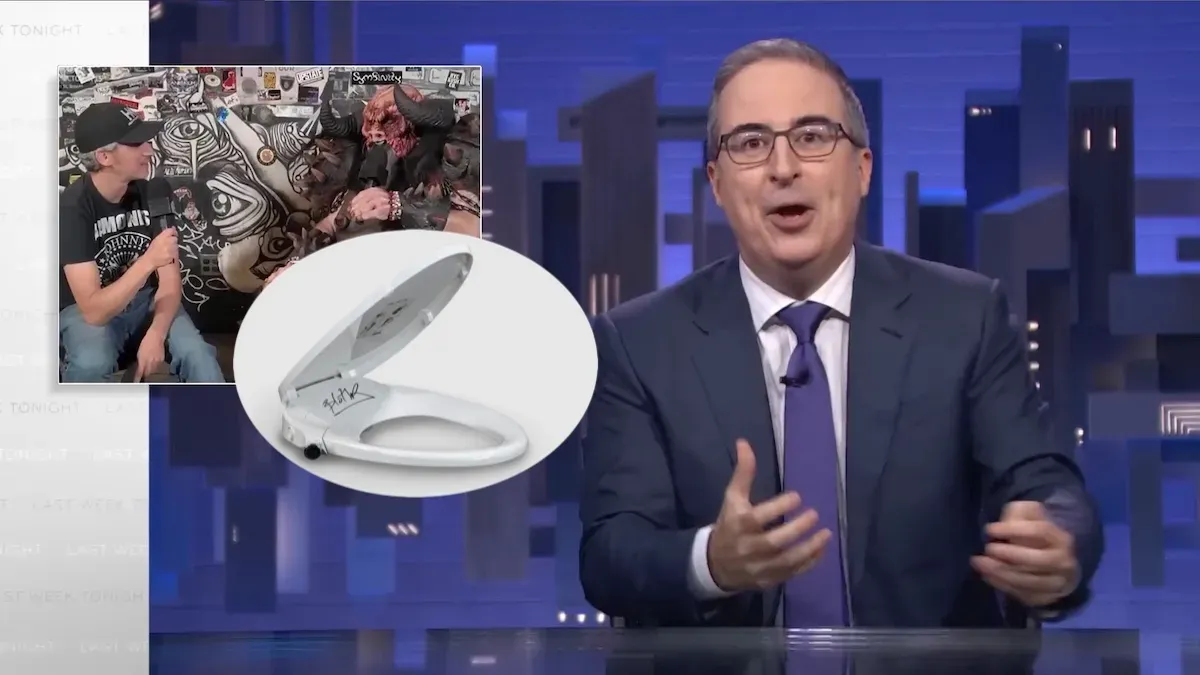
John Oliver has extended his HBO contract through late 2027, keeping Last Week Tonight With John Oliver on the network at least through its 14th season. The timing matters because Warner Bros. Discovery is attempting to acquire Paramount Skydance, and the stability of top talent affects post-deal leverage.
John Oliver has extended his HBO contract through late 2027, which means Last Week Tonight With John Oliver will run on the network for at least its 14th season. For an industry that treats TV talent like a constantly negotiable asset, that date is a rare kind of certainty: the show is not just “renewed for the next year,” it is effectively scheduled through a specific late-2027 endpoint.
The more interesting part is what is happening around that certainty. The extension comes amid Warner Bros. Discovery's attempted acquisition of Paramount Skydance. In other words, even as one of the biggest media companies in the world tries to reshape its portfolio through a major transaction, it is also publicly securing a marquee creative relationship that could otherwise become a bargaining chip. Executives hate uncertainty when they are managing both creative continuity and deal risk. Oliver’s renewed deal is continuity on one front, while the M&A story plays out on the other.
To understand why this matters, zoom out to how premium cable and streaming ecosystems typically build leverage. The business is powered by “must-have” programming that keeps audiences from switching, advertisers from hesitating, and distributors from renegotiating from a weaker position. For HBO, Last Week Tonight With John Oliver is not just a show. It is a recurring, high-signal brand asset. A long extension helps stabilize that asset. It also reduces the operational chaos that can come when leadership teams are focused on mergers, integrations, and regulatory scrutiny. Even if you are winning the acquisition fight, you still have to run the day-to-day.
Now consider the deal context that the source points to: Warner Bros. Discovery's attempted acquisition of Paramount Skydance. When a large media acquisition is underway, the winners and losers are not only the companies at the top of the headline. Contracts with top talent can become negotiation points. Buyers may want flexibility to align programming slates with their emerging strategy. Sellers may want to reduce future risk by locking in terms that survive uncertainty. A renewal can signal that at least some side of the table prefers stability over opportunistic renegotiation.
Regulatory background also sits in the background here, even though the source does not detail specific filings or regulators. Big media M&A in the United States and elsewhere usually attracts scrutiny because it can affect competition, pricing power, and content distribution. Even without knowing the exact stage of the Warner-Paramount Skydance effort, the fact that this acquisition attempt is ongoing is enough to explain why executives would care about talent contract timelines. If a deal drags, stalls, or changes shape, long-held creative assets can either become safety rails or bargaining casualties. Locking key shows through late 2027 reduces the number of surprises management has to handle during the uncertainty window.
For HBO specifically, there is another practical incentive: programming continuity supports everything from internal scheduling to marketing cycles and production planning. A talk-style news and comedy format like Last Week Tonight is built on cadence. If the network had faced an uncertain exit timeline for Oliver, the replacement question would have been unavoidable. By extending the contract through late 2027, the network effectively buys time to plan staffing, production, and future strategic positioning. That time is valuable in an environment where corporate strategy is in flux because of M&A activity.
The broader industry message is subtle but real. When a company is pursuing a major acquisition, the market watches for whether the acquirer can keep the creative engines running. A high-profile renewal does not make the merger itself succeed or fail. But it does reduce operational risk and helps preserve the value of the existing portfolio during a period when attention and resources are often diverted to the deal process. For executives at other media companies, the takeaway is uncomfortable in the best way: talent security can become a competitive differentiator precisely when corporate strategy is being stress-tested.
This story's Key Insights and Take-aways are locked.
Create a free account to unlock Executive Actions for one credit.
Register to UnlockAlways free for Executives Club members. Join the Club
More in Business

Leopold Aschenbrenner’s $45B AI hedge fund plunged, losing most value in days
Former OpenAI researcher Leopold Aschenbrenner watched Situational Awareness unravel quickly, forcing AI fund managers to ask what risk they missed.

Anthropic’s Levant Alpöge cracks the Jacobian conjecture after 87 years
A Harvard valedictorian used Claude to hit a 1939 breakthrough, but the missing “why” is the real problem.

Uber buys Delivery Hero for nearly $15B, vaulting to top food delivery outside China
The deal doubles Uber's dual-services footprint and pushes a ride-and-eats bundling play into 50 more markets.