
John Ricchio says Rockstar skips GTA 6 PC launch to start with constraints
Former Rockstar producer explains why PC ports lose priority, and why “shrinking is harder than extending.”
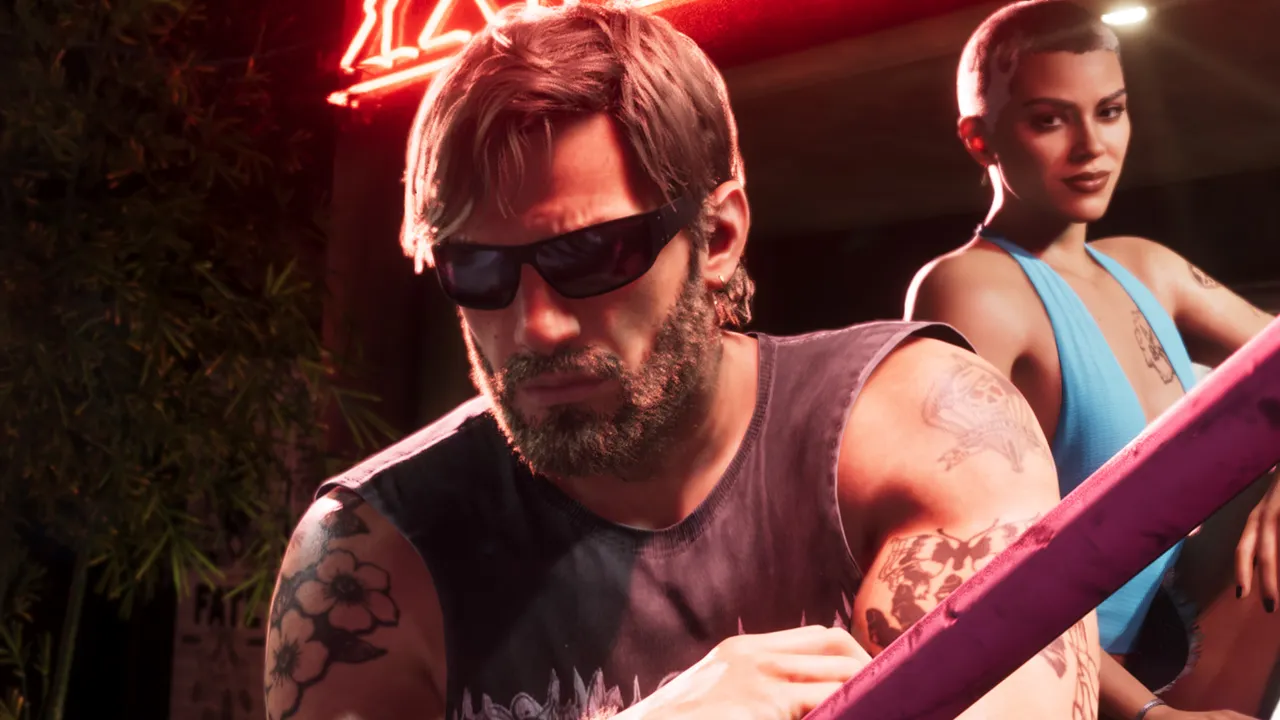
Former Rockstar producer John Ricchio argues Rockstar has not skipped PC because it does not care about PC, but because porting is a prioritization tradeoff against core development for other releases. His explanation, given in an interview with Reece 'Kiwi Talkz' Reilly on YouTube, frames the GTA 6 PC delay as an engineering and business-lift issue rather than an anti-PC stance.
Rockstar is not delaying GTA 6 on PC at launch because it “doesn’t care about PC.” Former Rockstar producer John Ricchio says the choice comes down to how development works when you start with one set of constraints, then scale to others. In his words, “Shrinking is a lot harder than extending.”
Ricchio’s core point is brutally practical: if you build for a baseline platform and then have to cram performance and features down for weaker hardware at the last minute, the end result can be rough. He describes an older era where games were typically made for PC first, optimized for the strongest hardware, and then downsized for consoles before launch. That pattern, he says, led to “some shoddy console ports cramming optimisation for weaker hardware at the last minute.” The implication for executives is clear: the absence of a simultaneous PC launch for GTA 6 is less a culture war, more a systems problem and a resource allocation decision.
Ricchio even points to a specific precedent that undercuts the “anti-PC” narrative. He says that back when the first Red Dead Redemption was in the lab, they had a PC port working “very early” in development. The timing of that PC version matters because, as he notes, the PC release arrived in 2024, more than 14 years later. If Rockstar truly lacked PC interest, you would expect a faster path from “working early” to “shipped.” Instead, the long gap supports his broader thesis: PC porting is not automatically an easy add-on, and it competes with whatever the studio decides is worth the effort right now.
So why does PC porting lose against the next GTA iteration, especially when the studio is already deep in building the main product? Ricchio frames it as development priorities driven by business reason and lift. He says, “It’s not that we don’t care about PC. It was just ‘is it worth spending time getting a PC port going versus working on GTA 5?’ … It’s never any specific, anti any platform.” The studio is essentially running a portfolio choice: time spent on port work is time not spent on the next big thing that has to carry revenue expectations and production schedules.
He adds a second, even sharper constraint: doing PC ports requires capacity that has to come from somewhere. “If you’re working on that, you’re not working on something else usually,” Ricchio says. There has to be “enough of a business reason to do some of those ports,” or the effort has to be so light “that it’ll be super easy to do.” His argument is that it is “rarely super light.” That matters for decision-makers because it reframes platform strategy from marketing preference into a real engineering cost question: how much incremental work gets you to “PC parity,” and what production risk you introduce while doing it.
Now add another layer: the era in which platform gaps were extreme is changing. Ricchio points out that in the past, there were cases of “legitimate hardware limitations” when developing for console compared to PC. He says that power gap is “definitely closer” now. In other words, the excuse that console is radically weaker is less potent than it used to be. Yet the constraint strategy still lands, because even with convergence, “shrinking is a lot harder than extending.” In practice, executives should read that as a warning against assuming modern performance similarity automatically eliminates port risk. Even if hardware is closer, the schedule, tooling, and optimization pipeline still have to be paid for.
There is also a business-politics angle to keep in mind, even though Ricchio’s comments are technical and prioritization focused. The source notes it is not new for Rockstar to prioritize console over PC, including because the studio has a marketing deal with Sony. That kind of relationship does not remove engineering realities, but it can shape incentives about launch timing and platform prominence. So you can hold two truths at once: PC porting may be feasible in theory, while the studio still chooses to sequence demand around platform partners, production cadence, and the internal need to lock the core release.
For players, the immediate inconvenience is obvious: if you are waiting for GTA 6 on PC, the launch timing is not aligned with your platform. The article notes GTA 6 release expectations and even points readers toward other GTA 6 content, and it also mentions “Phantom Vice Auto” to look forward to on November 19. For leadership teams at other publishers and studios, the larger takeaway is the playbook hiding inside Ricchio’s explanation. If your organization treats cross-platform support as an afterthought, you often end up with either rushed downscaling or a delayed release that eventually arrives years later. If you treat it as a front-loaded constraints problem, you may ship later for some platforms, but you may avoid the worst integration thrash.
Bottom line: Ricchio is arguing that Rockstar’s GTA 6 PC launch timing is not a statement of values, it is a statement of incentives. When lift is “rarely super light,” and when work on a port means work not spent elsewhere, the company will choose what best protects the main production line. Boards and executives should treat that as a signal: platform sequencing is a strategic decision with real engineering tax, partner dynamics, and second-order brand trust implications when audiences have to wait.
This story's Key Insights and Take-aways are locked.
Create a free account to unlock Executive Actions for one credit.
Register to UnlockAlways free for Executives Club members. Join the Club
More in Entertainment
12TB Steam 'teraleak' goes beyond Valve: GTA 3, Mafia 2 prototypes exposed
A 12-terabyte dump of Steam data reveals prototypes and builds of third-party classics like GTA 3 and Mafia 2, plus unreleased Valve content, rewriting game history.

LinkedIn's romance problem: 1 in 4 workers say dating on it is fair game
A new survey shows a quarter of U.S. employees treat the professional network as fair game for romance, even as LinkedIn bans it and removes hundreds of thousands of offending posts.

Enhypen's first No. 1 album breaks K-pop's Billboard 200 streak
The K-pop group's 98,000-unit debut tops the chart while Dolly Parton's catalog reentry shows how death reshapes streaming.