
John Valley’s “American Dollhouse” turns modern anxiety into a bloodthirsty nosy-neighbor slasher
The SXSW-premiered horror film weaponizes everyday dread with a classic villain blueprint, plus why it lands now.
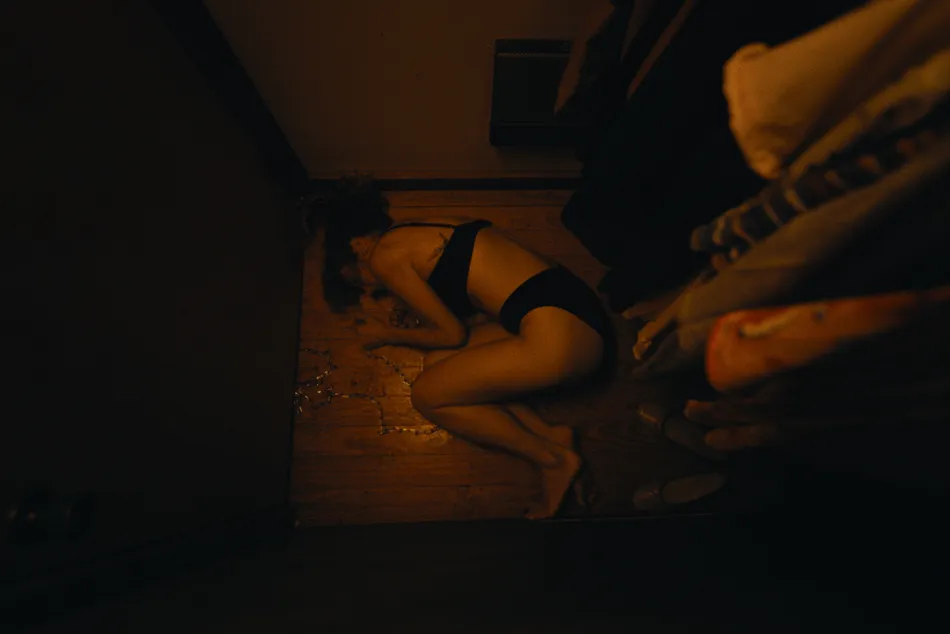
Writer and director John Valley’s “American Dollhouse,” starring Hailley Lauren as Sarah, premiered at this year’s South by Southwest and screened at New Orleans’ Overlook Film Festival. For decision-makers watching indie horror performance, it signals how quickly an outrageous villain can outcompete quieter anxiety-only scares.
Independent horror spent a lot of recent cycles tightening its focus: more dread, more symbolism, fewer rules. “American Dollhouse” comes in from the other direction. Writer and director John Valley is explicitly bringing back a “rollicking element,” the outrageous villain. And he does it with a premise that is almost too on-the-nose: a bloodthirsty nosy neighbor.
In the film, Sarah (Hailley Lauren) moves back, setting the stage for a conflict built on intrusion rather than the usual distant threat. That matters because “modern anxieties” are often diffuse. Valley’s approach is to make the anxiety physical, immediately legible, and relentlessly personal. Instead of asking the audience to decode fear, the movie shows it. The villain is not a rumor; it is a neighbor who keeps showing up, keeps pushing, and keeps escalating.
This release pattern is its own signal. The film premiered at this year’s South by Southwest, then had “lively screenings” at New Orleans’ Overlook Film Festival. For industry folks, that combo matters because it tends to separate two kinds of indie horror momentum. First, festival programmers and genre-aware audiences can test whether a loud, character-driven antagonist works in a room. Second, early buzz from recognizable genre events can translate into a clearer narrative for buyers and platforms: not just “weird horror,” but a horror product with a hook that can be summarized in one sentence, like the bloodthirsty nosy neighbor.
Why does this genre choice matter now? Because the market has been split between horror that performs as a social mirror and horror that performs as a machine. Anxiety-forward stories can feel like prestige, but they can also feel hard to market to people who just want an evening of high-stakes thrills. Classic slashers, by contrast, succeed when the rules are sharp: there is a target, there is pursuit, there is escalation, and the villain’s personality is a character in its own right. Valley seems to be borrowing that slasher DNA while re-skinning it with the pressures of contemporary life, where boundaries feel fragile and attention from others feels unavoidable.
The “outrageous villain” is not just a spectacle. It is a control system for the audience’s emotions. When the neighbor intrudes, the viewer knows what kind of fear they are in. That clarity can increase engagement during screenings, which helps explain why the article describes the Overlook Film Festival showings as “lively.” In business terms, it is the difference between brand messaging that requires background knowledge and messaging that lands instantly. A bloodthirsty nosy neighbor is instantly understandable. Even if you do not know the slasher subgenre, you understand the relational threat: someone is watching, someone is meddling, and someone is getting violent.
For executives and investors looking at indie horror slates, the second-order question is not whether “American Dollhouse” is scary. It is whether its structure creates repeatable demand signals. A film that can be summarized cleanly is easier to package for press, easier for agents to pitch, and easier for programmers to justify. Festivals like South by Southwest and Overlook also act like proof-of-concept engines. A premiere at SXSW can pull in early industry attention, while subsequent festival screenings can confirm whether the film keeps its energy with different crowds.
There is also a strategic lesson in Valley’s framing. The article positions the film as returning to an “outrageous villain” at a time when indie horror is full of “many styles.” That suggests Valley is not competing on sameness. He is competing on contrast. He takes modern anxieties, then plugs them into a classic villain mechanic. If the audience laughs, gasps, and reacts quickly, that is a sign the film’s anxiety-to-action conversion is working.
That conversion is the stakes for peers. If you run a label, finance horror, staff an acquisition team, or advise creators on go-to-market strategy, you want to understand what wins attention in a crowded genre calendar. “American Dollhouse” implies that “modern anxieties” need a delivery system. Valley’s system is the nosy neighbor, turned into a slasher-scale threat. In other words, the film is trying to make dread unavoidable, and then make it move.
This story's Key Insights and Take-aways are locked.
Create a free account to unlock Executive Actions for one credit.
Register to UnlockAlways free for Executives Club members. Join the Club
More in Entertainment

Russell Brand's accuser 'bewildered and confused' as he denies 7 sex charges
The criminal case against the comedian is a live test of how media companies manage talent risk when serious allegations go public.

'It's a Magic Trick': Ballet Experts Say Rosalía's SNL Pose Is Impossible
Three ballet experts tell Rolling Stone Rosalía's gravity-defying SNL stillness shouldn't be possible - and why the debate is now part of the show.

Activision CMO: GTA 6 Will Boost Call of Duty, Not Bury It
Activision's top marketer says Rockstar's blockbuster will drive players back to consoles and into Modern Warfare 4, even as the company admits its recent strategy failed.