

Joy Group bets on Southeast Asia, with 2025 overseas sales reaching $87 million
Chinese beauty exports are shifting from Western gambles to nearby markets, starting with Malaysia and Singapore retail expansion.
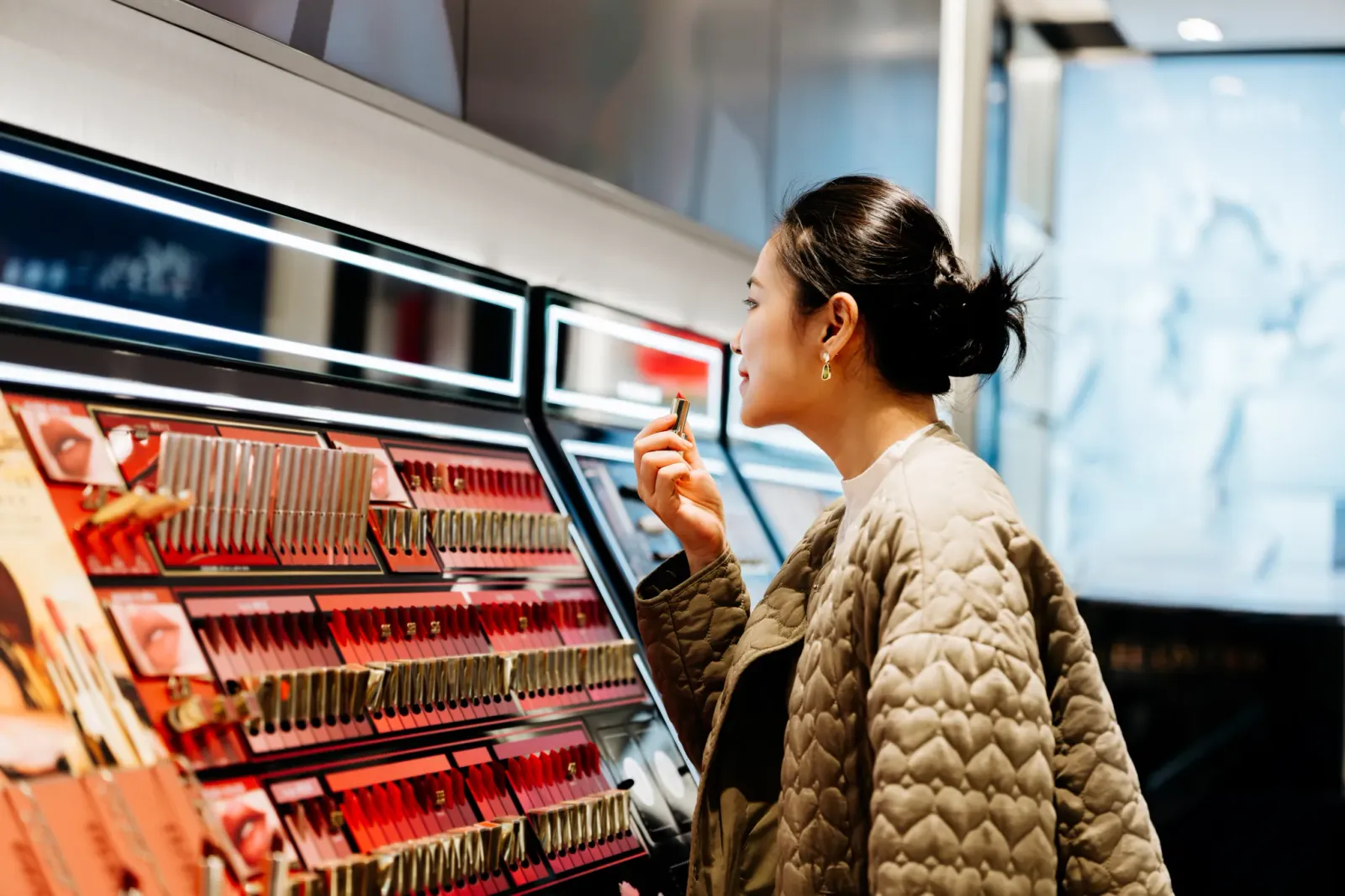
Joy Group, the parent of Chinese C-beauty brands Judydoll and Joocyee, is expanding its Southeast Asia footprint, including a planned Malaysia store and a Singapore hub launched in 2024. For decision-makers, the $87 million overseas slice of 2025 retail sales signals where Chinese consumer brands are finding growth and how they are building distribution and localization in real time.
Joy Group is treating Southeast Asia like the first rung on the “going global” ladder, not a side quest. In 2025, the group’s retail sales exceeded $730 million, and $87 million of that came from overseas sales, with Vietnam now its top overseas market. The company already debuted its first overseas boutiques in Singapore last year, and it plans to open a store in Malaysia by the end of the year. That is the math Chinese beauty operators are circling right now: start close, sell fast, learn locally, then worry about farther markets.
Joy Group’s broader strategy is built around that proximity and acceptability. Fanqi Kong, Joy Group’s general manager of international business, tells Fortune that Southeast Asia “has a huge consumer market, and people are generally very accepting of Chinese products.” Joy Group opened its Singapore office in 2024 and designated it as a regional hub to tap other Southeast Asian markets. In other words, this is not just exporting products. It is setting up an operating rhythm in a region where Chinese brands can iterate quickly across retail formats, e-commerce channels, and product lines.
Why Southeast Asia is winning as the first stop is pretty straightforward, but the details matter for anyone watching consumer brands go global. The source frames it as “closer to home,” with many emerging economies and young populations. That matters because beauty is a high-frequency category: new routines, new trends, and new product testing cycles. It also helps that the entertainment layer is already doing marketing work. The popularity of Chinese pop culture, including minute-long microdramas and TikTok reels of ‘cyberpunk’ cities like Chongqing, is boosting the popularity of C-beauty brands. One implication: distribution alone will not explain performance. Demand is being manufactured culturally, and brands are riding it.
The shift is also a response to the brutal reality of China’s domestic competition. The story notes that Chinese consumer brands are going global so commonly it spawned a buzzword, chuhai. That pressure is pushing companies to look outward for growth, and there is a clear pattern in what they tried first: Chinese companies initially focused on Western markets like the U.S. and Europe. Now, many are pivoting toward Southeast Asia because Chinese brands have found greater success there, attributed to geographical proximity, cultural similarities, and young consumer bases. Between 2019 and 2024, Chinese color cosmetics and skincare brands in Southeast Asia reported compound annual growth rates of 70% and 115% respectively, according to Euromonitor. Those are not “test the waters” numbers; they are “allocate capital, hire teams, and build infrastructure” numbers.
The underlying performance gap between “Chinese goods” and “quality brands” is getting smaller, and the source lays out why. There used to be a perception that Chinese goods were inferior, with manufacturers prioritizing quick market entry over original designs. It even cites jokes about how Chery QQ cars wouldn’t pass the crash test, and notes how when Xiaomi entered smartphones in 2014 it was seen as functional and affordable rather than premium. Over time, workers gained technical know-how by working for foreign multinationals. On the cosmetics side, the story points to how some advanced cosmetics were manufactured in China, so workers learned how to make them, and how skincare depends heavily on chemistry and material science. On the capital side, it notes China invested $1.03 trillion into R&D in 2024, ahead of the U.S.’s $1.01 trillion, according to the OECD. For boards and investors, the second-order implication is that brand-building is now happening on top of a maturing production and R&D base, which makes international expansion less dependent on a single viral product.
Marketing has evolved too, and that is where executives should pay attention because it is operational, not aesthetic. The source says Chinese firms are learning from foreign brands about the importance of branding, storytelling, and packaging. Some C-beauty brands have opted to focus more on Chinese heritage and weave in elements of traditional Chinese medicine. Chinese brands are also adapting product offerings to match local demand and climate. Joy Group, for example, has expanded its shade ranges to include deeper skin tone options, and is rolling out sunscreen cushions and waterproof lip ink designed for Southeast Asia’s hot and humid climate. Kong also describes “experimenting with a self-operating model,” building local entities and teams. That is a key line for executives: the playbook is shifting from agents and distributors to owned capabilities.
Where this gets more interesting is how Joy Group sells once it lands. Besides a few boutiques in Singapore, it sells through e-commerce platforms like Shopee, Lazada and Tiktok Shop, plus omnichannel retail stores like Sephora, Lazada, and Watsons. That combination matters because it reduces dependence on a single retail channel. It also creates multiple feedback loops on what sells, which variants convert, and what content drives purchase behavior.
But the story is not saying “Western markets are dead.” C-beauty giants haven’t abandoned them. Flower Knows entered the U.S. in 2024 via retail partnerships with Ulta Beauty and Urban Outfitters. Joy Group pushed into Europe last year after acquiring Italian dermatological hair care brand Foltène. Many newer C-beauty brands also debuted with English names to boost international appeal. Still, the source flags uncertainty about culturally distinct markets like the West and the Middle East. It quotes Lewis Lim’s point that it might be harder for C-beauty brands to break into other markets because cosmetics have to be adapted to the biological needs of your skin, unlike “hard” products such as EVs where the competitive advantage lies more in technology. For decision-makers, that is the strategic stake: Southeast Asia may be the fastest learning zone, but scaling beyond it will likely require deeper localization, including formulation choices and customer-specific product adaptation.
For executives watching consumer brand internationalization, Joy Group’s $87 million overseas contribution in 2025 is a signal that “going global” is getting sequenced. It is moving from distant, reputation-heavy markets to nearer, trend-driven ones where distribution tests are faster and localization feels less like a science experiment. The board question becomes simple and urgent: are you building regional operating muscle, or are you still planning overseas expansion as a one-time export event?
This story's Key Insights and Take-aways are locked.
Create a free account to unlock Executive Actions for one credit.
Register to UnlockAlways free for Executives Club members. Join the Club
More in Business

Anthropic’s Levant Alpöge cracks the Jacobian conjecture after 87 years
A Harvard valedictorian used Claude to hit a 1939 breakthrough, but the missing “why” is the real problem.

Uber buys Delivery Hero for nearly $15B, vaulting to top food delivery outside China
The deal doubles Uber's dual-services footprint and pushes a ride-and-eats bundling play into 50 more markets.

Epic and Google drop settlement bid, forcing rival Android app stores by July 22
Google told the court it is ready to carry third-party app stores starting Wednesday, July 22.