
JPMorgan plans stronger AI agents this year as security and governance hurdles finally loosen
Why JPMorgan’s AI agent rollout matters: it signals big-company readiness moving from pilots to durable operations.
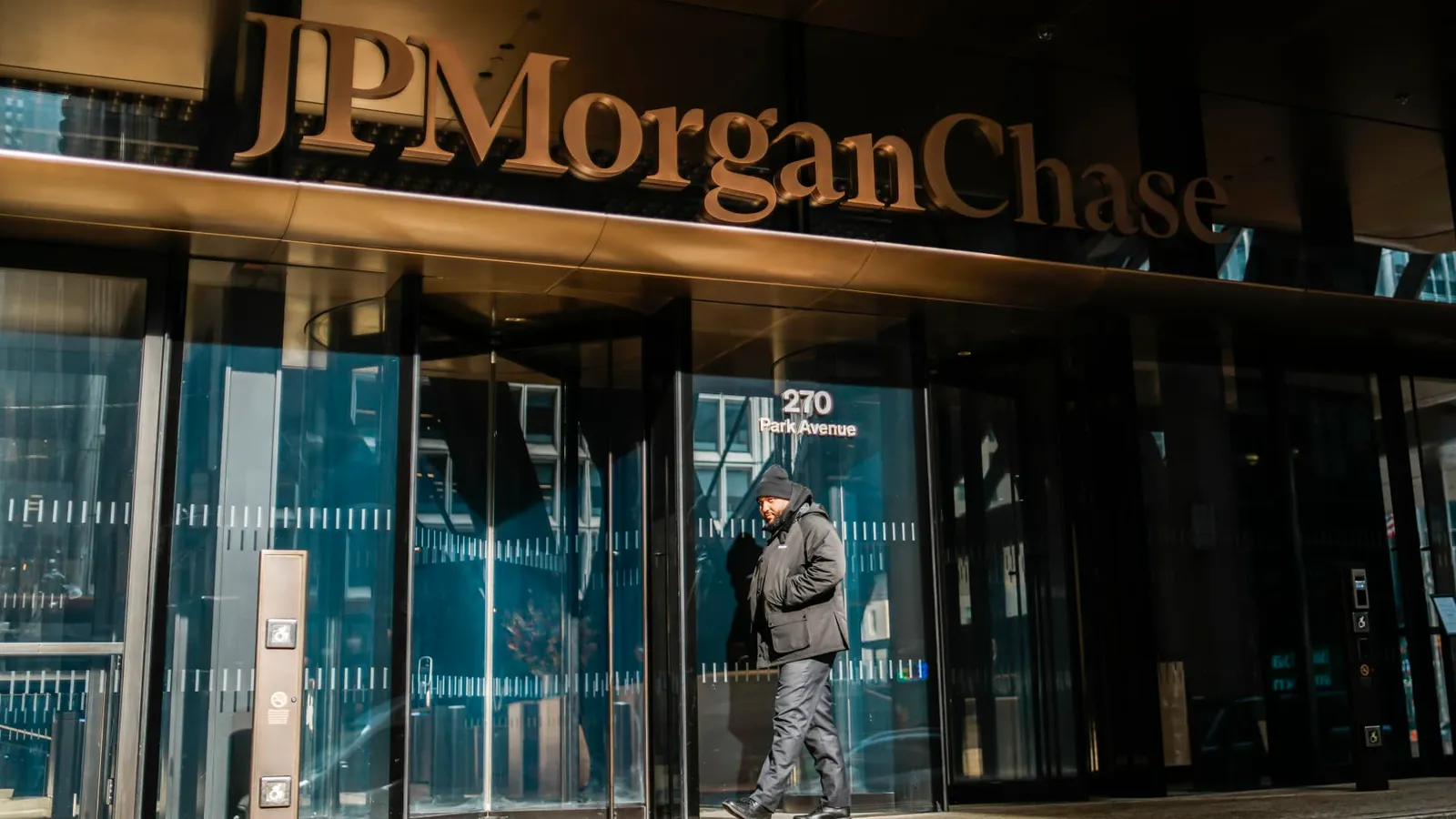
JPMorgan Chase plans to deploy more powerful AI agents this year, signaling a shift from experimentation to broader use. For decision-makers, it suggests that security and governance issues that have slowed adoption inside large enterprises may be nearing resolution.
JPMorgan Chase is planning to deploy more powerful AI agents this year, and the timing is the tell. In the world of enterprise AI, “more powerful” is not a marketing adjective. It is a practical step that only becomes realistic after teams stop getting blocked by security reviews, governance checklists, and internal risk questions.
CNBC’s framing matters here: the move suggests long-running AI agents are close to clearing the security and governance hurdles that have slowed adoption inside big companies. In plain English, these agents are not just answering questions in a sandbox. They are the kind of systems that can keep working over time and handle tasks with real operational consequences, which means the bar is higher. Until those guardrails feel workable, large institutions tend to stick to short, bounded deployments. When the guardrails start to clear, the adoption timeline compresses.
This is where enterprise AI has been stuck for a while. The early wave of AI products worked well for narrow, low-risk use cases. Think: drafting text, summarizing documents, or providing information to humans. But “agentic” AI, especially long-running agents, introduces a different failure mode. The system is no longer just responding to prompts. It is executing steps, interacting with tools, and progressing toward an outcome. That creates new concerns for CIOs, CISOs, risk committees, and boards: data exposure, unintended actions, auditability, and what happens when the model is wrong or incomplete.
So why does JPMorgan’s planned rollout matter beyond one bank? Because it is a signal to an entire class of organizations. Large financial institutions are not lightweight tech buyers. They are among the most compliance-heavy enterprises on the planet, and they tend to move carefully. When a company like JPMorgan indicates that the “security and governance hurdles” are coming into view, it implicitly tells the rest of the market that internal approval processes may be catching up to the technology.
Security and governance are not purely technical problems. They are decision and documentation problems. Teams need mechanisms to control what the agent can access, what actions it can take, how outputs are logged, and how policy is enforced. They also need confidence that the system can be monitored and that there is an accountability trail. In many big companies, these requirements have created a bottleneck. Even when models improve quickly, adoption depends on the institution’s ability to manage risk in a repeatable way.
That is why this story reads like an adoption unlock, not a capability brag. “More powerful AI agents” implies incremental capability, but the real operational breakthrough is that teams are ready to let agents run longer and do more. CNBC’s summary points directly at the bottleneck: long-running AI agents have been slowed by security and governance hurdles. If JPMorgan is now preparing to deploy them more broadly, those hurdles are not eliminated, but they are evidently manageable enough to move forward.
For executives, the second-order implication is board-level. When AI deployments move from controlled pilots to more durable workflows, governance questions do not go away. They change shape. Boards typically want to know: What controls exist? How do we detect abuse or mistakes? How are we measuring performance beyond “it seems smart”? And critically, how does the company respond when an AI system behaves unexpectedly? A bank that is preparing to scale agents this year is effectively telling the market that it has built, or believes it can build, a governance story that can survive scrutiny.
Peers in other sectors will watch the rollout closely even if they are not in finance. Customer service, legal ops, finance functions, procurement, and internal knowledge work all have tasks where agents could help over time. But those are the same domains that become risky when autonomy increases. If JPMorgan’s experience points to smoother internal approvals, other large enterprises may accelerate their own agent roadmaps, especially once their security and governance teams feel the path is clearer.
The strategic stake is simple: whoever figures out how to safely scale “long-running” AI will capture productivity gains first, and they will do it with less internal friction. JPMorgan’s move suggests that the market’s biggest constraint is shifting from model quality to operational readiness. If that is true, 2024 is not just another year of AI headlines. It is a year where governance maturity becomes a competitive advantage.
This story's Key Insights and Take-aways are locked.
Create a free account to unlock Executive Actions for one credit.
Register to UnlockAlways free for Executives Club members. Join the Club
More in Business

OpenAI files for an IPO at $852B, signaling it may list sooner than later
The ChatGPT maker’s filing joins Anthropic’s AI listing wave and turns “someday” into a real timing option.

Abbott wins CE Mark for dual glucose-ketone sensing tech in diabetes
The first dual glucose-ketone sensing technology just cleared EU regulators, bringing new monitoring capability closer to market.

Secretlab CEO Ian Ang goes anti-copycat, spends $2M on proprietary materials, and shrugs at AI
Patents, bespoke manufacturing, and a clear line on copying and AI pressure as Secretlab launches the Atlas at $499.