
July 4 criticality: four US microreactor prototypes beat a 250th-birthday deadline
The milestone is real, but zero-power criticality is not grid-ready. Here is what it changes next.
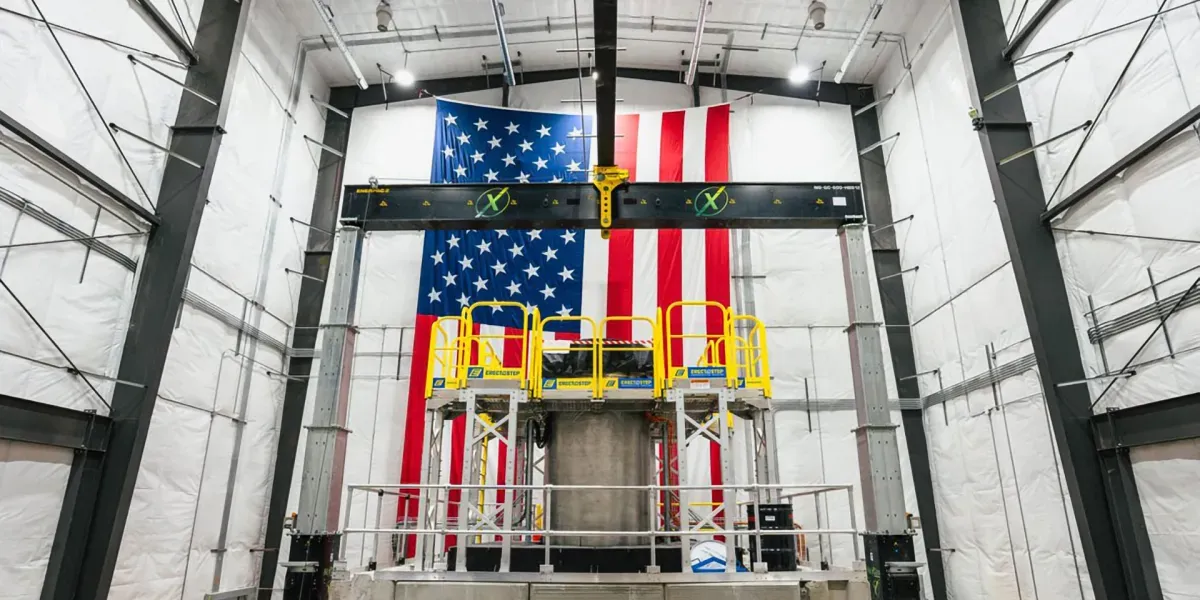
Four microreactor prototypes reached criticality on or before July 4 under the US Department of Energy's Reactor Pilot Program. For decision-makers, the question shifts from “can they ignite?” to “can they operate, get approved, and deliver power on timelines?”
July 4, 2026 was supposed to be just another American holiday. Instead, it landed on a real technical deadline for US nuclear: a year ago, the Trump administration set a goal to see three new microreactors achieve criticality by the nation's 250th birthday, and this year four reactors did it. Antares Nuclear hit the milestone first in June with its Mark-0 test reactor, then Valar Atomics, Deployable Energy, and Aalo Atomics followed. Aalo’s criticality happened in the early hours of July 4, a detail that captures the mood: this was a sprint to a moment that nuclear people care about.
But here is the nuance that matters for anyone making decisions in power, tech, or policy: achieving criticality does not mean a reactor is ready to produce electricity for the grid, or even that it can run in the way most people think of “power generation.” All four reached what is called zero-power criticality, which is essentially the ability to start a nuclear chain reaction without meaningful power output from the reactor. MIT Technology Review points out why that distinction is huge: a zero-power-criticality test can be achieved without making real engineering progress on fuel or design. In other words, the milestone proves the physics can work in a narrow, controlled sense. It does not yet prove the engineering can scale into a system that reliably turns heat into usable electricity.
So how did we get here, and why now? The Reactor Pilot Program matters because it is designed to fast-track prototype development. In August, the US Department of Energy selected 11 reactor projects for the program, offering land and support from the national labs system. All 11 are microreactors. That term is doing a lot of heavy lifting: the microreactors are far smaller than the large light-water reactors that dominate today’s grid, which are tens or even hundreds of times their size. Smaller can be good if it reduces build time, cost, and complexity. But it also shifts the burden to a different set of engineering and approval challenges, especially when timelines start to get aggressive.
The speed of execution is the other headline-worthy part. Antares Nuclear was first in June, and then three more followed. The article notes that Valar, Antares, and Aalo were all founded in 2023, while Deployable Energy started in 2025. For an industry known for massive projects that often blow past deadlines and budgets, getting to a technical milestone quickly is undeniably a positive sign for emerging nuclear technologies.
Still, going from zero-power criticality to producing electricity means taking on major follow-on engineering work. The article flags examples like adding significant equipment, including cooling systems to transfer heat out of the reactor core. That is not a cosmetic upgrade. It is where the “prototype physics” has to turn into “operational machine,” with all the reliability, safety, and systems integration that go with moving from a test state to continuous operation.
Then come the timelines and the risk profile. Aalo says it has already begun work on the second reactor and plans to produce 10 megawatts of electricity to power an on-site data center in 2027. Deployable Energy says it plans to deploy commercial reactors by 2028. The article gives you the right warning label: timelines from startups, especially in nuclear, should be taken with a grain of salt. The complexity is obvious, but the extra wrinkle is that some constraints are outside the companies’ control, including regulation.
In the US, the Nuclear Regulatory Commission is the gatekeeper for civilian and commercial nuclear use, and historically, approvals have been slow. Earlier this year, the NRC proposed a new framework for microreactor approvals designed to speed things up, but it is yet to be seen how quickly it will move. There is also an added political-fact-of-life mentioned in the piece: some nuclear experts have questioned whether the agency under the Trump administration is loosening nuclear rules too much. Whether you view that as progress or peril depends on your risk tolerance, but for executives it translates into one practical reality: you cannot model go-live dates without modeling regulatory interpretation.
Finally, there is a debate brewing in the background, and boards should care even if they are excited. Some supporters are not applauding the milestone. The article cites an analysis by Third Way, a public policy think tank, which argues the federal focus on the program is an “unhelpful diversion” from goals to meaningfully increase nuclear capacity. The memo’s framing is blunt: artificially accelerating project timelines is a short-term solution, not a long-term fix. Criticality is a big first step, but a lot still has to happen for these microreactors to come online, and then to become a significant source of electricity for the grid.
So what does this mean for decision-makers staring at energy transitions, data-center demand, or regulated infrastructure risk? The “win” here is real but narrow: four microreactors crossed a chain-reaction ignition milestone by a deadline tied to a national birthday. The “work” starts immediately after: turning zero-power proof into power production, surviving NRC approval pathways, and hitting operational timelines that match grid needs. The companies just demonstrated technical ignition. The next era is about sustained performance, approval velocity, and the credibility to deliver electricity, not just reactions.
This story's Key Insights and Take-aways are locked.
Create a free account to unlock Executive Actions for one credit.
Register to UnlockAlways free for Executives Club members. Join the Club
More in Technology

Google quietly links your phone number to every Android account on your SIM
Adding a SIM now ties your phone number to all Google accounts - and future accounts inherit it. Here's the security and privacy stakes.

Hijacker AI 'Skynet mode' runs 100,000 attack steps against exposed models
Symantec caught a criminal AI agent that borrows other models, steals data, and mines crypto; the only relief is no confirmed victims yet.

Nvidia's AI-financier shift faces its first big test as neoclouds stumble
A rout in neocloud stocks is forcing investors to weigh Nvidia's hidden exposure as both supplier and lender to the AI buildout.