

Justin Bieber joins FIFA World Cup final halftime lineup with Madonna, Shakira, BTS
A blockbuster July 19 event at MetLife turns global pop into sports broadcast leverage, not just entertainment.
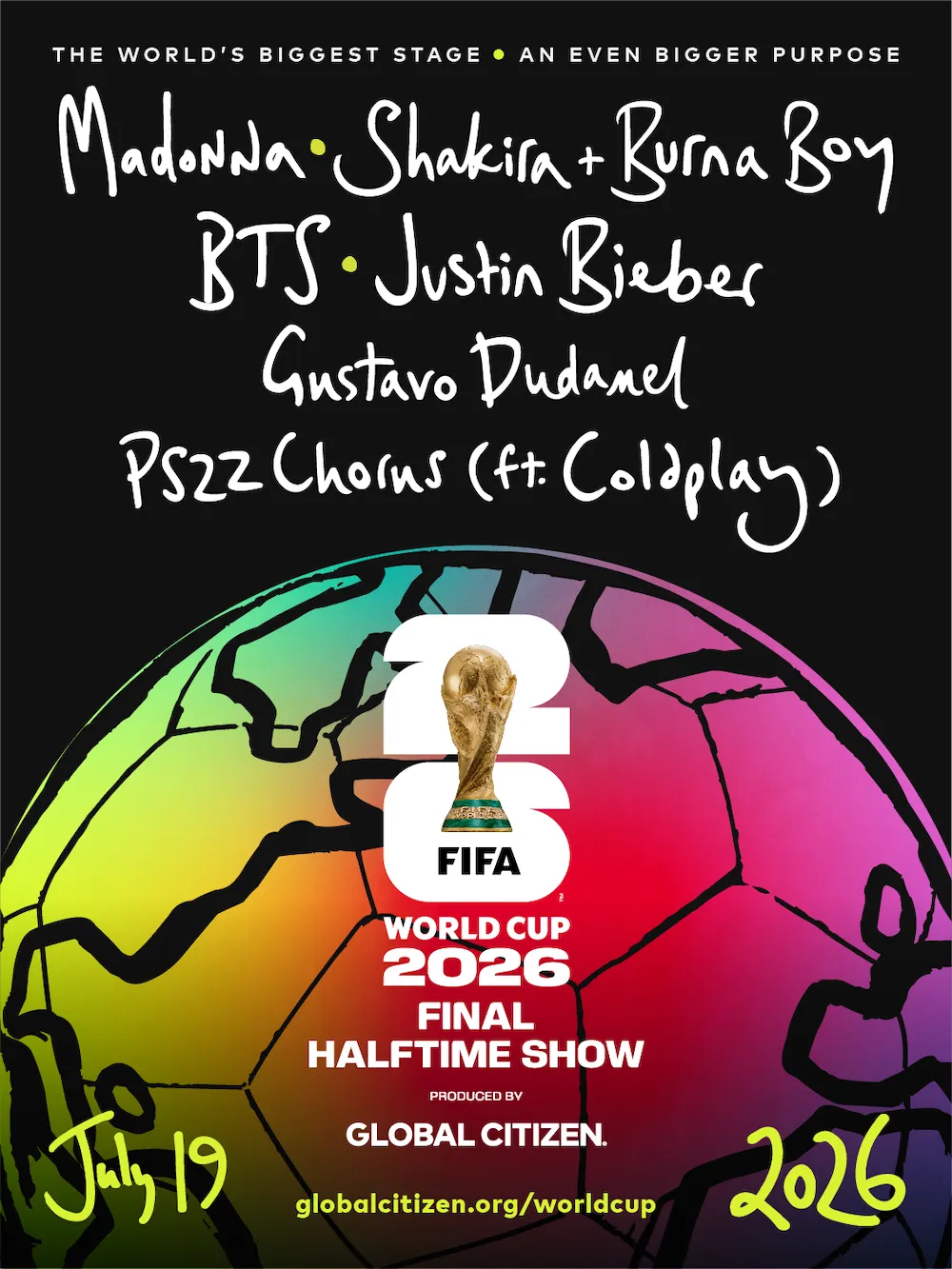
Justin Bieber has officially joined the first-ever FIFA World Cup Final Halftime Show, alongside Madonna, Shakira, and BTS. The lineup also includes Coldplay, Burna Boy, Gustavo Dudamel, and New York’s PS22 Chorus for the match on July 19 at MetLife.
Justin Bieber is officially in. He will join Madonna, Shakira, and BTS as co-headliners for the first-ever FIFA World Cup Final Halftime Show on July 19 at New York New Jersey Stadium, better known as MetLife.
That date matters because this is not a side quest. FIFA’s championship match halftime slot is one of the rare global “same time, same screen” moments, and adding Bieber piles another massive, cross-audience name onto a bill already packed with global reach. Bieber’s presence signals FIFA is treating halftime like a major, high-stakes media product, not a throwaway performance.
Look at what else is on the roster: Coldplay, Burna Boy, Gustavo Dudamel, and New York’s PS22 Chorus have also joined the star-studded lineup. This mix is doing two jobs at once. First, it draws different audience segments that might not all overlap. Bieber, Madonna, Shakira, and BTS each bring their own fan networks across music cultures and geographies. Coldplay and Burna Boy extend the lineup further with broad mainstream appeal and distinctive regional pull. Gustavo Dudamel, along with PS22 Chorus, introduces a classical and youth-chorus element that changes the tone from pop spectacle to something closer to a “festival of worlds” vibe.
For decision-makers, the operational question is simple: can a live, multi-act show run smoothly at world-scale? Halftime is short. Talent is complex. Logistically, each additional headline act increases coordination needs around rehearsal schedules, staging, audio, lighting, and broadcast timing. In corporate terms, it is a live production with the texture of a global concert tour, except the distribution channel is FIFA’s biggest match and the margin for error is tiny.
Then there is the strategic layer. FIFA has moved to make the final halftime show into a headline event, and the lineup reflects an intent to maximize attention across platforms. Bieber’s inclusion is especially telling because it implies FIFA is actively mapping mainstream pop culture against sports viewership. When a sports organization borrows star power at this scale, it changes the game for marketers and partners on both sides. Sponsors and broadcasters benefit from a more predictable media conversation beyond the match itself. The halo effect of a “legend-meets-current-superstar” lineup can also pull in viewers who might otherwise be casual or late to the tournament story.
Regulatory and rights framing sits behind the scenes, even when no one at the headline level is talking about it. Events like this typically require careful handling of performance rights, broadcast rights, and contractual terms for music licensing and talent participation. While the source does not list specific licensing details, it does establish the core fact: this is a first-ever FIFA World Cup Final Halftime Show with a lineup that includes internationally recognized recording and performing artists. That combination increases the number of stakeholders who must be aligned, from music rights holders to production and broadcast teams. For executives, that means governance matters as much as hype. A big lineup is only as valuable as the ability to deliver it legally and reliably.
The second-order implication for boards and operators is that this is a template, whether FIFA calls it one or not. If the halftime show works, sports leagues and rights holders will face pressure to replicate the “global music supercard” model in future finals and marquee matches. That can reshape budgets and negotiation dynamics across the entertainment-sports border. It can also raise the expectations of audiences: once people tune in for halftime star power, they start treating halftime as part of the product, not a pause.
Finally, for peers who manage sponsorships, media partnerships, or large-scale events, this lineup is a signal about where attention is headed. FIFA is putting names like Justin Bieber, Madonna, Shakira, BTS, Coldplay, Burna Boy, Gustavo Dudamel, and PS22 Chorus into the same moment on July 19 at MetLife. If you are an executive building a brand around mass audiences, that is the playbook: align global celebrities, diversify audience entry points, and design halftime to be talkable enough that it extends beyond kickoff. The strategic stake is straightforward, and it is coming fast. If FIFA delivers a clean, high-voltage broadcast, the final halftime show becomes a repeatable media engine for years.
This story's Key Insights and Take-aways are locked.
Create a free account to unlock Executive Actions for one credit.
Register to UnlockAlways free for Executives Club members. Join the Club
More in Entertainment

Russell Brand's accuser 'bewildered and confused' as he denies 7 sex charges
The criminal case against the comedian is a live test of how media companies manage talent risk when serious allegations go public.

'It's a Magic Trick': Ballet Experts Say Rosalía's SNL Pose Is Impossible
Three ballet experts tell Rolling Stone Rosalía's gravity-defying SNL stillness shouldn't be possible - and why the debate is now part of the show.

Activision CMO: GTA 6 Will Boost Call of Duty, Not Bury It
Activision's top marketer says Rockstar's blockbuster will drive players back to consoles and into Modern Warfare 4, even as the company admits its recent strategy failed.