
Katelyn Ohashi says she could chase LA 2028 after a seven-year retirement
The viral gymnastics star’s comeback announcement reopens the Olympic pipeline, brand deals, and the rules that shape elite returns.
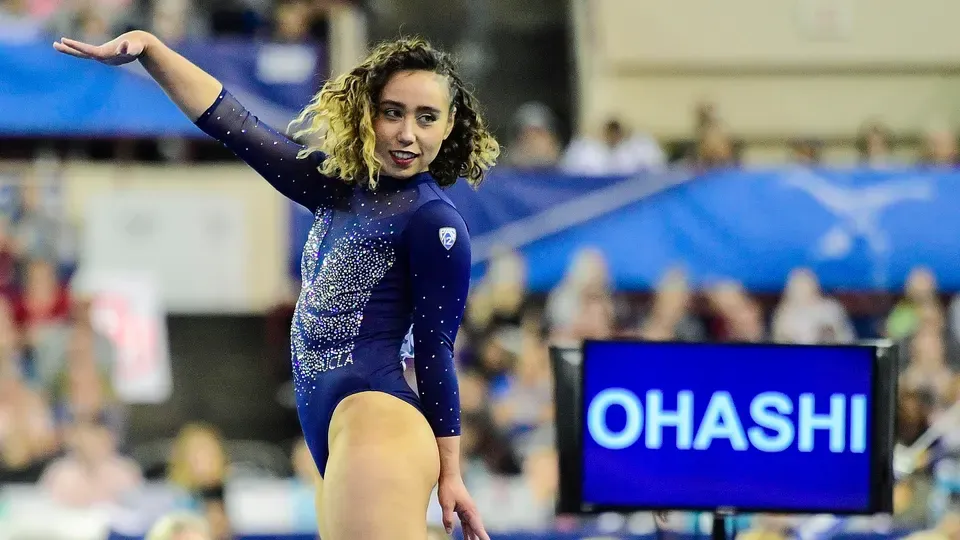
Katelyn Ohashi announced her comeback seven years after retiring from elite gymnastics, signaling a potential run at the LA 2028 Olympics. For decision-makers watching talent, sponsorship, and sport governance, her return adds a high-attention test case for how quickly athletes can re-enter elite qualification and media cycles.
Katelyn Ohashi is back. Seven years after retiring, the elite gymnastics prodigy and viral sensation announced her comeback, and she also floated the possibility of chasing the LA 2028 Olympics.
That matters because the Olympics are not just a “dream” milestone for athletes. They are a regulated, deadline-driven pathway with selection processes, eligibility constraints, and training timelines that do not care about your follower count. Ohashi’s statement reintroduces her into that real-world pipeline at the same time her public profile can still pull eyeballs like a live wire.
To understand why executives and operators should care, zoom out to the business of elite sport. Gymnastics does not run on vibes. It runs on timing, form cycles, injury management, and the kind of competitive readiness that shows up in scores, not social posts. When a widely known athlete returns, it creates a rare blend of attention and uncertainty: attention from fans and brands, uncertainty from the practical question of whether the athlete can meet the demands of elite competition after years away.
There is also a strategic communications problem that boards and sponsorship teams understand immediately. Ohashi’s comeback is not happening in a vacuum. In modern sports, viral athletes often become brands, and brands often demand narratives. If the comeback is framed too early as a guaranteed Olympic run, every setback becomes louder. If it is framed too cautiously, she risks losing momentum. So the announcement itself is a bet on balancing transparency with motivation, while still letting training realities drive the schedule.
Now add the LA 2028 context. An Olympics cycle is long, but decision points show up fast. Athletes typically need consistent training and participation in qualifying environments well before the Games. That means Ohashi’s “potential run” language is doing important work. It signals ambition without pretending the calendar will automatically cooperate. For stakeholders, it is a reminder that elite sports milestones are governed by rules and performance benchmarks, not just announcements.
From a governance lens, sports federations and Olympic movements treat eligibility and selection with careful guardrails, because the system has to be fair and auditable. When a high-profile athlete returns after retirement, it highlights the friction between two realities. One is the entertainment and media reality, where a comeback can feel immediate. The other is the regulatory and competitive reality, where the pathway is granular, and “return” still has to pass through the same checkpoints as everyone else.
Then there is the second-order impact: the comeback could change how the sport is marketed and how future athletes think about leaving and re-entering. Ohashi is a rare case because she is both an elite gymnastics figure and a viral sensation. That combination can shift expectations, not only for fans but for sponsors and training ecosystems that may start asking whether retirement is truly a hard stop. Boards overseeing sports partnerships and media rights will watch closely, because attention is valuable, but only when it survives scrutiny and produces sustained engagement.
For executives in adjacent spaces, the takeaway is simple: Ohashi’s announcement is a high-visibility stress test of the elite sports pipeline. It will show whether the LA 2028 narrative can stay aligned with the actual demands of gymnastics competition after a seven-year break. If she progresses, it becomes a powerful proof point for talent ecosystems. If she hits friction, it still offers a real-time case study in how quickly regulatory realities and performance requirements can clip even the biggest public momentum.
This story's Key Insights and Take-aways are locked.
Create a free account to unlock Executive Actions for one credit.
Register to UnlockAlways free for Executives Club members. Join the Club
More in Business

SK Hynix jumps 11% after seeking up to $29.4B in Nasdaq listing
The chip giant filed for a Nasdaq listing plan that could raise $29.4 billion, instantly reshaping investor expectations.

Micron revenue hits nearly $42B as AI memory lifts gross margins above 81%
Fiscal Q3 results crush estimates, prove AI memory is rewriting Micron's margins, and change the momentum math for the whole chip stack.

SpaceX sells $25B in debt under two weeks after IPO, despite $90B in orders
The satellite and rocket company’s quick $25 billion borrowing move signals how it plans to finance scale after going public.