

Kathy Bates almost rejected Matlock as “just a procedural,” then declined Waterboy script
The Oscar and Emmy winner admits she trashed Adam Sandler’s Waterboy script and nearly passed on Matlock.
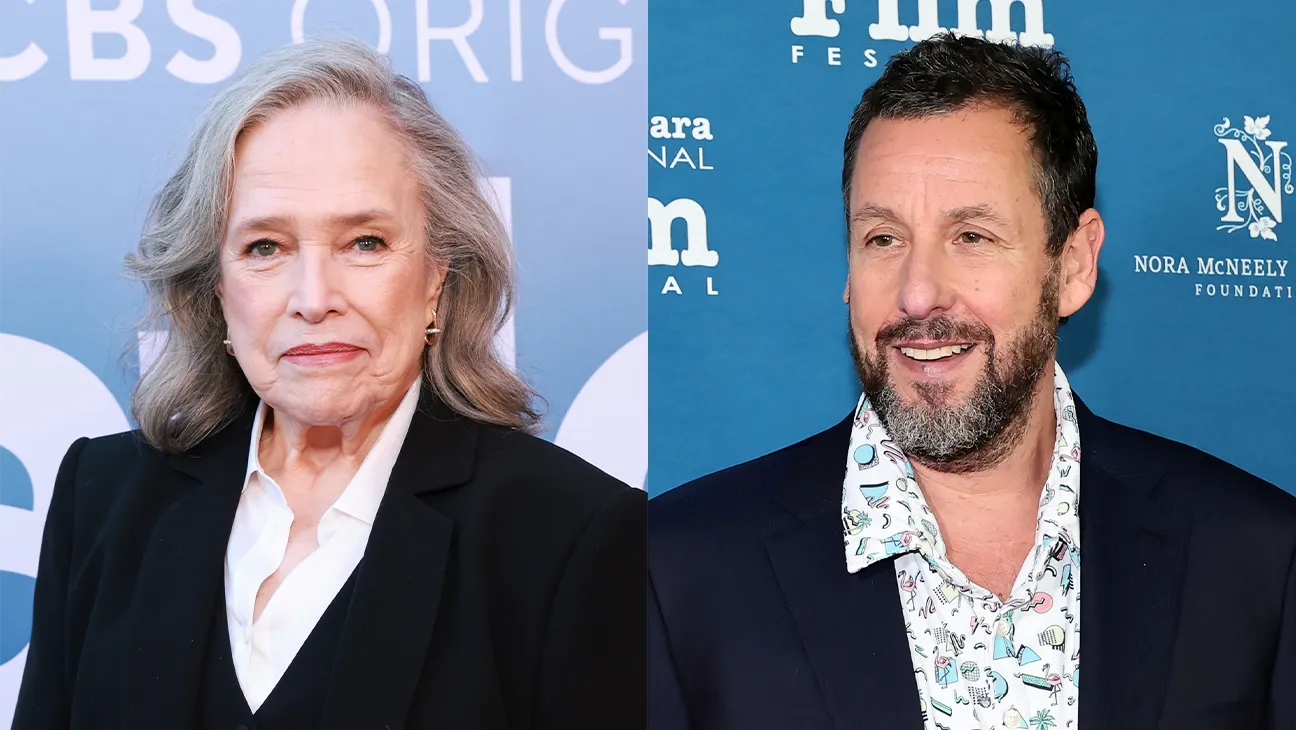
Kathy Bates, the Oscar and Emmy winner, revealed she threw the Waterboy script in the trash because she “didn’t know who Adam Sandler was.” She also said she nearly passed on Matlock because she thought it was “just a procedural,” before reconsidering.
Kathy Bates did not just miss a cultural reference. She nearly missed major TV and film moments because, by her own description, she could not initially see the point.
Bates, an Oscar and Emmy winner, revealed she “threw” the Waterboy script in the trash because she “didn’t know who Adam Sandler was.” In the same conversation, she also said she nearly passed on Matlock because she thought the show was “just a procedural.” Both stories land on the same uncomfortable question for executives and creators: how often do we dismiss something before the value is visible?
To understand why her comments matter beyond celebrity trivia, zoom out to how entertainment packaging works. A script, a show premise, even a cast list often arrives pre-labeled. In Waterboy’s case, the “Adam Sandler” factor is a brand cue. If you do not recognize it, the script can look like the wrong thing at the wrong time. In Matlock’s case, “procedural” is a genre badge that typically signals a repeatable format: episodic structure, case-of-the-week rhythms, and an expectation that the main draw is the case, not character reinvention. Bates said she saw Matlock that way at first, then changed course. That is the operative sequence: initial framing creates an early decision, and early decisions are sticky.
For boards, producers, and studio executives, Bates’ framing is a reminder that projects do not get evaluated only on intrinsic quality. They get evaluated on perceived legibility. Legibility is the shortcut that determines who reads, who pitches, who greenlights, and who says yes before anyone has time to prove it. When a show or film is wrapped in a familiar category, risk-tolerant people can confuse “familiar” with “forgettable.” Meanwhile, category outsiders can confuse “different” with “unreliable.” Bates’ comments sit right in that tension, showing how recognition, or the lack of it, can reshape an entire opportunity pipeline.
Second-order, her Waterboy anecdote highlights how talent ecosystems rely on network memory. She did not “know who Adam Sandler was,” so the script did not immediately connect to the expected payoff. In entertainment, this is like a distribution strategy in miniature: recognition drives attention; attention drives conversations; conversations become hiring. For decision-makers, it is easy to assume internal understanding is universal. But Bates suggests that even seasoned actors are not immune to the information gap created by changing pop culture reference points. Executives who assume a project’s existing audience is also the project’s decision-maker audience can end up negotiating from the wrong baseline.
Now connect that to Matlock. Calling a series “just a procedural” is not inherently wrong. Procedurals often rely on repeatability. But repeatability can also be a vehicle for character depth, performance nuance, and long-run audience loyalty. Bates’ near-pass implies that the project may have looked like a formula rather than a performance showcase. That is an incentive problem hiding in plain sight. When someone expects “procedural,” they may underweight what actors can actually do inside the structure. Executives negotiating casting, story tone, and actor fit need to translate format into the human reasons to care. Otherwise, a project can be dismissed as “content,” instead of appreciated as a platform for performance.
There is also an internal governance lesson here. Entertainment decisions are rarely single-thread. They move through development notes, creative meetings, casting conversations, and sometimes an informal culture of “we do not need to chase this because it is probably the same as the last one.” Bates’ two admissions, taken together, underline how quickly “probably” can become policy, even among people whose resumes signal strong instincts. If an Oscar and Emmy winner can be turned off by a label, then any team can be too. Boards and leadership teams should treat framing risk as a real operational risk, not a vibes problem.
Strategically, Bates’ story should matter to anyone in similar roles today, not because it proves which genre will win, but because it exposes how early information shapes later outcomes. The Waterboy script, if discarded, would have been a missed pipeline moment. Matlock, if treated as merely procedural, would have delayed or redirected a major career and audience connection. For executives, the stakes are simple: you do not just approve projects. You decide what gets a fair first look. In a business built on taste, recognition, and momentum, the first impression you assign can either unlock a hit or quietly bury it.
This story's Key Insights and Take-aways are locked.
Create a free account to unlock Executive Actions for one credit.
Register to UnlockAlways free for Executives Club members. Join the Club
More in Entertainment

Russell Brand's accuser 'bewildered and confused' as he denies 7 sex charges
The criminal case against the comedian is a live test of how media companies manage talent risk when serious allegations go public.

'It's a Magic Trick': Ballet Experts Say Rosalía's SNL Pose Is Impossible
Three ballet experts tell Rolling Stone Rosalía's gravity-defying SNL stillness shouldn't be possible - and why the debate is now part of the show.

Activision CMO: GTA 6 Will Boost Call of Duty, Not Bury It
Activision's top marketer says Rockstar's blockbuster will drive players back to consoles and into Modern Warfare 4, even as the company admits its recent strategy failed.