
Kathy Griffin says she was banned from Fallon’s Tonight Show for being “too controversial”
Her Instagram claim comes as she criticizes Jimmy Fallon for hosting Conor McGregor after a 2024 sexual assault ruling.
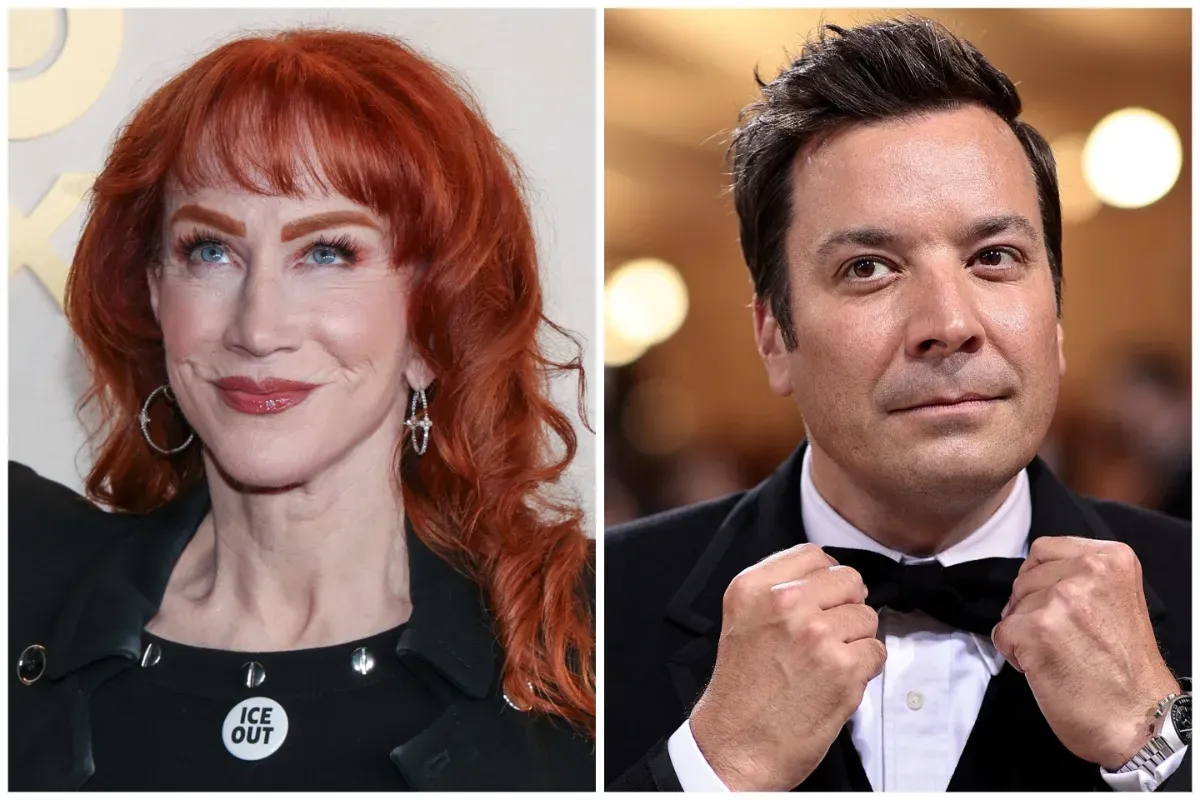
Kathy Griffin posted on Instagram Tuesday claiming she has been banned from Jimmy Fallon’s Tonight Show. She also slammed Fallon for hosting UFC legend Conor McGregor, who was found liable in 2024 and ordered to pay $257,000.
Kathy Griffin used Instagram on Tuesday to make a blunt claim: she says she was banned from Jimmy Fallon’s “Tonight Show” for being “too controversial.” In the same post, she turned that accusation into a broader critique, slamming Fallon for hosting Conor McGregor, who has become a flashpoint for celebrity, sports entertainment, and legal accountability.
The legal and reputational stakes here are not abstract. The source reports that McGregor was found liable in a sexual assault case in 2024 and ordered to pay $257,000 to a woman who accused him of rape. So when Griffin calls Fallon’s booking choices out, she is not debating vague “politics” or taste. She is arguing that mainstream media decisions are colliding with real-world court outcomes, and she is doing it in the highest-visibility format she has: a national late-night brand and the UFC name that can move audiences fast.
For executives and operators who watch talent booking and brand partnerships, this is the tightrope problem. Late-night shows are built on cultural temperature checks. They book big names because big names bring viewers, press, and social engagement. But the same amplification that makes celebrities valuable also makes them liabilities when controversies stick. A court finding, especially one tied to sexual assault allegations and a monetary award, can convert “controversy” from chatter into a reputational factor that advertisers, sponsors, and platforms all have to weigh.
Griffin’s specific claim is also about control of access. “Banned” is a word that implies an actual boundary has been enforced, not just a missed invitation. The source frames her allegation directly, saying she claimed she’s been banned from Fallon’s “Tonight Show.” If even partially accurate, that points to a behind-the-scenes gating mechanism where talk-show producers decide which personalities fit the show’s current editorial and risk posture. Even without details on who made the decision or what policy was cited, the implication is that Griffin believes her own public persona has crossed a line.
Then comes the second-order issue that boards and brand teams think about when they see a booking controversy: consistency. Griffin is effectively challenging the narrative that “controversial” can be selectively defined. She is taking two actions or choices in the same media ecosystem and drawing a comparison: her claimed exclusion versus Fallon’s reported hosting of McGregor. Whether one agrees with her framing or not, the move matters because audiences pay attention to patterns. When people perceive selective enforcement, it can change how they interpret the show’s stated values, and it can pressure sponsors that prefer neutrality.
Zooming out, the late-night ecosystem is not just entertainment anymore. It is an intersection point for legal outcomes, celebrity branding, and social media amplification. Griffin is posting on Instagram, which is where narratives are now made and contested in real time, often faster than traditional press cycles. Her Instagram approach suggests she understands how to compress the timeline: get the claim out, attach it to a widely known public figure, and force the algorithm to keep the story alive. For media executives, that reduces the time window to manage messaging.
The regulatory background matters too, even when the story is framed as “late-night drama.” Sexual assault litigation outcomes and related court orders become part of the public record, and they shape how institutions handle risk. While the source does not cite a regulator in this specific situation, it does point to a 2024 court finding and a $257,000 payment order. In practice, that kind of outcome tends to ripple into advertiser risk frameworks, platform moderation conversations, and talent-agency reputational assessments. It also influences whether networks decide they can defend a booking as “newsworthy” versus whether they face backlash framed as “promoting” a person after accountability.
Strategically, this is the kind of story that can linger in a company’s internal risk discussions long after the clip goes viral. It forces decision-makers to ask: How do we define “too controversial”? Who sets that threshold? And what happens when critics argue the threshold is different for different stars? For other executives in media, sports entertainment, and influencer-adjacent platforms, the message is clear: legal and reputational risk does not stay in court. It migrates into programming, sponsorship value, and brand trust.
This story's Key Insights and Take-aways are locked.
Create a free account to unlock Executive Actions for one credit.
Register to UnlockAlways free for Executives Club members. Join the Club
More in Entertainment

Russell Brand's accuser 'bewildered and confused' as he denies 7 sex charges
The criminal case against the comedian is a live test of how media companies manage talent risk when serious allegations go public.

'It's a Magic Trick': Ballet Experts Say Rosalía's SNL Pose Is Impossible
Three ballet experts tell Rolling Stone Rosalía's gravity-defying SNL stillness shouldn't be possible - and why the debate is now part of the show.

Activision CMO: GTA 6 Will Boost Call of Duty, Not Bury It
Activision's top marketer says Rockstar's blockbuster will drive players back to consoles and into Modern Warfare 4, even as the company admits its recent strategy failed.