
Katy Perry’s “Watch It Burn” drops June 25 and turns breakup anger into a scorpion-human saga
The pop-rock single and cinematic video arrive after her Orlando Bloom split, with Perry explicitly saying she’s finally letting herself be angry.
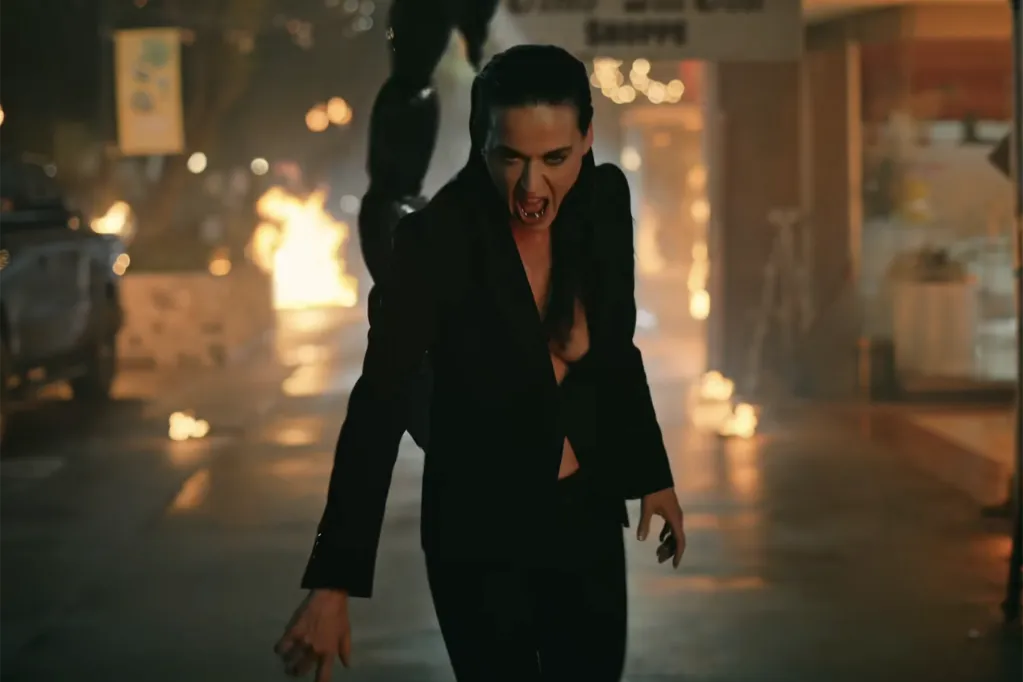
Katy Perry released her new single “Watch It Burn” on June 25, followed by a cinematic music video in which she appears as a monstrous scorpion-human hybrid. For decision-makers watching culture and media engagement, the move is a case study in how fast-release visuals and direct emotional positioning can drive momentum and conversation.
Katy Perry finally lets the match hit the fuse. “Watch It Burn” dropped Thursday night, June 25, and the new single comes with a cinematic music video that previews exactly what the title promises: Perry wreaking havoc as a monstrous scorpion-human hybrid.
The song itself is a cathartic pop-rock banger built around one clear stake. Perry’s lyrics frame the track as reclaiming her life by saying goodbye to a long-term relationship, with lines that land like receipts: “Tonight’s the night, I light a match/ Throw it hard behind my back,” and “Gonna try to forgive and forget/ Light a cigarette, and watch it burn.” She adds, “I’m gonna get what I deserve … Finally I put myself first.” The business version of this is simple: when the emotional thesis is this explicit, the audience knows what it is buying, and the visuals hand them the payoff.
Before the full release, Perry teased the rollout with previews shared in the lead-up to launch, then performed the track before its release at O Son do Camiño in Spain and Rock in Rio Lisboa. That kind of pre-release staging matters more than it sounds. It turns a song from a “drop” into a shared event. By the time the single lands on June 25, listeners have already heard it in the wild, connected it to a moment, and started to form their own interpretations. It is an old playbook, but Perry’s execution leans into what audiences have rewarded in recent years: faster cycles, stronger narrative visuals, and emotional clarity.
Billboard also notes that “Watch It Burn” marks Perry’s first release since the November single “Bandaids.” That matters because it positions this track as a momentum reset. Then there is the context of her broader recent runway: in 2024 she released the album 143, which reached No. 6 on the Billboard 200. For operators in music and adjacent media, that is not trivia. Billboard 200 performance signals how reliably an artist can convert attention into chart outcomes, and it sets the baseline expectations for what comes next.
The lyrical subtext, according to Billboard, “seemingly nods” to Perry’s breakup last year from fiancé Orlando Bloom, with whom she shares daughter Daisy. In an industry where public narratives often compress into a few headline-friendly beats, anchoring a song in a specific life chapter gives the release a built-in search pattern. People do not just listen to the track. They read the lyrics looking for the person, the timeline, and the emotional math. That can be powerful, but it also raises the stakes for the artist’s authenticity, because fans quickly sense when a storyline feels manufactured.
Perry doubles down on that authenticity in a conversation with cowriter Justin Tranter on his Unfamous podcast. She said, “In ‘Watch It Burn,’ I am wrestling with my darkness, but last year was pretty tough.” She then explained the emotional mechanics of the track in more blunt terms: “I have not given myself permission to be angry my whole life over things where I should be f-king angry about,” and, “What I’ve done is I pushed it down, but I should be f-king angry. I’m allowed to be angry for a f-king moment.” There is a reason this matters beyond pop culture commentary. When an artist frames a song as a psychological correction rather than a generic breakup revenge fantasy, the content becomes more shareable and more durable. It is not just drama. It is a concept.
Even the relationship-forward part of Perry’s current public story is relevant to how this release lands. Billboard reports that Perry is now in a relationship with Justin Trudeau, whom she called “the love of my life” during a Q&A at the premiere of her Lifetimes Tour concert film in New York earlier in June. She added, “I fly super high,” and “Sometimes I need to be anchored. To have that anchor finally makes me feel really whole.” Put the pieces together and you get the contrast that likely drives fan engagement: the new single is about burning down the past, while her public remarks emphasize being anchored in the present. The same artist, two different emotional registers, and a release strategy that lets both coexist.
Strategically, this is a useful signal for executives, brand partners, and anyone in media strategy: Perry is not leaning solely on star power or production spectacle. She is tying the release to a clear narrative arc, using pre-release live performances to seed the audience, and then matching the song’s thesis with a video concept that is instantly legible. “Watch It Burn” is available now, and Billboard directs readers to check it out below, but the bigger takeaway is how quickly content can become a cultural operating system when it offers both a story and an image people can’t unsee.
This story's Key Insights and Take-aways are locked.
Create a free account to unlock Executive Actions for one credit.
Register to UnlockAlways free for Executives Club members. Join the Club
More in Entertainment

Russell Brand's accuser 'bewildered and confused' as he denies 7 sex charges
The criminal case against the comedian is a live test of how media companies manage talent risk when serious allegations go public.

'It's a Magic Trick': Ballet Experts Say Rosalía's SNL Pose Is Impossible
Three ballet experts tell Rolling Stone Rosalía's gravity-defying SNL stillness shouldn't be possible - and why the debate is now part of the show.

Activision CMO: GTA 6 Will Boost Call of Duty, Not Bury It
Activision's top marketer says Rockstar's blockbuster will drive players back to consoles and into Modern Warfare 4, even as the company admits its recent strategy failed.