
Keith Thomas kept hand feeling for months after his brain stimulation was turned off
A double neural bypass in 2023 kept movement and touch gains going for about three months unplugged, raising hopes for lasting recovery.
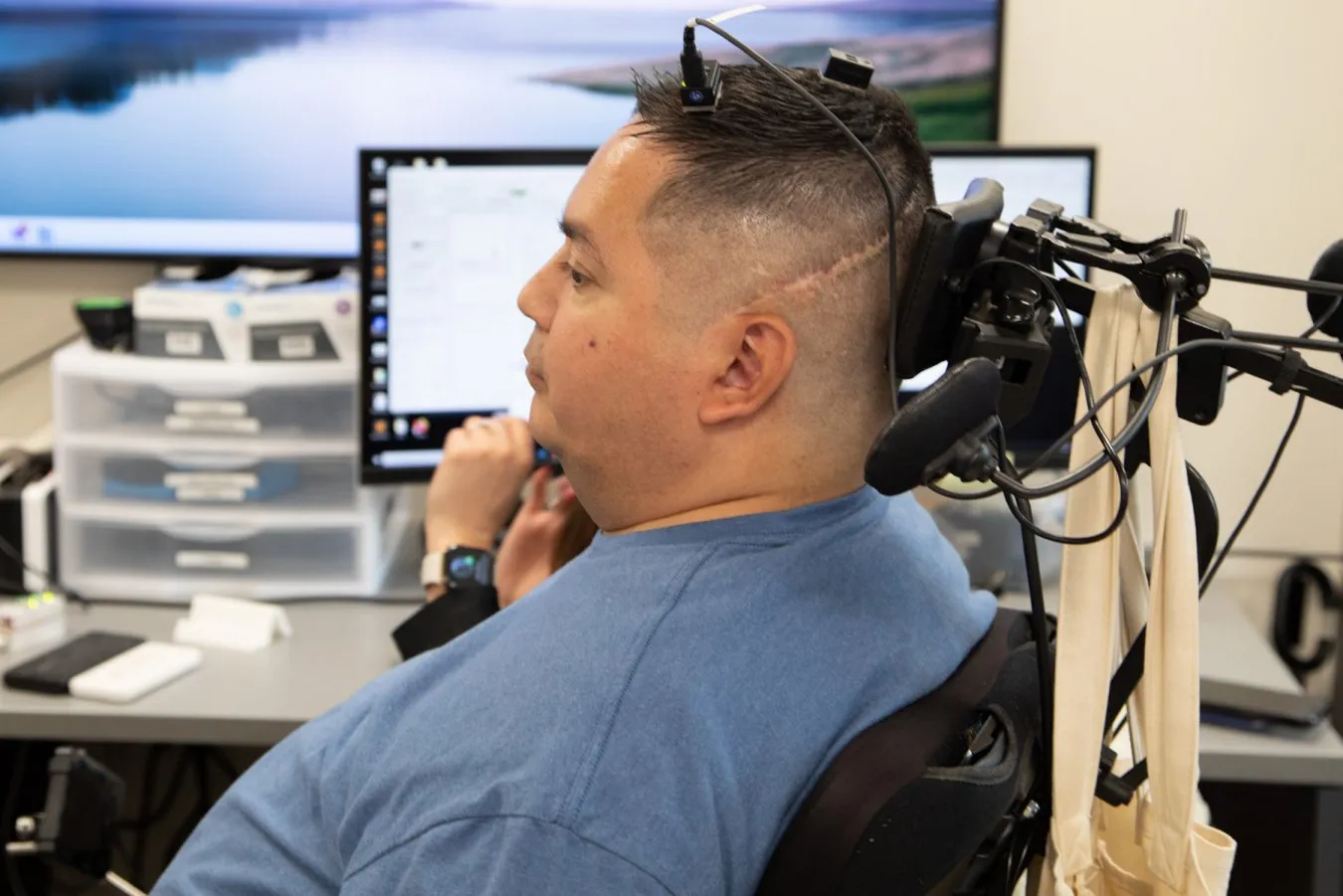
Keith Thomas, 48, regained hand movement and pressure sensation after a July 2020 diving accident, using a brain implant and neurostimulation. Researchers reported he maintained those gains for months after the stimulation was completely turned off, pointing to neuroplasticity as more than a temporary fix.
Keith Thomas has paralysis, and after a double neural bypass surgery in 2023, researchers found something that is hard to explain away as “just a short-term boost”: he kept improved hand feeling and movement for months even after the team turned the stimulation off completely.
In the study described by New Scientist, Chad Bouton at the Feinstein Institutes for Medical Research in New York says the researchers “turned everything off completely, for many months, and yet he’s maintained these gains.” He adds it was “unheard of.” That is the real stake here. If stimulation effects fade as soon as you unplug the system, it is a medical product with a power button. If gains persist, it becomes closer to a therapy that helps the nervous system rewire itself. In Thomas’ case, the interruption lasted about three months due to “a fire in the building,” forcing the team to stop stimulation longer than planned.
Let’s lay out what the intervention actually did, because it helps explain why this could plausibly change brain behavior. Thomas was paralyzed from the chest down in July 2020 and had no sensation or control over his limbs, with significant muscle wasting, according to Bouton. In 2023, Bouton and colleagues performed a double neural bypass surgery. They placed five electrodes into Thomas’ brain in regions associated with arm movements and feeling. Then they connected computer cables to those electrodes so artificial intelligence could interpret his movement intentions.
That interpreted intention was wired into electronic splints that stimulated his arms, hands, and fingers to carry out intended movements. The practical result, as described in the report, was that Thomas could pick up coffee cups and scratch his face. To restore a sense of touch, the team embedded force sensors into 3D printed wearable devices for Thomas’ hands and fingers. Those sensors sent feedback through electrical stimulations into his brain’s sensory areas.
The team also ran a series of experiments to explore sensation in different contexts. One involved Thomas feeling objects through another person’s hand. In addition, after the experiments, the researchers planned a control-like test: they intended to stop stimulation for about a month to check for lingering effects. Then the fire hit, which pushed that “off” period out to about three months. Instead of losing the gains when stimulation stopped, Thomas maintained strength, feeling, and function in his hands. Bouton says he is now controlling individual fingers with even more accuracy, calling that “big.”
Thomas’ own account, in a video interview with New Scientist, describes what those months of “unplugged” life felt like. He raised his elbows nearly to shoulder level and said he could feel “tingling” in his wrist in response to pressure even when he’s “unplugged from the computer.” He also said, “When I first felt it, it was amazing.” Then came the line that matters for durability: “I’m used to it now.”
Why do researchers and clinicians care about this durability? Because neuroplasticity is the mechanism that turns temporary assistance into possible recovery. Sergey Stavisky at the University of California, Davis, says the work suggests this approach promotes lasting recovery of the nervous system, framing the goal as helping the nervous system partially heal so the person can move their own body better. Daniel Lu at UCLA adds that if improvements persist even when the system is turned off, the device may be doing more than temporarily restoring function. Lu says it may be helping the nervous system reorganize through neuroplasticity, which is the brain’s ability to rewire itself by forming new neural connections, including after injury.
The report also notes biological evidence that points in that direction. Researchers observed stronger neural responses in Thomas’ sensory cortex since the intervention. But they are also explicit about the limitation that will matter for anyone tracking whether this becomes a broader clinical pathway: this is a single case report. Charles Greenspon at the University of Chicago says he has worked on stimulation to restore touch in people with spinal cord injuries for years and finds some respond better than others, and some not at all. Greenspon points out there is “no idea why,” and raises the replication question: “So, the question is: can you replicate it? This is a really ambitious study, but we need to see them replicating their results in more participants before we believe the hype.”
So, what should decision-makers take from this, beyond the headline-level wow? First, the study is published in Nature Medicine and includes a journal reference and DOI: 10.1038/s41591-026-04498-0. Second, the intervention uses AI to interpret movement intentions, electrodes placed in brain regions tied to arm movements and feeling, and sensory feedback using force sensors embedded in 3D printed wearable devices. That combination has real implications for regulation and reimbursement because it blurs lines between device-only therapy and neuromodulation plus software plus sensing. For boards, that raises questions about post-market obligations, long-term monitoring, and how durability claims are established.
Third, the success pattern in one person does not automatically translate into a repeatable product. Different injury types, different spared pathways, and different patient biology can change outcomes. Even if the concept works, scaling will require figuring out who is most likely to respond. For executives watching the neurotech market, the signal is that durability after turning off stimulation could shift the value proposition from “continuous tethered therapy” to “recovery-assisted training.” For now, the strategic stake is clear: this case suggests the nervous system may reorganize, but the field still needs replication in more participants before the hype becomes evidence.
And for Thomas’ future, the report ends with cautious possibility. Bouton says “at this point now we know nothing’s impossible, or anything’s possible,” and adds he thinks it’s possible Thomas will continue to improve.
This story's Key Insights and Take-aways are locked.
Create a free account to unlock Executive Actions for one credit.
Register to UnlockAlways free for Executives Club members. Join the Club
More in Technology

Google quietly links your phone number to every Android account on your SIM
Adding a SIM now ties your phone number to all Google accounts - and future accounts inherit it. Here's the security and privacy stakes.

Hijacker AI 'Skynet mode' runs 100,000 attack steps against exposed models
Symantec caught a criminal AI agent that borrows other models, steals data, and mines crypto; the only relief is no confirmed victims yet.

Nvidia's AI-financier shift faces its first big test as neoclouds stumble
A rout in neocloud stocks is forcing investors to weigh Nvidia's hidden exposure as both supplier and lender to the AI buildout.