
Kimi Antonelli flashes fastest in FP2 as Pierre Gasly crashes hard at Spa
Mercedes' young star leads after FP2, while Alpine's Pierre Gasly red-flagged practice with a heavy crash.
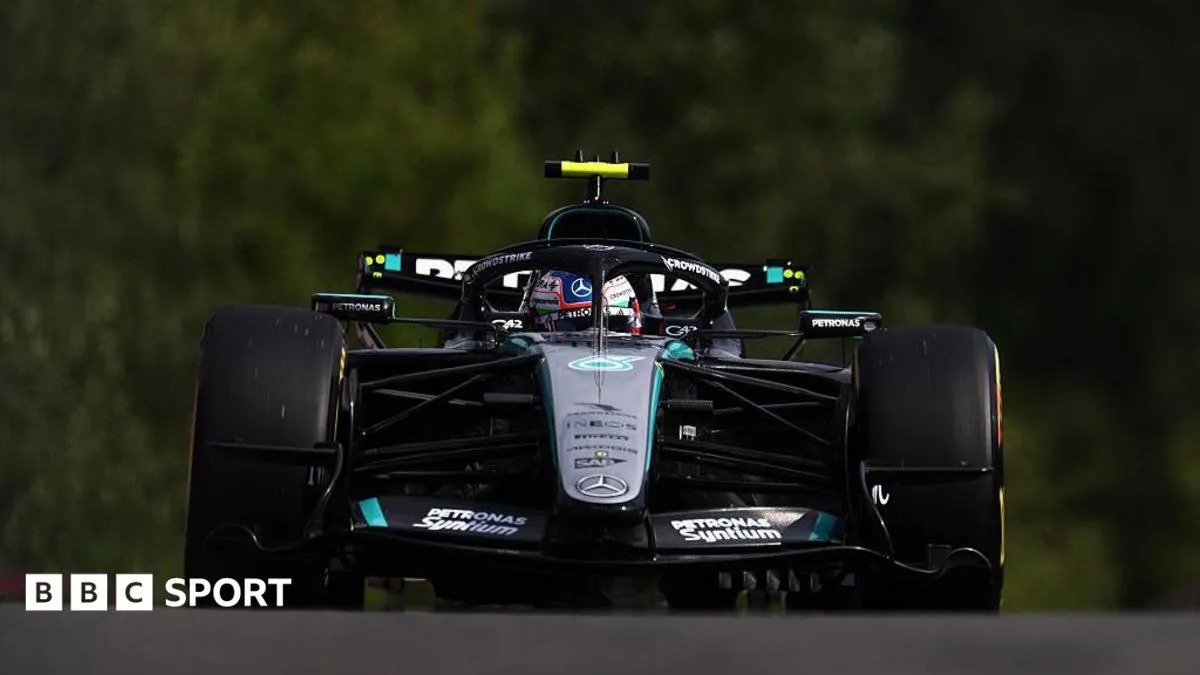
Kimi Antonelli set the fastest time in Friday practice at the Belgian Grand Prix, with Alpine's Pierre Gasly causing a red flag after a heavy crash. The immediate consequence for teams is a disrupted session schedule and urgent focus on repairs, running plans, and risk control going into qualifying.
Kimi Antonelli put Mercedes on top of Friday practice at the Belgian Grand Prix by setting the fastest time in FP2, even as Alpine's Pierre Gasly brought proceedings to a halt with a heavy crash. The session ended up split into two realities: the stopwatch that kept moving forward, and the red flag moment that instantly reset every team’s weekend rhythm.
For decision-makers, this is the kind of Friday that forces fast prioritization. Antonelli’s pace matters because it helps establish a weekend baseline, but Gasly’s crash matters because it eats track time, triggers safety and repair work, and can expose weaknesses in setup choices. A red flag during practice is not just a bad moment for the driver who crashes. It is operational disruption for the whole garage: mechanics, engineers, data analysts, and strategy staff all have to re-plan what they can test and when.
Spa is famously unforgiving on the lap and even more unforgiving during learning. The circuit’s high-speed sections and complex braking and traction demands mean teams are typically chasing a narrow window that balances confidence, tire behavior, and aerodynamic stability. In that environment, a heavy crash can be a signal, or it can be a one-off, but either way the team’s engineering team has to treat it like a system problem until proven otherwise. That includes looking at the car’s configuration, driver inputs, and any conditions that might have contributed. Alpine, like every other team, also has to manage the practical constraints: spare parts availability, repair turnaround, and the internal time budget before the weekend’s more unforgiving sessions.
Meanwhile, Antonelli’s fastest FP2 time is the clean storyline teams want to start qualifying with, because pace in practice influences confidence and planning. Mercedes can translate that time into a narrower target for tire preparation, fuel strategy modeling, and car balance adjustments for later sessions. Even if practice times do not perfectly predict Sunday outcomes, they still matter as inputs. In Formula 1, no one gets bonus points for being “close” on paper. You earn advantage through better lap stability, better braking consistency, and better grip at the points where it counts, and practice gives the closest thing to real-world evidence.
This dynamic also matters for the people behind the scenes who are under pressure to show progress. When a team brings in a younger driver, every weekend becomes more than racing. It is a live assessment of development work, adaptability, and whether the car can be tuned to a driver’s style without compromising performance. In Antonelli’s case, the message from Friday is straightforward: he had enough pace and enough control to post the fastest time despite the chaos around him. That kind of signal can shift internal conversations, including which areas of the car to double down on and which to keep flexible.
On the operational side, Gasly’s heavy crash adds a layer of caution. A crash strong enough to cause a red flag forces the sport’s safety and operational protocols into motion and typically compresses the remaining usable track time. Even without changing the rules on paper, compressed practice changes what teams can accomplish. They might lose opportunities to evaluate a specific setup, run a tire comparison, or gather data for qualifying trim. The knock-on effect is simple: if you cannot test it now, you are estimating later. That raises uncertainty right when every team is trying to reduce it.
For executives and boards, the second-order question is how teams manage risk and learning under real constraints. Formula 1 is an engineering and execution business, but the sport is also a safety business. A heavy crash is a reminder that the line between “aggressive” and “dangerous” is thin, and teams have to prove they can operate within it, repeatedly. At the same time, being overly conservative can leave performance on the table. The best teams turn incidents into structured learning, keeping the weekend alive while protecting the long-term development path.
By the end of FP2 at Spa, the weekend narrative is set: Mercedes has a clear speed reference through Antonelli’s fastest time, while Alpine faces the immediate task of recovery and verification after Gasly’s heavy crash. For rival teams, that combination creates a pressure-cooker. If you are chasing pace, you now have a reference for what “good enough” might look like. If you are more worried about stability and reliability, you have a reminder that one wrong move can collapse an entire session. Either way, Friday’s events increase the urgency for the next steps, because in Formula 1, you cannot pause the calendar to fix the consequences of the last lap.
This story's Key Insights and Take-aways are locked.
Create a free account to unlock Executive Actions for one credit.
Register to UnlockAlways free for Executives Club members. Join the Club
More in Entertainment

12TB Steam 'teraleak' goes beyond Valve: GTA 3, Mafia 2 prototypes exposed
A 12-terabyte dump of Steam data reveals prototypes and builds of third-party classics like GTA 3 and Mafia 2, plus unreleased Valve content, rewriting game history.

LinkedIn's romance problem: 1 in 4 workers say dating on it is fair game
A new survey shows a quarter of U.S. employees treat the professional network as fair game for romance, even as LinkedIn bans it and removes hundreds of thousands of offending posts.

Enhypen's first No. 1 album breaks K-pop's Billboard 200 streak
The K-pop group's 98,000-unit debut tops the chart while Dolly Parton's catalog reentry shows how death reshapes streaming.