
Knicks fans just watched 53 years of heartbreak finally snap into belief
The “this doesn’t feel real” moment Knicks supporters have waited for arrived, and it changes how decisions get made next.
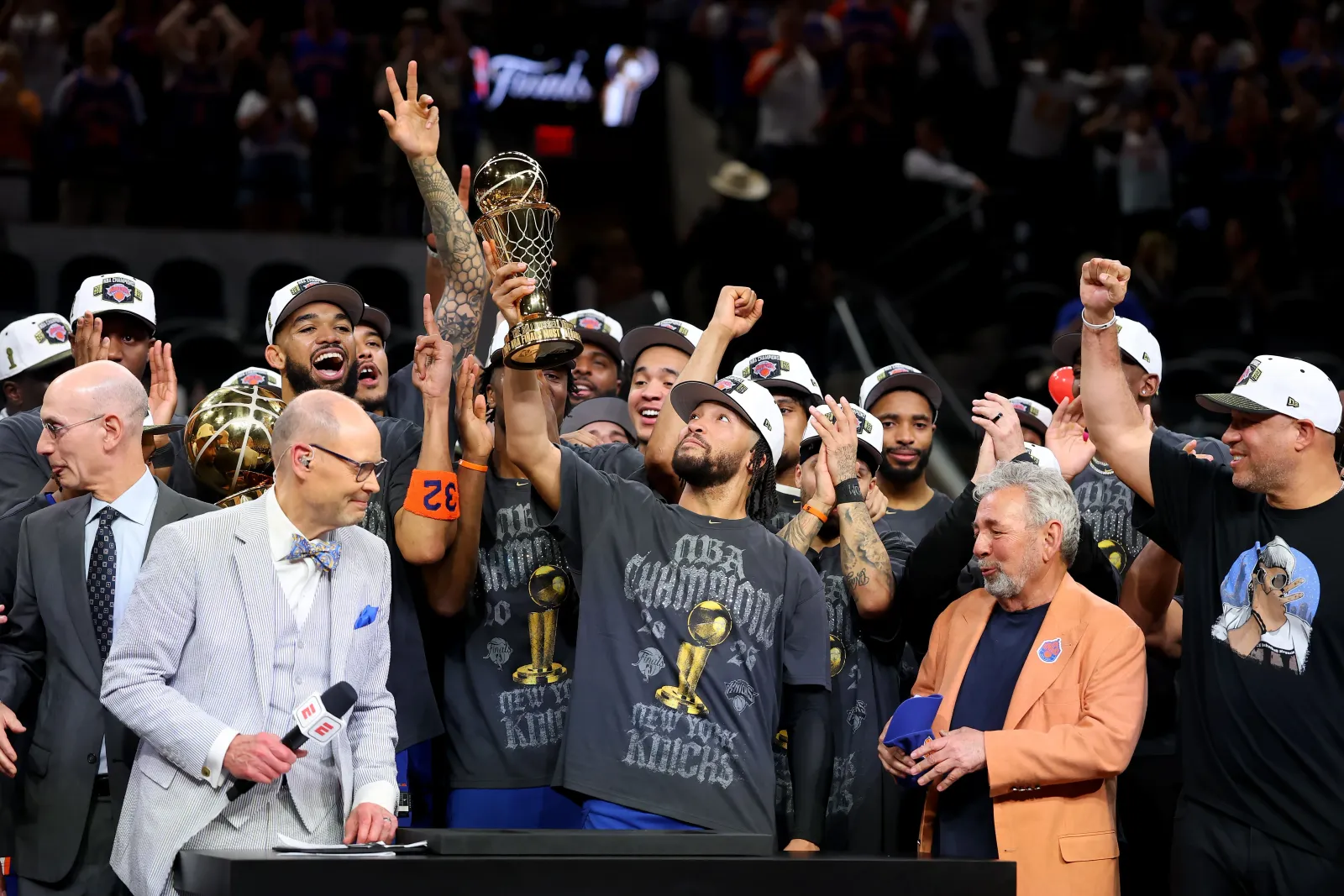
The New York Knicks’ most devoted fans describe decades of heartbreak, from Jordan to Starks’ Game 7 to the Zion draft. For decision-makers, that cultural weight matters because it shapes expectations, risk tolerance, and how quickly patience runs out.
This doesn’t feel real. All New York Knicks fans have known for the last 53 years is heartbreak and humiliation. The list of what they mean by “the curse” is basically a greatest-hits album of near-misses: Jordan. Starks’ 2-18 in Game 7. Reggie. Ewing going down. Missing out on Steph by one pick. Rebuffing Jeremy Lin. Phil Jackson. Amar’e’s knees. The Unicorn jumping ship. The Zion draft.
That is the emotional scoreboard Knicks executives have been working under since long before anyone in a suit ever used the phrase “process.” The source frames it as lived history, not vibes. When you have 53 years of collective memory that the next big thing is always one bad bounce away, every roster decision becomes higher stakes than it looks on paper. A trade, a free-agent pivot, even a draft-night preference can land like a verdict. You are not just building a team. You are negotiating with expectation.
So when the Knicks experience something that fans interpret as “finally” breaking the pattern, the second-order effect hits the business side fast: expectations become an economic variable. In sports, on-court results drive off-court outcomes, but the translation is instant. Ticket demand, merchandising, and broadcast attention typically react to winning, but the bigger boardroom consequence is internal. When fandom shifts from resignation to belief, the org gets permission to take calculated risks, because the cost of failure changes. Failure is still painful, just different. It goes from “we’re doomed” to “we missed, but we were close,” and that nuance changes how much time leadership gets.
There is also a reputational clock that only runs one way: toward scrutiny. The Knicks history the source cites is a catalogue of the exact moments that become shorthand for management missteps. Missing out on Steph by one pick is the kind of detail that sticks. The Unicorn jumping ship is the kind of outcome that creates a narrative about whether a franchise can close. Rebuffing Jeremy Lin is the kind of decision that fans treat as a mismatch between talent evaluation and reality. Phil Jackson becomes shorthand for a high-profile presence that might not have delivered the expected outcome, while Amar’e’s knees and Ewing going down remind everyone that injuries can erase good bets.
This is why “this doesn’t feel real” matters. It is not just an opinion. It is an articulation of how belief is manufactured in sports fandom: through repeated evidence that the team can’t finish. When the evidence stops being negative, the emotional equation changes overnight. That shift affects the incentive structure for executives. Boards tend to reward momentum. Ownership tends to want stability and a credible plan. But momentum is not just wins and losses. It is also the narrative that management is steering the franchise in the right direction.
Now zoom out to how the league landscape influences the Knicks specifically. The source’s references span eras, from the Jordan era to the modern star-hunting cycle. Across those years, the NBA has been evolving in how stars are acquired, how contracts are constructed, and how players decide where to play. Even without adding new facts beyond the source, the takeaway is clear: the market for elite talent is competitive, and the Knicks have repeatedly been on the wrong side of “one pick” and “jumping ship” moments. That makes any real improvement feel like it must be a mistake, because the historical distribution of outcomes has been skewed toward disappointment.
And yes, there is a regulatory-adjacent angle even for people who think they are only reading sports news. The NBA’s collective bargaining and roster rules shape what is possible, and those constraints can turn “obvious” decisions into complicated tradeoffs. When fan expectations swing, leadership still has to operate within league structure, salary frameworks, and roster limits. The second-order implication is that boards and executives often become more willing to spend political capital internally, because they believe the constraints can be navigated better than they have been in the past.
Finally, for peers in similar roles, the Knicks story is a case study in how culture becomes a performance metric. If you lead a franchise with a long history of “we missed,” your team is always measured not just by outcomes, but by whether you can reverse the meaning of those outcomes. When Knicks fans feel the old script break, the strategic stakes jump: keep the plan coherent, protect the closing execution, and avoid the kind of decision that fans will eventually reduce to one brutal line item like “one pick.” In other words, the “belief” moment creates a new standard. And once a franchise earns belief, the next failure does not just hurt. It gets interpreted as betrayal of history.
This story's Key Insights and Take-aways are locked.
Create a free account to unlock Executive Actions for one credit.
Register to UnlockAlways free for Executives Club members. Join the Club
More in Entertainment

Russell Brand's accuser 'bewildered and confused' as he denies 7 sex charges
The criminal case against the comedian is a live test of how media companies manage talent risk when serious allegations go public.

'It's a Magic Trick': Ballet Experts Say Rosalía's SNL Pose Is Impossible
Three ballet experts tell Rolling Stone Rosalía's gravity-defying SNL stillness shouldn't be possible - and why the debate is now part of the show.

Activision CMO: GTA 6 Will Boost Call of Duty, Not Bury It
Activision's top marketer says Rockstar's blockbuster will drive players back to consoles and into Modern Warfare 4, even as the company admits its recent strategy failed.