
Knicks’ ticker-tape parade likely brings NYC $380M economic activity for $2M logistics
Mayor Zohran Mamdani’s Thursday parade turns a championship into a measurable tourism and demand spike.
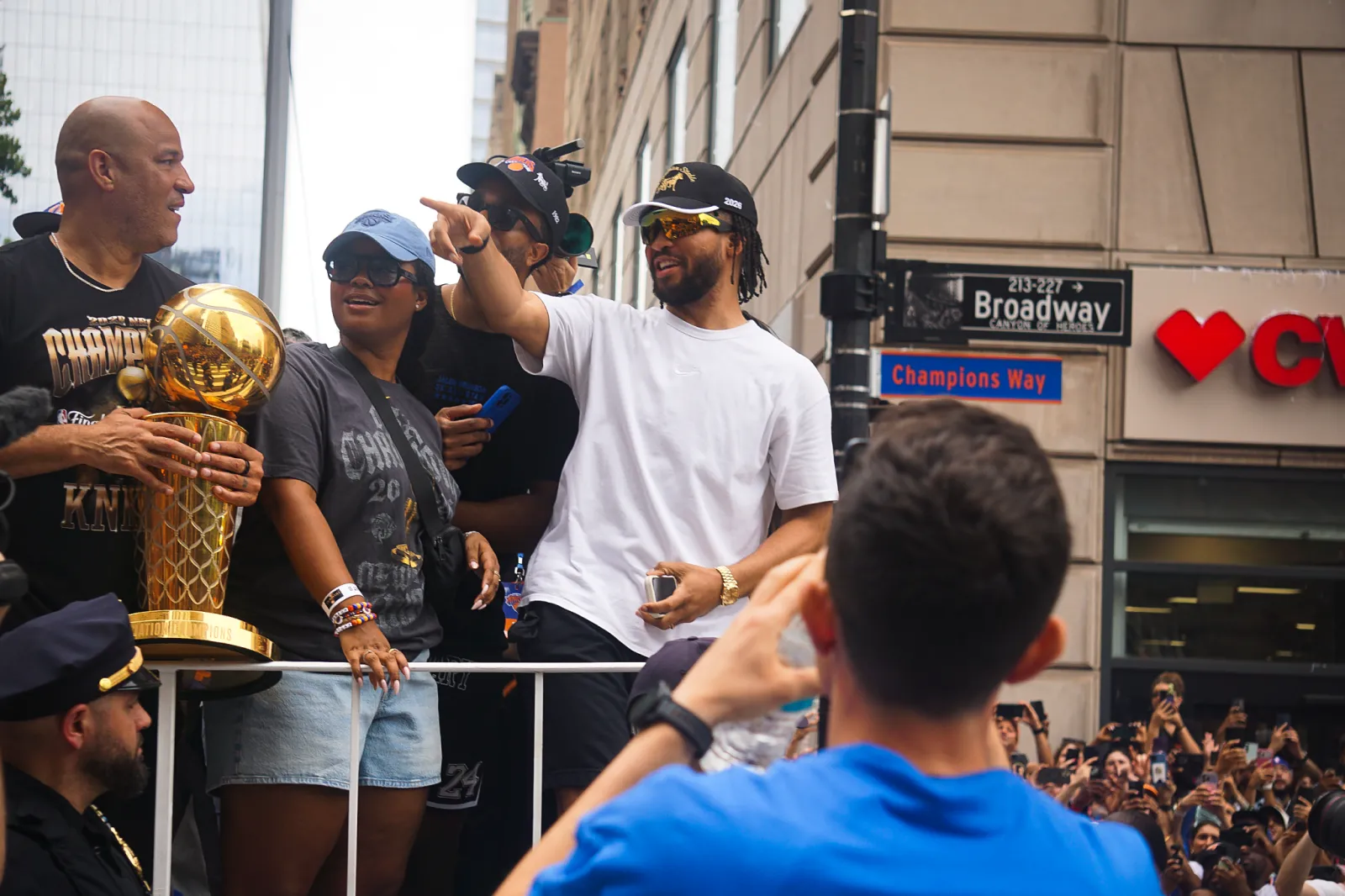
The Knicks capped a postseason that NYC’s Economic Development Corporation says generated at least $380 million in economic activity during home games, while the parade logistics and preparations are expected to cost over $2 million. For decision-makers, the math is a live case study in how marquee sports events can shift spending, not just buzz.
The Knicks finally got what New York had never done before: a first-ever ticker-tape parade. And the financial angle is loud. According to the New York City Economic Development Corporation, the Knicks’ post-season run generated an $380 million in economic activity during home games, with each home game during the Finals worth $90 million. That is paired with a parade price tag that, while not trivial, lands in a different universe: logistics, preparations, and cleanup are expected to surpass $2 million.
The headline-friendly part of this story is the simple ratio: a roughly $2 million logistics tab against $380 million in economic activity. The quieter part is how much structure matters. When the Milwaukee Bucks won the championship in 2021, the entire NBA playoff run generated $57.6 million in economic activity for that city. New York’s version of “the spotlight” looks bigger not just because it is bigger, but because it gets more expensive, more cross-market, and more visit-driven.
Zoom out for a second and you see why executives should care. There is a long-running debate in city economics and major-event budgeting: does a big public moment create net new spending, or does it just reshuffle the same dollars from one restaurant to another? The source points to a key mechanism. About 20% of Game 1 purchases in San Antonio came from New York billing zip codes, meaning fans flew to Texas specifically to keep the money flowing for New York. When out-of-town visitors come in, that is typically net new money entering the local economy, not a local reallocation. That distinction is the difference between “feel-good” and “measurable.”
Now add another layer: pricing and demand. NBA Finals tickets are typically priced 200% higher than regular season equivalents, and New York commands a premium on top of that premium. The source notes floor seats at the Garden ran a minimum of $10,000 this year. Those price dynamics do two things at once. They concentrate spending among high-intent fans and they raise the stakes for the host market, because the event becomes something more like a destination experience than a casual commute.
And the Knicks did not just win. They ended a historic withholding. Until now, the city’s own political choices mattered. When the Knicks won titles in 1970 and 1973, the then-mayor John Lindsay passed on the downtown ticker-tape spectacle entirely. The '70 team got a reception at Gracie Mansion, while the '73 squad got a luncheon and a City Hall ceremony drawing roughly 2,000 people. This year was different, in both timing and execution. Minutes after Jalen Brunson sealed the title in San Antonio last Saturday, he posted three words on X: "Parade. Thursday. Manhattan." By 7:30 a.m. Thursday, the NYPD announced that all viewing pens were full more than two hours before the first float moved, and subway service was suspended south of Canal Street to manage the crush.
That immediately turns the story into an operations and risk-management case study. The parade itself is expected to cost more than $2 million for logistics, preparations, and cleanup, but security is where the scale really shows. More than 10,000 officers were deployed, described as the largest planned deployment in NYPD history and nearly one-third of the department's entire uniformed force. The source says it exceeded even New Year's Eve in Times Square. The operation included aviation teams, drones, heavy weapons units, explosive detection K-9s, and a plainclothes unit working inside the crowd. The mobilization was also tied to recent real-world street conditions: after 63 people were arrested and 10 officers injured during street celebrations following the Game 5 championship-clinching win.
If you are a board member or CFO, this is where you focus. The source does the arithmetic: the net numbers clearly favor the city, at least on economic activity and with the stated cost assumptions. A “$2 million logistics tab against $380 million in economic activity” is the kind of return ratio most investments would envy. But the second-order implication is not just “events print money.” It is also that public-private outcomes depend on capacity and constraints. The source highlights demand pressure with 347,000 applications for just 600 tickets to the City Hall ceremony, a sign that the political decision to make this a public moment had teeth, not symbolism.
Finally, the story spreads beyond the day itself, which matters for media economics and tourism planning. The source notes that the 2026 NBA Finals averaged more than 20 million viewers on ABC/ESPN, the most-watched postseason since 1998. That national broadcast becomes a sustained advertisement for New York City at a scale no tourism campaign can replicate. And after confetti crews were already at work, Mayor Zohran Mamdani framed the political meaning in terms of resilience and belief. At City Hall he said, “The Knicks did not just win for New York City. They won like New York City.” He went on to describe New York as a place defined by backing up against the wall, odds stacked high, rent payments, and the idea of asking why someone is being given a head start.
Even the keys part is a reminder that modern city branding is not only about slogans. The Keys to the City Mamdani presented were commissioned months in advance, manufactured by Azra Khalfan, designed by Aneesh Bhoopathy, with typography by Tobias Frere-Jones, the designer behind the typefaces of the 9/11 Museum and NYU. In other words: the championship created a moment, but the city prepared an object and a narrative system to make the moment last.
For executives and other decision-makers, the strategic stakes are straightforward. You are not just funding a parade; you are underwriting a high-profile, high-traffic, high-visibility economic channel, with real security and logistics costs and with measurable activity during home games. If you are looking for a template for when public spending is likely to deliver net-new impact, the Knicks offer a rare, data-backed playbook: big demand, out-of-town spending, national attention, and a cost structure that still nets positive.
This story's Key Insights and Take-aways are locked.
Create a free account to unlock Executive Actions for one credit.
Register to UnlockAlways free for Executives Club members. Join the Club
More in Business

A flaw in PHP just forced governments to pull their own sites offline
European agencies from Belgium to Germany took websites dark to patch a critical weakness in the language behind almost 70% of the web, and the blast radius extends far beyond government portals.

BioWare shuts down, Mass Effect 5 dead after $55B EA buyout
The legendary RPG studio's closure lands months after a $55 billion investment group buyout of EA, raising tough questions for gaming's biggest acquirers.
Musk weighs Tesla-SpaceX mega-merger as boards form review panels
Special committees at both companies will examine a tie-up that could fuse electric vehicles and space launch, forcing a fresh look at governance and valuation.