
Landmark supercooled pig kidneys survive days at -4°C, then get transplanted
The time bottleneck is shrinking, and organ-banking strategies just got a credible new lane.
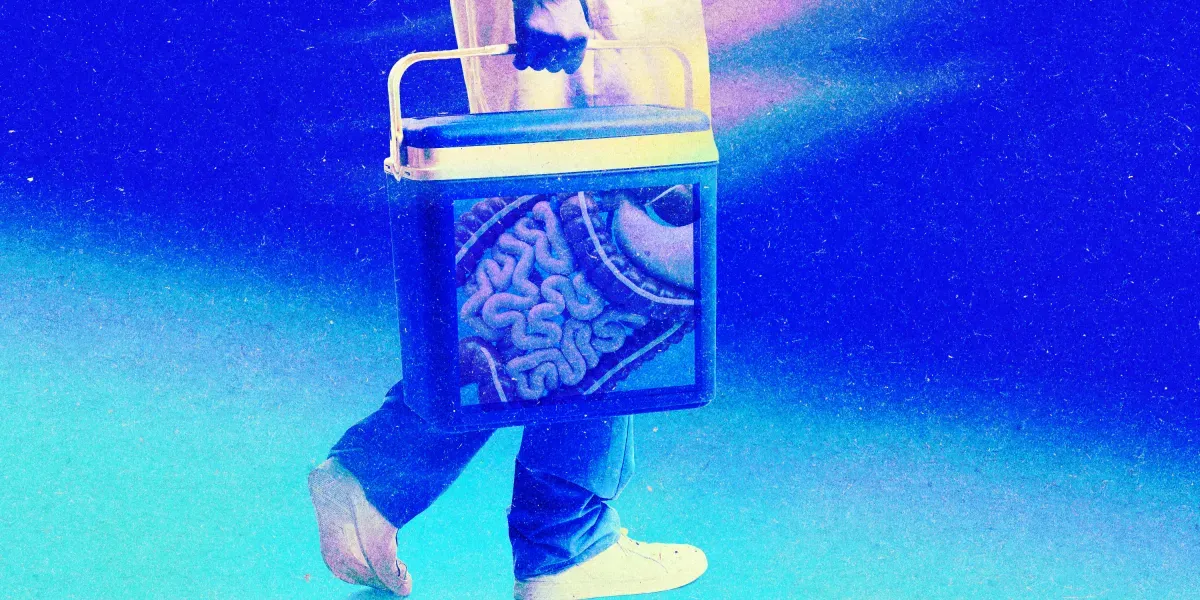
Researchers, led by Matthew Powell Palm of Texas A&M, supercooled pig kidneys to -4°C (25°F) and preserved them for days before reimplanting them back into pigs. The success challenges the long-held “ice = irreversible damage” problem and strengthens the case for longer-lived organ preservation pathways.
Here is the key problem in organ transplantation that most people only hear about in headlines: time. Even when donor organs are kept on ice, they survive only a matter of hours outside the body. That mismatch between “when the donor organ becomes available” and “when the patient needs it” drives urgency, logistics stress, and ultimately shortage.
Now add a new data point to that bottleneck. In new research, a team has been able to supercool pig kidneys, animals with organs of a similar size to human ones, and preserve them for days. The kidneys survived being stored at -4°C (25°F), and the researchers eventually reimplanted them back into pigs. For executives watching biotech’s hardest operational math, this matters because it is a proof-of-concept that the clock might be pushed out, not just optimized around.
The reason is brutally simple. It has proved super difficult to freeze organs. Once ice forms in them, they are done. Ice crystals create all kinds of damage and render the organs unusable. That limitation has been a major reason why the industry talks about preservation in terms of hours, not days, and why “organ banks” remain a goal rather than an everyday reality. Organ banks would be stores of human organs preserved for days, weeks, months, or even longer, letting teams run tests, find the best matches, and transport organs to recipients.
But freezing is not the only conceptual path. Some researchers have focused on cryopreservation, rapid extreme cooling that essentially leaves cells in a glasslike state. This process is routine for eggs, sperm, and embryos. Those are cooled to -196°C in less than two seconds and can be used even after decades in storage. The leap from reproductive cells to organs is where the story gets tougher, and the source makes the boundary clear: no one has managed to cryopreserve and thaw human organs for transplantation. Separately, plenty of human bodies and brains have been stored at ultra-low temperatures in the hope that they might one day be rewarmed and brought back to life. That broader cryonics ecosystem is relevant here mainly as background on what the field thinks is possible, even if it is not the same as successful transplantable organ preservation.
In March, the newsletter also described Stephen L. Coles, a gerontologist who opted to cryopreserve his own brain. After he died in 2014, his body was taken to Alcor, a cryonics facility in Arizona. A team removed Coles’s head, perfused his brain with cryoprotective chemicals, removed the brain from the skull, and cooled it to -146°C. Years later, a cryobiologist named Greg Fahy studied pieces of his brain and found that the brain cells, which had shrunk, “bounced back” once they were rewarmed. The important nuance is what the source emphasizes: bouncing back does not mean the cells are alive, and it does not mean the brain can be reanimated.
That same “hard problem, no shortcuts” theme shows up in the responses to the organ-preservation work. Matthew Powell Palm, working on other ways to preserve organs, is central to this story because his team helped manage the supercooled pig kidneys and successfully transplant them in a study described as a “landmark achievement.” The source notes a specific contrast in approaches: his method did not require cryoprotectants. Other teams, meanwhile, are exploring chemical cocktails that might allow organs to be stored at lower temperatures for longer periods of time. For decision-makers, the strategic subtext is that the field is trying multiple technical routes, because no single workaround can erase the fundamental physics and biology problem of injury during cooling, storage, and thawing.
There is also a parallel track that does not depend on extreme cold: machine perfusion. Researchers use devices that perfuse organs with nutrients, mimicking what happens inside the body. Over roughly the last decade, machine perfusion has become more common, typically used to maintain livers and kidneys for up to about 24 hours. The industry is now adapting this protocol for a growing list of organs, including eyeballs. The source calls out a recent feat that might enable whole-eye transplants. And it offers a concrete example of how teams are extending the playbook: in Valencia, scientists developed a perfusion system for uteruses. They nicknamed the device “Mother” and used it to keep a human uterus alive for a day.
Taken together, this is why the newsletter calls it an exciting time for organ preservation. Supercooling that lets pig kidneys survive days at -4°C (25°F) sits beside efforts to prevent ice damage through cryopreservation, alongside chemical strategies that seek better preservation without “toast,” and beside machine perfusion systems that stretch survival beyond a cold-storage approach. No matter your role, the second-order implication is the same: the longer organs stay viable outside the body, the more flexibility transplant systems gain. That flexibility can mean better matching and testing, fewer wasted organs, and less scramble. And for anyone building, funding, or governing in this space, the stakes are not abstract. A shift from hours to days could rewire how supply chains, regulatory expectations, hospital workflows, and investment theses around “organ readiness” get priced.
This story's Key Insights and Take-aways are locked.
Create a free account to unlock Executive Actions for one credit.
Register to UnlockAlways free for Executives Club members. Join the Club
More in Technology

EU hits Google with €890m fine for favoring its own apps under new rules
First major enforcement under the EU’s digital rules signals a stricter era for app store and search gatekeepers.

PlayStation Network outage prevents logins, online play, and PlayStation Store purchases
Sony’s PlayStation Network is down in a way that can freeze accounts, halt multiplayer, and interrupt digital revenue.

Anthropic says Claude Opus 5 is its best and cheapest model for businesses
The cost crunch is real, and Anthropic is trying to win it with a new “best performing” and “most cost-effective” Claude.