

Lars Ulrich calls U2 Sphere night a “frontier,” then faces Metallica’s “intimidating” residency
The drummer says U2’s Las Vegas opener re-energized him, as Metallica’s Sphere run expands to 24 nights in 2026-2027.
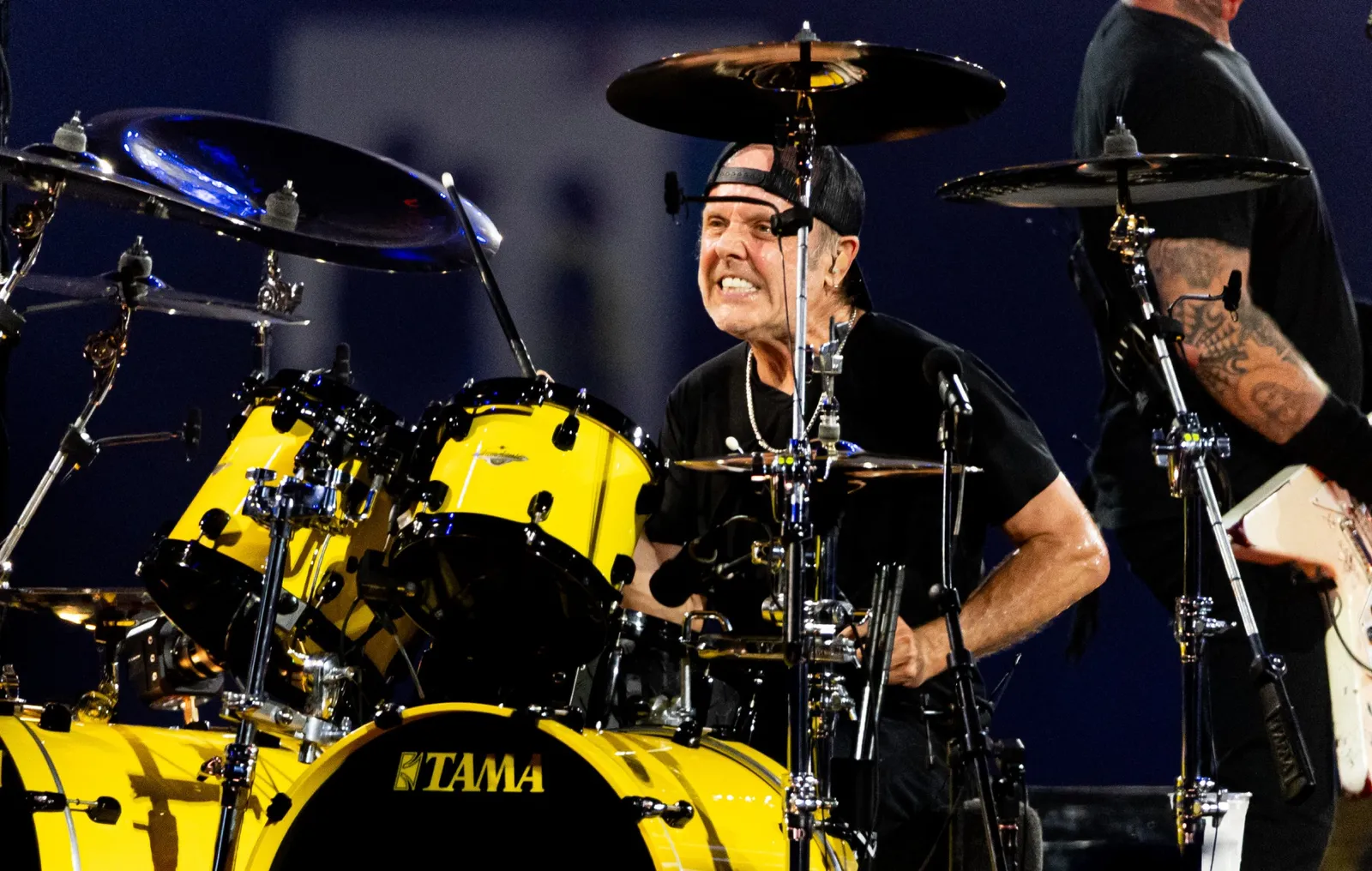
Lars Ulrich looked back on U2’s opening night at the Las Vegas Sphere, telling The Edge he was “awestruck” and “inspired.” That sets the emotional and production bar for Metallica’s own Sphere residency, which grew from an 8-date plan to 24 nights.
Ahead of Metallica’s residency at the Las Vegas Sphere, Lars Ulrich revisited the moment he watched U2 crack open the venue in real time. He was there opening night, and speaking to U2 guitarist The Edge during his Close To The Edge show on SiriusXM, Ulrich said he was “so just fucking awestruck, inspired, energized - all of it.” The point was not just that the show looked impressive. It made him reconsider what was possible on stage, describing it as “Holy shit, this is somehow another frontier.”
That “frontier” feeling matters because Metallica’s Sphere plans are no longer a small experiment. The band is set to embark on their own residency at the high-tech venue this autumn, and the scope has already ballooned. When Metallica first announced their stint at the Sphere, the “Life Burns Faster” run was initially slated for an eight-date run between October 1 and October 31. But after overwhelming demand from fans, the residency expanded to an extensive 24 nights. The schedule now runs weekly in two-date increments from October 2026 through March 2027.
Ulrich didn’t sugarcoat the pressure that comes with taking a venue that only a handful of artists have fully “cracked” and making it feel inevitable for a different band. He called the shows “gonna be challenging,” adding that, after talking to others, it was “overwhelming and fucking intimidating.” The underlying fear is familiar to anyone who has ever upgraded a product into a real platform: when the environment changes, control disappears. Ulrich framed it as the Sphere being a place they “don’t end up in often enough,” because they have a tendency to perform in environments they “completely control and know.”
So the strategy, at least emotionally, is to get comfortable with being slightly out of their own element. Ulrich said, “hopefully when we step out on stage that first night, we’ll have it somewhat together,” and he linked that goal to the value of stepping into a different kind of stagecraft. That’s a subtle but important point for executives and operators watching entertainment tech: the Sphere is not just a bigger arena. It’s a fundamentally different production system, and even a legendary act has to adapt its instincts.
The venue is built for adaptation. The Sphere features massive wraparound 16K screens and a cutting-edge sound system. It has also become a coveted destination for major rock and pop acts, with Metallica following U2, Phish, Dead & Company, and the Eagles in hosting a residency at the Sphere. Last spring, Kirk Hammett talked about the possibility of playing the arena and called it a “great example of how venues are changing.” He pointed to “modern technology” used “to the fullest,” aimed at raising the levels of production and entertainment, “connected to AI,” and turning it into a “crazy experience.”
Executives should read those comments as a blueprint for where competitive advantage is moving. In a traditional concert, the artist drives the show, and the venue is a constant. Here, the venue is part of the creative engine. Robert Trujillo also weighed in with the “possibilities are endless” line, adding: “No heavy rock band has done this.” For boards and leadership teams, that’s a high-stakes signaling problem. If you do not align production, rehearsal, tech vendors, and creative execution early, you risk delivering something that feels unfinished in a platform designed to flex at maximum.
Metallica’s wider timeline also adds operational context. Ahead of their Sphere show, the band stopped in London to wrap their mammoth “M72” tour. The thrash metal icons performed at London Stadium as part of the last UK and Ireland leg of their world tour, which kicked off back in April 2023 and celebrated the release of their latest album “72 Seasons.” London dates came after shows in Dublin, Glasgow, and Cardiff over the previous weeks. The first of the two London Stadium dates was played at the start of the month (July 3), where James Hetfield and the band broke out hits including “Master Of Puppets,” “Seek And Destroy,” and “Sad But True.”
For leadership teams, that matters because it suggests how these residencies get resourced. You are not just buying tickets. You are building a long runway of production readiness, tour carryover, and creative continuity until the residency window opens in October 2026. And Metallica’s recent activity shows they are still testing audience response beyond the strict confines of a scripted set. The band’s “Kirk and Rob Doodle” segment has seen covers including The Pogues, The Proclaimers, a-ha, and ABBA, and even Tom Jones’ “Delilah” in Cardiff, despite the song being banned from the Principality Stadium. They have also drawn attention for Hammett wearing a “Taylor Swift Is A CIA Psyop” shirt on stage, urging fans to donate blood and plasma by becoming the first-ever metal group to collaborate with UK blood services, and donating £20,000 to a foodbank in Cardiff.
All of that funnels back to one business-relevant truth: Sphere-level venues compress execution risk into the first performance moment, while also amplifying brand upside if you land it. Ulrich’s “frontier” reflection on U2’s opening night is a reminder that the bar is not average. It’s historical. And for Metallica, the bar keeps rising as the run expanded from an eight-date plan to 24 nights across October 2026 through March 2027. The “intimidating” part is not just the scale. It is the expectation that the show will feel like another milestone, not another rental stage.
This story's Key Insights and Take-aways are locked.
Create a free account to unlock Executive Actions for one credit.
Register to UnlockAlways free for Executives Club members. Join the Club
More in Technology

Google quietly links your phone number to every Android account on your SIM
Adding a SIM now ties your phone number to all Google accounts - and future accounts inherit it. Here's the security and privacy stakes.

Hijacker AI 'Skynet mode' runs 100,000 attack steps against exposed models
Symantec caught a criminal AI agent that borrows other models, steals data, and mines crypto; the only relief is no confirmed victims yet.

Nvidia's AI-financier shift faces its first big test as neoclouds stumble
A rout in neocloud stocks is forcing investors to weigh Nvidia's hidden exposure as both supplier and lender to the AI buildout.