
Lebanon's last bell maker: a 300-year secret born from a rifle
Naffah Naffah keeps a family craft alive in the mountains near Beirut, with his sons poised to inherit a foundry that began with an 18th-century gunsmith.
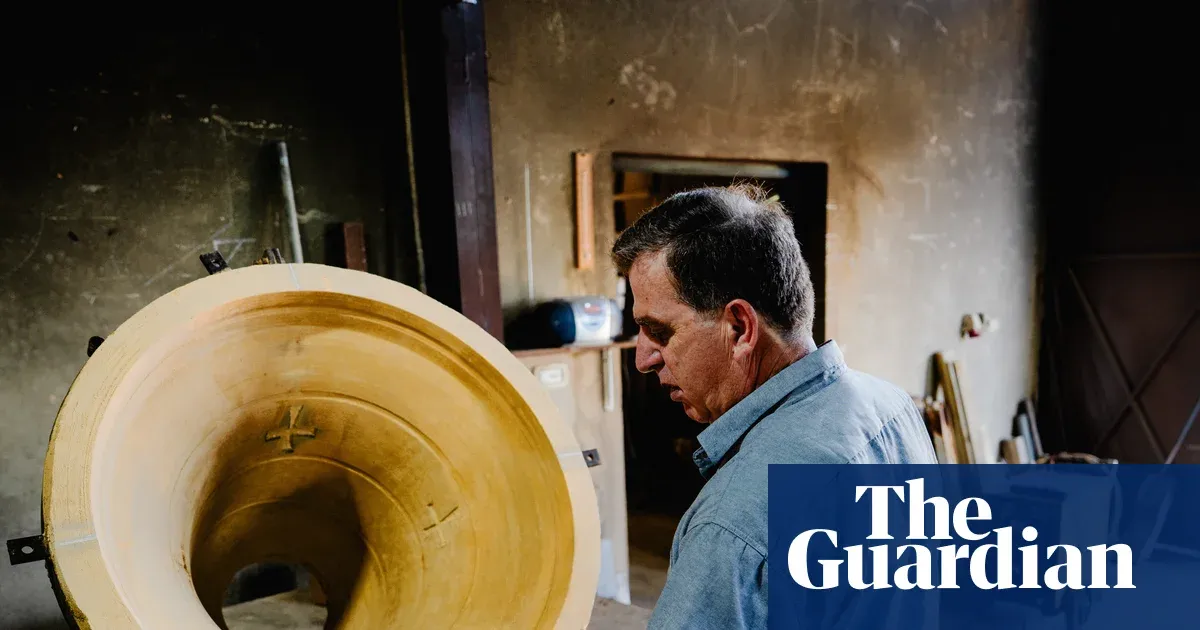
Naffah Naffah, Lebanon's only church-bell maker, continues a 300-year family tradition in Beit Chabab, with his sons set to take over the foundry upon his retirement. The craft's origin traces to an 18th-century metalworker who learned bell-making by shadowing a Russian engineer after secretly arming revolutionaries.
The story of Lebanon's last church-bell maker begins not with bronze, but with a rifle. In the 18th century, Youssef Gabriel, a local metalworker in the town of Beit Chabab, was secretly forging rifles for Arab revolutionaries fighting the Ottoman empire, which then controlled Lebanon. One day, a Russian engineer arrived in town to cast a church bell. Gabriel, intrigued, shadowed the man and absorbed the entire process on sight. That stolen knowledge became the foundation of a family trade that has now survived 300 years.
Today, Naffah Naffah carries that legacy. He is Lebanon's only remaining church-bell maker, working from a foundry in the mountains near Beirut. When he retires, his sons will take over the furnace, ensuring the line continues. The story, reported by The Guardian, is a rare case of a craft that has outlived empires, wars, and economic collapse - and it all traces back to a moment of quiet observation.
The foundry's survival is no accident. Bell-making is a demanding, precise art: molten metal must be poured at exact temperatures, molds must be perfect, and the final product must ring true. For centuries, the Naffah family has supplied churches across Lebanon, a country where church bells are not just religious instruments but communal alarms, celebrations, and markers of identity. In a region often defined by conflict, the sound of a bell still calls people together.
The craft is fragile, though. Naffah Naffah is the last of his kind, and the pressures on such traditions are immense. Across the Middle East, artisanal trades are disappearing as younger generations move toward cities, technology, and more stable careers. The fact that his sons are willing to take over is itself a quiet victory - a commitment to heritage that many family businesses fail to secure. It is also a reminder that the most valuable assets are often intangible: skill, memory, and the patience to master a process that cannot be rushed.
The historical irony is rich. The same family that once armed revolutionaries against an empire now builds instruments of peace. The Ottoman empire is long gone, but the bells still ring. Beit Chabab, the town where it all started, remains the heart of the operation. The continuity is a testament to how skills, once learned, can outlast the politics that surrounded their origin. What began as an act of rebellion became a tradition of devotion.
For executives and founders, the story offers a lesson in longevity. The Naffah family has survived 300 years by doing one thing exceptionally well, adapting to changing times without losing the core craft. They did not scale into factories or dilute the brand. They stayed small, stayed precise, and stayed relevant to their community. In an era of disruption, there is something to be said for that kind of focus. The foundry is a case study in the power of niche mastery over expansion for its own sake.
The succession plan is equally instructive. Naffah Naffah's sons are not just inheriting a business; they are inheriting a responsibility to a community and a tradition. For family businesses everywhere, the challenge is always the next generation. Here, the answer seems to be that the craft itself is the inheritance - and the sons have chosen to accept it. That choice is the difference between a business that merely survives and a legacy that endures.
As Lebanon continues to navigate economic and political turmoil, the survival of a 300-year-old foundry is a small but meaningful signal. It suggests that some things endure beyond the headlines. The bells made in the mountains near Beirut will keep ringing, a sound that began with a gunsmith's curiosity and a Russian engineer's unknowing lesson. For anyone building something meant to last, that is a story worth remembering.
This story's Key Insights and Take-aways are locked.
Create a free account to unlock Executive Actions for one credit.
Register to UnlockAlways free for Executives Club members. Join the Club
More in Business

Elon Musk unveils a flying car, and SpaceX helped build it
The Tesla CEO's showcase at a SpaceX facility signals a future where road and rocket engineering converge.

Apple's $2,000 iPhone Duo opens preorders, taking on Samsung and Google
Apple's first foldable hits the market at a premium price, reshaping a category Samsung and Google have led.

Pope Leo XIV, first American pope, diagnosed with lung cancer
The 71-year-old Chicago-born pontiff underwent successful surgery on his right lung, and his diagnosis raises new questions about his AI-focused papacy and the Vatican's future.