
Lenovo targets $2B convertible bond to repurchase debt and buy back shares
The zero-coupon deal, tied to AI infrastructure momentum, could reshape Lenovo’s leverage and shareholder math by 2033.
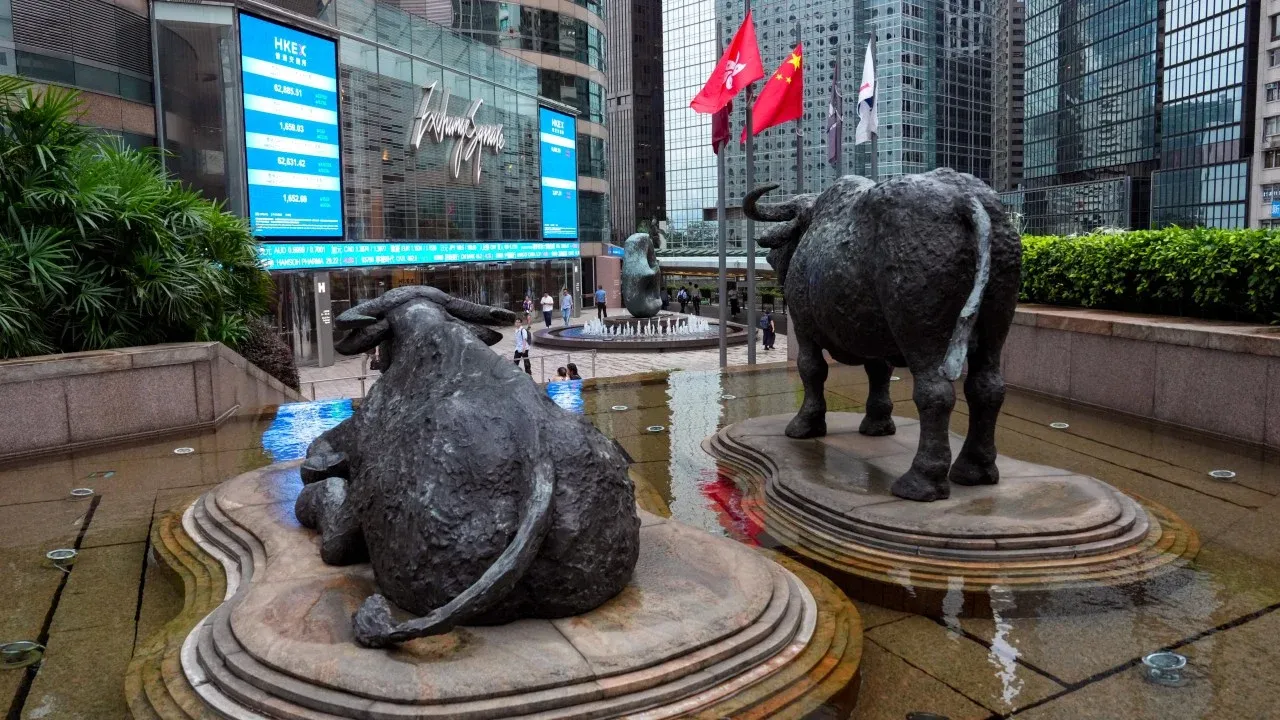
Lenovo Group says it plans to raise US$2 billion via a zero-coupon convertible-bond offering, then use proceeds to repurchase existing debt and buy back shares. For decision-makers, the 2033 maturity, conversion mechanics, and equity dilution math will matter as AI-driven infrastructure spending stays robust.
Lenovo Group, the world’s largest personal-computer (PC) maker, is targeting US$2 billion through a convertible-bond offering, and the purpose is specific: repurchase existing debt and buy back shares. The company disclosed this in a Hong Kong stock exchange filing on Thursday, outlining a structure designed to fund capital actions while keeping an equity “option” open later.
Here is the key mechanic that turns this from a simple financing story into a shareholder math story. Lenovo’s proposed zero-coupon convertible bonds will mature in 2033 and can be exchanged for 426.9 million shares at an initial conversion price of HK$36.70, or US$4.68 a share, according to the filing. That means the eventual impact on investors depends on what happens to Lenovo’s share price over time, because the conversion terms determine how much equity may be issued when the bonds are exchanged.
Convertible bonds are a familiar tool in markets, but they are especially relevant right now because companies are trying to line up capital for waves of investment without locking themselves into a single outcome. The source frames the backdrop as “robust AI infrastructure growth.” When demand for computing capacity rises, the supply chain and adjacent infrastructure can see sustained spending pressure. PC makers and hardware ecosystems typically benefit from this cycle in different ways, but the big incentive is the same: stay funded for capex, inventory, supply commitments, and the working capital swings that follow demand.
Lenovo’s choice to split the use of funds between debt repurchases and share buybacks is also a tell. Debt repurchases can reduce interest burden and improve the balance sheet profile, but they do not change the fact that the bonds themselves are new liabilities with a 2033 horizon. Share buybacks, meanwhile, can support per-share metrics and signal confidence, but they also require careful coordination with the timing of conversion and any future equity issuance. In other words, Lenovo is trying to get multiple benefits from the same capital raise: cleaner leverage now, and potential equity upside or flexibility later.
The “zero-coupon” label matters. Zero-coupon convertible bonds generally do not pay periodic interest; instead, the bond’s economics are embedded in the conversion feature and the eventual value at maturity or upon exchange. That design can make the offering more palatable for issuers that want to manage cash outflows in the near term. For investors, it increases reliance on the stock performance and conversion terms to deliver returns, which is why that HK$36.70 initial conversion price, and the implied US$4.68 per share, becomes central to evaluating how dilution or conversion could play out.
Then there is the share-count exposure built into the headline numbers. The company says the bonds can be exchanged for 426.9 million shares. That is a large figure, and it forces boards and investors to think about two scenarios: one where the bonds are less likely to convert because the stock price does not rise enough to make conversion attractive, and another where conversion becomes more likely because the stock performs. In the conversion case, the market must absorb an increase in the share count, which can pressure earnings per share and other per-share metrics even if the company simultaneously buys back shares using part of the proceeds.
The exchangeable share amount is also tied directly to the initial conversion price. Set at HK$36.70, the terms determine the starting point for conversion economics, not the end point. Over the life of the bonds, market moves can change the “incentive” to convert, and investors will model the path. While the filing details the initial parameters, decision-makers should also treat the deal as a flexible capital instrument, not a one-time dividend replacement. Convertible bonds can behave like debt while the stock is below a conversion threshold, then like equity once conversion becomes favorable.
Finally, the strategic stake is broader than Lenovo’s balance sheet. Lenovo is the world’s largest PC maker, and when a company at that scale chooses a convertible-bond structure while citing robust AI infrastructure growth, it sends a signal about how it expects demand cycles, financing costs, and capital allocation tradeoffs to evolve. Other hardware and infrastructure-adjacent companies watching Lenovo will take notes on how the market is pricing risk, how boards are balancing debt reduction against shareholder returns, and how they are managing dilution risk via conversion terms maturing in 2033.
This story's Key Insights and Take-aways are locked.
Create a free account to unlock Executive Actions for one credit.
Register to UnlockAlways free for Executives Club members. Join the Club
More in Business

Anthropic’s Levant Alpöge cracks the Jacobian conjecture after 87 years
A Harvard valedictorian used Claude to hit a 1939 breakthrough, but the missing “why” is the real problem.

Uber buys Delivery Hero for nearly $15B, vaulting to top food delivery outside China
The deal doubles Uber's dual-services footprint and pushes a ride-and-eats bundling play into 50 more markets.

Epic and Google drop settlement bid, forcing rival Android app stores by July 22
Google told the court it is ready to carry third-party app stores starting Wednesday, July 22.