
Lisa Su says AI returns are showing up as hyperscalers keep spending
AMD CEO Lisa Su points to “returns” from AI demand and hyperscaler budgets, and what it signals for the rest of the chain.
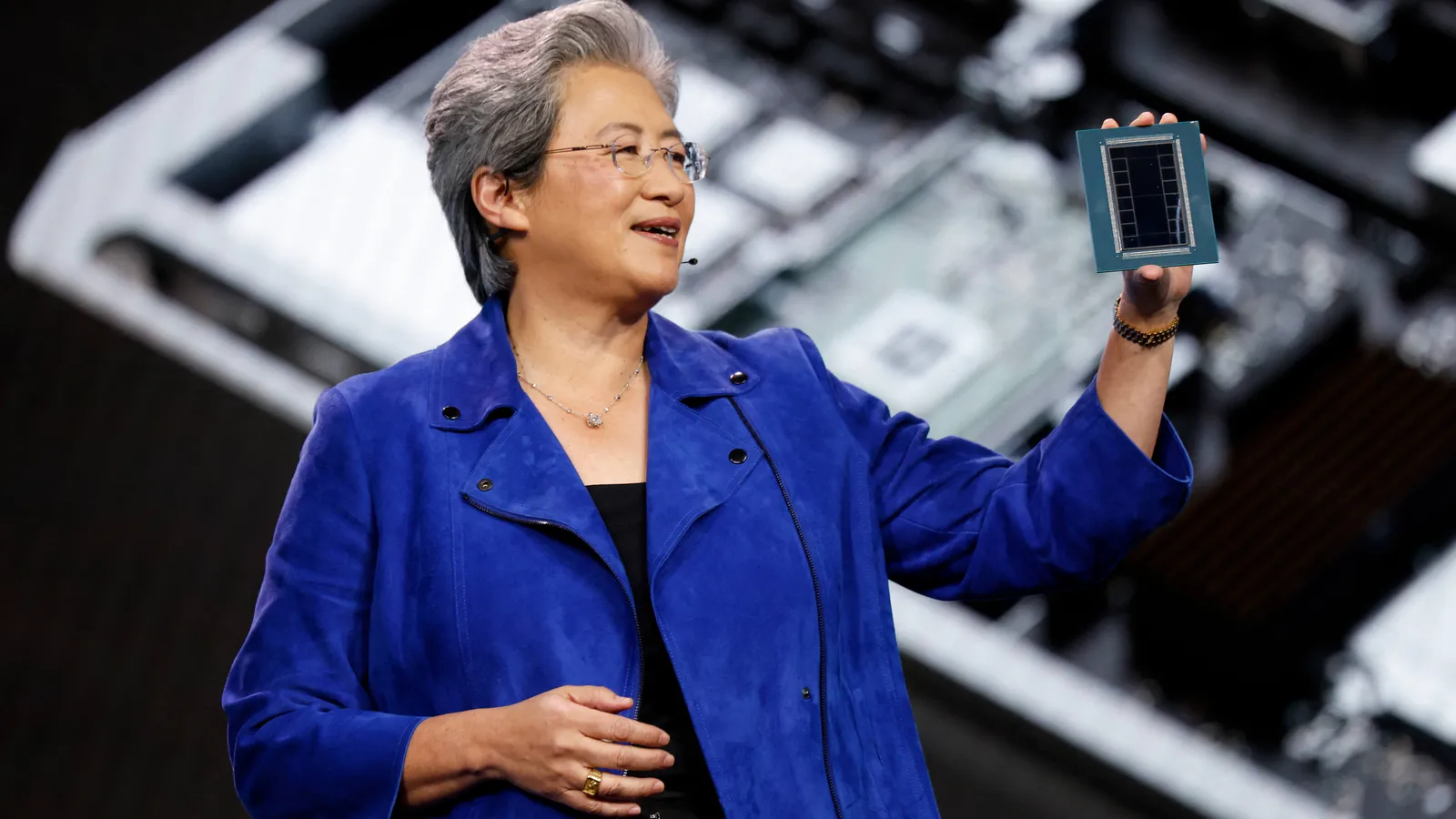
AMD CEO Lisa Su discusses AI demand and hyperscaler spending, saying the company is seeing the returns. For decision-makers, her framing is a real-time read on whether AI infrastructure demand is converting into durable growth, not just hype.
AMD CEO Lisa Su says the company is “seeing the returns” from AI demand and hyperscaler spending. In plain English: the big cloud buyers are still opening their checkbooks, and AMD believes that spending is translating into measurable payoff rather than fizzling out after the initial buildout.
That matters because AI infrastructure spending has two very different phases. Phase one is the scramble. Everyone rushes to deploy accelerators, refresh data center capacity, and lock in supply. Phase two is the reckoning. After the first wave, the question becomes whether the spend turns into sustained demand. Su’s comment lands right in the second phase, where investors and operators start caring less about wishful forecasts and more about whether spending patterns keep holding.
To understand why hyperscaler spending is a bellwether, you have to remember how the tech stack gets funded. Hyperscalers, the largest cloud providers, essentially act like the market’s demand engine. When they invest in AI, they are not only buying chips. They are funding the entire pipeline: data center buildouts, power and cooling upgrades, networking, model deployment tooling, and the operational labor required to keep systems running. That means when their spending direction shifts, it ripples outward across semiconductors, system makers, and even power infrastructure.
Su’s “returns” framing also signals how AMD is trying to manage expectations. AI has been a high-volatility category for the last year, where headlines often race ahead of adoption realities. Boards and CFOs have to decide how much of the revenue story to bet on. If AI demand is merely pulling forward inventory, the financial impact can fade quickly. But if AI demand is converting into ongoing infrastructure consumption, then the category can sustain. Saying they are “seeing the returns” is AMD positioning itself as a beneficiary of that conversion.
There is also a competitive angle hiding inside the phrase. In AI compute, performance is only half the equation. The other half is supply, software ecosystem friction, and the operational fit in a hyperscaler’s environment. Hyperscalers often want predictable delivery timelines and consistent performance per watt, and they prefer platforms that can be rolled out across large fleets without creating a bespoke maintenance nightmare. When Su emphasizes that they are seeing returns from hyperscaler spending, she is implicitly telling the market that AMD is not just present in AI discussions. AMD is monetizing that presence.
Second-order implications extend beyond AMD’s earnings. When hyperscalers keep spending, it can also change how the rest of the industry plans capacity. OEM and server partners may be more willing to build around accelerator roadmaps. Data center construction and power procurement planning can tighten, because AI deployments drive long lead times for facilities and electrical infrastructure. For boards, that means capital allocation decisions may need to account for a longer AI build cycle, including supply chain and contract commitments that stretch across years rather than quarters.
Regulatory background also quietly matters, even when the headline is about demand. Semiconductor and data center decisions now intersect with national policy around strategic industries, export controls, and localized supply chains. While this specific interview focuses on AI demand and hyperscaler spending, the broader environment is that governments treat compute infrastructure as strategic. That can influence which suppliers get favored, how supply chains are reshored or diversified, and how quickly companies can scale production. In a world like that, “returns” are not only about product-market fit. They are about timing and the ability to scale within policy constraints.
So what should executives take from this? Su is effectively telling the market that the AI budget cycle is still paying off for AMD, and that hyperscaler spending is translating into real outcomes. For peers in semiconductors, enterprise hardware, and infrastructure, the strategic stake is simple: if hyperscalers are in sustained ROI mode, the entire AI supply chain may have more runway than cautious planning assumes. If they are not, the industry could hit a demand cliff. Su’s message points toward runway, and in markets like this, runway is everything.
This story's Key Insights and Take-aways are locked.
Create a free account to unlock Executive Actions for one credit.
Register to UnlockAlways free for Executives Club members. Join the Club
More in Business

Anthropic’s Levant Alpöge cracks the Jacobian conjecture after 87 years
A Harvard valedictorian used Claude to hit a 1939 breakthrough, but the missing “why” is the real problem.

Uber buys Delivery Hero for nearly $15B, vaulting to top food delivery outside China
The deal doubles Uber's dual-services footprint and pushes a ride-and-eats bundling play into 50 more markets.

Epic and Google drop settlement bid, forcing rival Android app stores by July 22
Google told the court it is ready to carry third-party app stores starting Wednesday, July 22.