

Logitech G512 X 98 lets you mix analog and mechanical, but the hybrid plan disappoints
A keyboard built to be “best of both worlds” ends up feeling like a compromise, not a breakthrough.
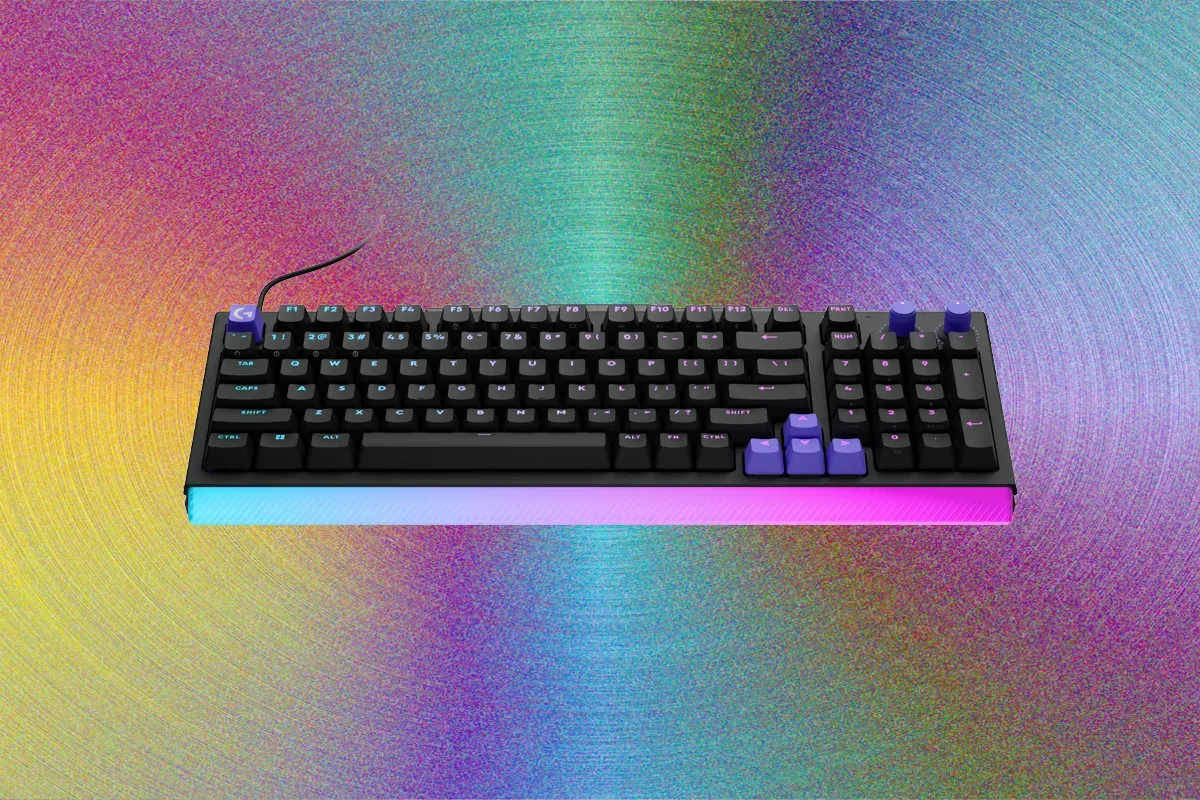
Logitech’s G512 X 98 review centers on its switch system, which lets buyers swap between mechanical and analog switches. For decision-makers in consumer hardware and competitive peripherals, the lesson is how hard it is to engineer “two-in-one” without introducing new tradeoffs.
Logitech’s G512 X 98 is built around one seductive idea: let people swap between mechanical and analog switches, so they can chase the “best of both worlds” in a single keyboard. The review’s verdict is immediate and blunt. The hybrid concept is clever, but Logitech’s execution “isn't as well thought out” as the promise suggests.
If you are the kind of executive who has watched enough product rollouts to smell a half-baked tradeoff from across the room, this is the part that matters. The G512 X 98 does not fail because the market is unfamiliar with hybrids, customization, or gaming-first peripherals. It fails because the solution to the mechanical-versus-analog question is only partially satisfying. The review frames the whole product as an attempt to capture two performance profiles at once, and then reports that the attempt does not quite land.
To understand why this kind of product is tricky, you have to zoom out to how peripherals are judged. For keyboards, switches are not a cosmetic spec. They are the user’s perceived “feel,” the latency profile, and the control model. Mechanical switches tend to be celebrated for tactile feedback and predictable actuation, which translates into confidence for competitive play and repeatable typing. Analog switches, by contrast, are often positioned as a path to variable input, enabling more nuanced control. When a product tries to give both, it is not just mixing parts. It is mixing expectations.
That expectation gap is exactly where hybrid devices can stumble. Mechanical enthusiasts tend to want consistency and muscle-memory stability. Analog enthusiasts tend to want expressive control and precise mapping of input ranges. A keyboard that supports both categories is, in theory, a win for everyone. In practice, it must also manage the friction that comes with switching categories. If the experience changes more than the user expects, or if the ecosystem around analog behavior makes the mechanical experience less clean, the “hybrid” framing becomes a marketing slogan rather than a user advantage.
The review headline calls the G512 X 98 a “Hybrid Mish-Mash,” which is a fair summary of the underlying tension. The hybrid goal is to avoid forcing customers to choose. But hybrid systems often introduce new questions the user did not ask for: What does “analog mode” change beyond the switch? Does the feel remain consistent across use cases? Does the keyboard deliver the benefits of analog without eroding the comfort and reliability people associate with mechanical boards? The review indicates that the answers are not as strong as hoped.
Market context matters here. This is the kind of product that sits in a competitive peripherals category where customers have strong opinions and short tolerance for “almost.” Gaming keyboards are a brand and community battleground. Enthusiasts review, compare, and recommend based on sensory details that do not show up in a spec sheet. They also tend to own multiple setups, which means a hybrid must outperform at least one of its “sub-boards,” not merely coexist with them.
There is also a second-order business implication for teams building consumer hardware. Hybrid products can increase engineering and QA complexity. Even if the hardware is modular, the performance envelope may not be. Firmware behavior, driver software, game profiles, and user settings can all become part of the perceived product quality. When a review says the solution is not as well thought out as expected, that often signals that the product did not just combine features, it combined uncertainties. From a decision-maker lens, that is the risk: the brand message promises versatility, but the user experience demands clarity.
Regulatory background is less direct for this specific product, but the broader framing is still relevant. Consumer electronics in the US and EU increasingly face scrutiny around safety, component compliance, and wireless or connectivity behavior where applicable. Even when a product is not primarily wireless, any gaming device competes in a world where compliance costs and documentation requirements can shape design timelines. Hybrid architectures may raise the chance of edge cases that need validation, which can push teams toward compromises that show up in reviews as “mish-mash.”
For executives and board members overseeing product portfolios in peripherals, the G512 X 98 review is a reminder that “two-in-one” is not automatically a strategy advantage. It is a systems challenge. You can sell a hybrid, but you cannot hide the experience gaps behind the word “swap.” If the hybrid plan does not deliver on the promise of best-of-both-worlds feel, it can turn customization into confusion. And in a category where enthusiasts decide quickly and share loudly, the cost is not theoretical. The strategic stake is simple: if your flagship modular concept reads as a compromise, you may sacrifice both the analog crowd and the mechanical loyalists, leaving the middle customer unconvinced.
This story's Key Insights and Take-aways are locked.
Create a free account to unlock Executive Actions for one credit.
Register to UnlockAlways free for Executives Club members. Join the Club
More in Technology

OpenAI says 10,000 agents cracked a 90-year math problem in 88 hours
The company's claim is audacious, but one mathematician is pushing back. Here's what it means for AI-driven discovery.
Meta still serves child sexual abuse ads on Instagram in India - BBC report
A new report following the BBC Eye investigation says the ads are still there - what it signals for every platform with a self-serve ad engine.

White House yanks 'Build the Wall' game after Tetris Company copyright warning
The administration's arcade game vanished in hours - and the takedown playbook every brand can learn from.