
Macron and Modi court AI CEOs as France and India sprint for data-center money
The leaders are running personal charm offensives to win AI investment, cloud infrastructure, and the real jobs that follow.
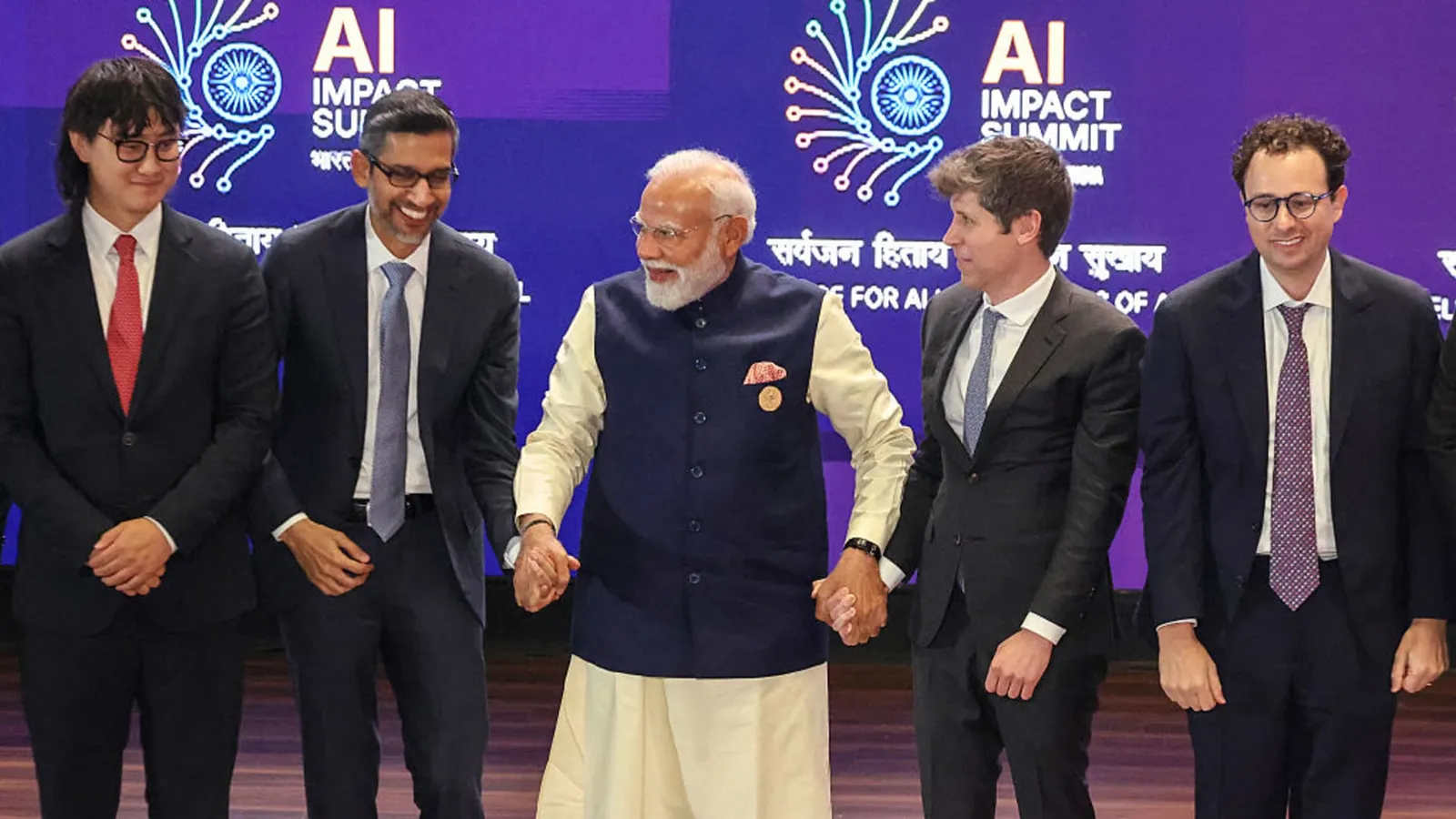
French President Emmanuel Macron and Indian Prime Minister Narendra Modi are courting tech CEOs as France and India compete to secure AI data center investment and cloud infrastructure. For executives and boards, the chase is about location, power, and regulatory leverage, not just who talks nicest.
Macron and Modi are courting tech CEOs in a high-stakes charm push as France and India race to secure AI data center investment and cloud infrastructure. The move matters because AI compute does not scale on goodwill. It scales on concrete commitments: where data centers get built, how quickly capacity comes online, and whether governments help unlock the bottlenecks that can delay everything from power hookups to permitting.
France and India are both signaling they want to be the “default” AI destinations for major cloud and chip-adjacent players. That is why the leaders are personally involved, not just sending economic-development teams. When presidents and prime ministers go after CEO attention directly, it usually means they are trying to bend timelines and reduce uncertainty. For decision-makers watching from other markets, the message is clear: in the AI arms race, relationships are increasingly part of the infrastructure pipeline.
Zoom out and this is a classic competition story, but with a modern twist. AI demand is driving a surge in data center construction and upgrades, and that means investors need reliable jurisdictions. They want predictable regulation. They want power and networking that will not become a surprise bottleneck two quarters after a site goes live. They want governance that makes long-term bets feel safer. In that environment, courting tech CEOs is a way of turning “future potential” into near-term commitments, especially when multiple countries are pitching similar incentives.
The cloud infrastructure angle adds another layer. Data centers are not standalone projects anymore. They are the physical foundation for cloud services, AI training and inference, and the enterprise workflows that ride on top. That puts governments in a position to influence not only where hardware lands, but where workloads flow. If a country can win major cloud-related investment, it can also attract surrounding ecosystems: service providers, system integrators, and companies building AI applications that depend on cloud access.
There is also a governance and regulation subplot here, even if it is not spelled out in the headline-level version. When governments push to secure AI investment, they are implicitly negotiating the terms of operation: rules for data handling, compliance expectations, and the ability to scale operations without getting tangled in process. Executives care about this because the cost of compliance and the timeline of approvals can make one location economically superior to another, even if both markets offer similar headline incentives.
Another second-order effect: CEO attention is not infinite, so “personal charm offensives” can function as a signal to boards and leadership teams. If a head of state is actively courting, it can be interpreted internally as a sign that a government is prioritizing the project. That can change how companies allocate scarce development resources, how they evaluate risk, and how quickly they move from exploratory talks to serious investment planning.
For corporate leaders, the stakes are straightforward. The AI data center and cloud bets are capital intensive and long cycle. A misstep in location strategy can lock in higher costs or slower deployments for years. Meanwhile, winning markets can reinforce themselves, because the first wave of investment builds supply chains, talent pipelines, and operational know-how that later investors reuse. In other words, the leaders are trying to win the compounding advantage: be early enough to become the default.
For other executives and boards, the strategic takeaway is uncomfortable but actionable. When major economies like France and India are racing for the same investment categories, the competitive frontier is shifting from pure economics to relationship-driven execution. Macron and Modi are not just selling a vision. They are inserting themselves into the decision journey of tech CEOs, right at the point where investment timelines are being negotiated and where uncertainties are being converted into commitments.
In the AI race, infrastructure is strategy. And when presidents and prime ministers step into the room, it is usually because time, risk, and capital are on the line.
This story's Key Insights and Take-aways are locked.
Create a free account to unlock Executive Actions for one credit.
Register to UnlockAlways free for Executives Club members. Join the Club
More in Technology

Nvidia's $89B data center quarter: the 9 companies cashing in
The AI buildout is minting fortunes beyond GPUs, and memory, cloud, and cooling suppliers are riding the same wave.

Google quietly links your phone number to every Android account on your SIM
Adding a SIM now ties your phone number to all Google accounts - and future accounts inherit it. Here's the security and privacy stakes.

Hijacker AI 'Skynet mode' runs 100,000 attack steps against exposed models
Symantec caught a criminal AI agent that borrows other models, steals data, and mines crypto; the only relief is no confirmed victims yet.