
Madonna’s ‘Confessions II’ opens at No. 1 with 134,000 units, topping Olivia Rodrigo
A seven-year wait ends in a Billboard 200 win: 134,000 equivalent album units place Madonna ahead of Olivia Rodrigo.
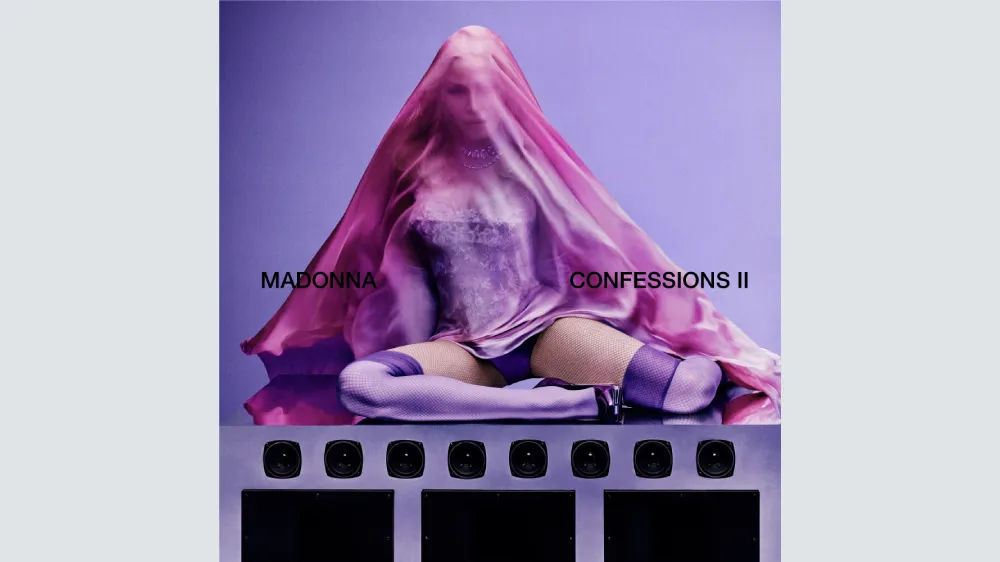
Madonna’s “Confessions II” debuts at No. 1 on the Billboard 200 with 134,000 equivalent album units, Variety reports via Billboard. For decision-makers, it is a clean reminder that release-day demand still reshuffles music consumption even against current chart leaders.
Madonna’s long-awaited “Confessions II” has landed at No. 1 on the Billboard 200 with 134,000 equivalent album units, Variety reports via Billboard. That number is the whole story early: in chart terms, it was enough to push the album past Olivia Rodrigo’s still highly successful release to take the top spot.
The timing matters, too. Variety frames this as Madonna’s first new album in seven years, and the debut performance shows the market did not treat “wait time” as a permanent ceiling. With the album bowing at 134,000 equivalent album units, it converts anticipation into measurable chart gravity on a Sunday Billboard update, immediately changing the top-of-chart landscape.
For executives tracking consumer attention, the “equivalent album units” concept is the modern translation layer between fandom and rankings. Charts are not just about physical sales anymore; they try to combine multiple consumption behaviors into one comparable metric. The practical implication is straightforward: when a release hits, it does not just compete with other albums on one channel. It competes across the whole bundle of how people spend money, listen, and stream. Madonna’s result suggests her audience is broad enough, and her album rollout strong enough, to perform across that bundle rather than relying on only one format or one demographic.
There is also a market psychology angle, because “first new album in seven years” is not a typical play in an industry that constantly refreshes. In most entertainment businesses, long gaps create two competing risks: the audience moves on, or the audience returns with a bigger burst. Madonna’s No. 1 debut with 134,000 equivalent album units points toward the second pattern, where the gap becomes part of the marketing, not a liability. This does not mean every comeback will behave the same way, but it is a concrete datapoint: legacy artists can still monetize release moments, and mainstream chart systems still give them room at the summit.
Chart outcomes also create knock-on effects for everyone managing release calendars. In the short term, the Billboard 200 leaderboard influences where consumers and media look next, which can feed additional streams and purchases. In the medium term, it pressures competitors to reconsider how they sequence singles, marketing pushes, and physical distribution around album launch windows. Even if you are not in the same genre, the operational takeaway is that a single high-performing release can reorder attention quickly and force surrounding strategies to adapt.
Variety also notes that other artists bow in the top 10, including Ken Carson and Sienna Spiro, alongside Madonna’s No. 1 debut. That matters for decision-makers because it tells you the chart top 10 is not a one-track story. It is a crowded landscape where established global brands and newer mainstream-adjacent acts both win attention during the same week. For labels, management teams, and marketing leaders, this is a reminder that competition is not only one-on-one against a single rival album. It is also against the broader “this week’s slot” for audience time.
Finally, there is the strategic question that hangs over anyone planning an album cycle: how do you model success in a world where rankings are driven by multiple forms of consumption and where a comeback can still dethrone a currently successful act. Madonna’s 134,000 equivalent album units did exactly that by pushing past Olivia Rodrigo to reach No. 1. If you are an executive or board member watching performance benchmarks, this is the kind of result that recalibrates what “possible” looks like, especially when the headline condition is unusual, like a seven-year wait.
The stakes are simple and real: chart leadership is a proxy for demand, but it also becomes a multiplier for visibility. Madonna’s debut makes that multiplier visible again. It is not just a music story. It is a commercial one about timing, audience behavior, and how quickly the market can switch when a release arrives with enough pull to move the numbers.
This story's Key Insights and Take-aways are locked.
Create a free account to unlock Executive Actions for one credit.
Register to UnlockAlways free for Executives Club members. Join the Club
More in Entertainment

12TB Steam 'teraleak' goes beyond Valve: GTA 3, Mafia 2 prototypes exposed
A 12-terabyte dump of Steam data reveals prototypes and builds of third-party classics like GTA 3 and Mafia 2, plus unreleased Valve content, rewriting game history.

LinkedIn's romance problem: 1 in 4 workers say dating on it is fair game
A new survey shows a quarter of U.S. employees treat the professional network as fair game for romance, even as LinkedIn bans it and removes hundreds of thousands of offending posts.

Enhypen's first No. 1 album breaks K-pop's Billboard 200 streak
The K-pop group's 98,000-unit debut tops the chart while Dolly Parton's catalog reentry shows how death reshapes streaming.