
Maine Democrats scramble to replace Graham Platner, meet July 27 deadline
Several candidates are circling as the party plans a nominating convention before the July 27 successor cutoff.
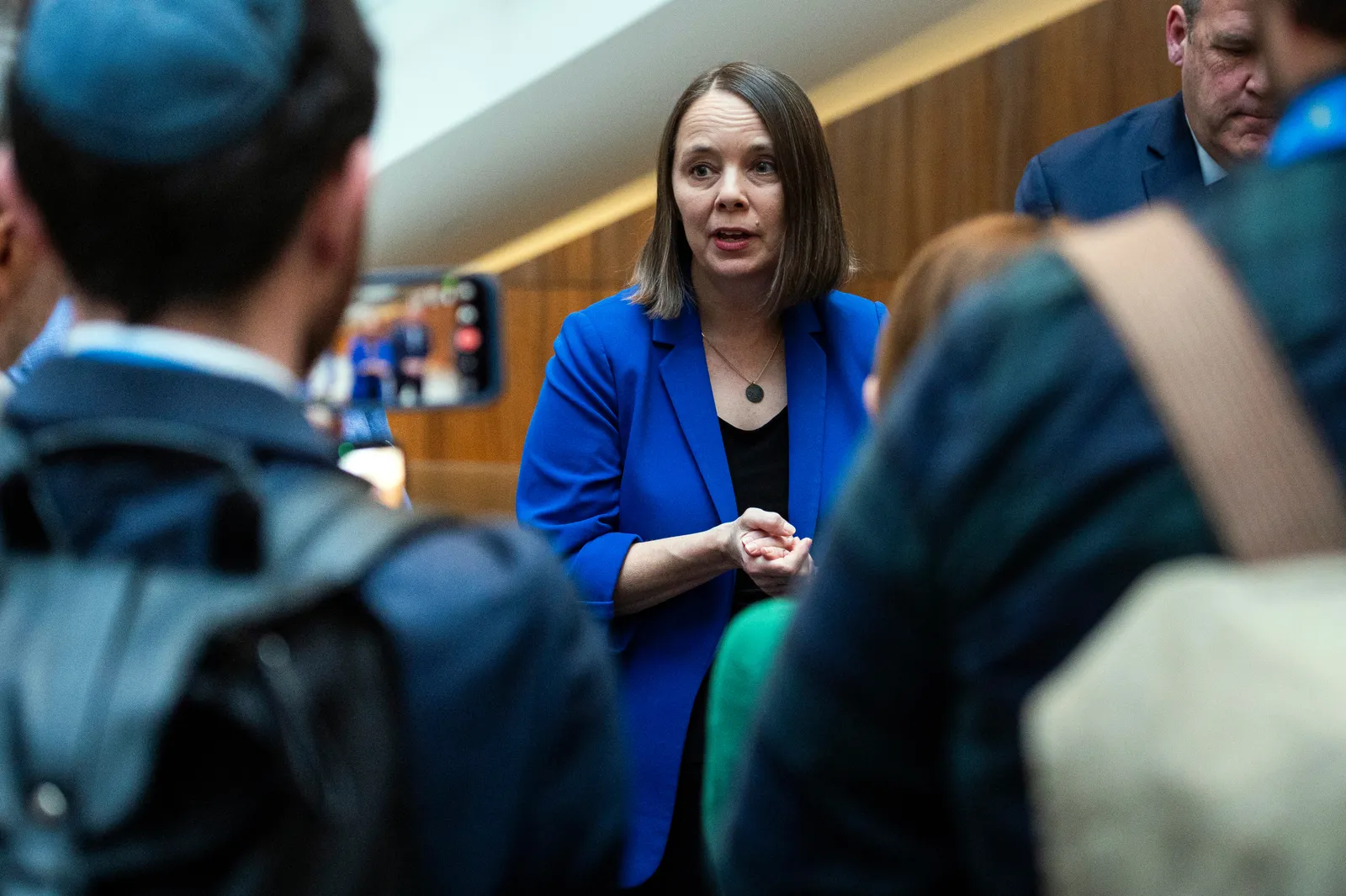
Graham Platner dropped out of Maine’s Senate race, triggering a scramble among Democrats to pick a replacement to take on GOP Sen. Susan Collins. Maine law controls the process and sets a July 27 date, with Election Day looming in just over four months.
Graham Platner just dropped out of Maine’s Senate race, and Maine Democrats are already in full scramble mode to replace him. A POLITICO report of a new sexual allegation against Platner on Monday set it off, as Democrats pressured him to step down and weighed who could take his place to defeat GOP Sen. Susan Collins.
The clock is now the story. State law gives the Maine Democratic Party authority to replace Platner, and it mandates that the successor must be chosen by July 27. On Wednesday, just before Platner suspended his campaign, the Maine Democratic Party approved tentative plans for a nominating convention to pick his successor. With less than four months until Election Day, the party is moving from “who do we want?” to “who can win, fast?”
Why this scramble matters beyond the roster: the party has long held that winning the Maine Senate race will be critical to retaking control of the upper chamber. Platner’s campaign, which denied the allegation, had been losing steady support and financial backing, and that created an opening for progressives to start preparing once the momentum shifted. The result is a crowded field of Democrats who either signaled their interest immediately or laid early groundwork while Platner was still in.
Former Senate President Troy Jackson is the most direct early mover. Jackson, a Platner ally who called on him to step aside Monday, swiftly launched his bid after Platner suspended his campaign. On X, Jackson wrote, “I’m in. And we're going to defeat Susan Collins,” adding that “Maine deserves a Senator that will fight for working families.” He was widely speculated to jump into the race and had already filed his interest in a bid with the Federal Election Commission before Wednesday. Our Revolution, a progressive organization founded by Sen. Bernie Sanders (I-Vt.), has thrown its support behind Jackson.
But the fast start comes with political friction. Some votes from Jackson’s 20-year history are resurfacing, including his 2009 state Senate vote against a bill to legalize same-sex marriage. Jackson later called that vote “the worst vote I ever took.” His closeness to Platner during the primary may also give pause to some Democrats as they choose a nominee, especially if party leaders want a clean break from the controversy that is now dominating the conversation.
Other candidates are positioning themselves to translate opposition to Susan Collins into a broader coalition. Dan Kleban announced his bid Wednesday, after previously dropping out of the Democratic Senate primary earlier this year and backing establishment-backed Gov. Janet Mills. Kleban is the 49-year-old founder of Maine Beer Company. In a statement, he said, “Mainers deserve a senator who will fight for them against the D.C. establishment while also doing what’s right,” and added, “I plan to be that senator.” Kleban’s angle is familiar in Democratic politics: pitch a non-incumbent outsider who can take on the national establishment themes while still sounding Maine-specific.
Kleban is also joined by a cluster of candidates or near-candidates testing the runway. Nirav Shah, a former public health official, told POLITICO Tuesday afternoon that he is “evaluating” whether he will mount a Senate bid, but he was already positioning himself. Shah called for an open process, including at least one televised debate and multiple public town halls across Maine. Shah oversaw the state’s response to the Covid-19 pandemic, and he finished second in Maine’s gubernatorial primary earlier this year. He told POLITICO that he is “very, very much aligned” with Platner’s politics.
Secretary of State Shenna Bellows is also in the “seriously consider” lane. In a statement on Tuesday, Bellows said she would “seriously consider entering this race, because I believe I am uniquely fit to unite Mainers and defeat Susan Collins in just over 100 days.” She has been fielding calls about a potential run, according to a person familiar with her campaign granted anonymity to speak about private conversations. That person pointed to her ideological alignment with Platner on progressive issues and a compelling biography: she grew up poor in rural Maine and flipped a GOP-held state Senate district, according to the report. Bellows previously ran for Senate and lost badly to Collins in 2014, meaning she will need to prove she can win this time around.
Then there is a set of contenders navigating varying degrees of name recognition, political fit, and timing. Jordan Wood finished third in a run for Maine’s 2nd District after Rep. Jared Golden (D-Maine) decided he wouldn’t seek reelection. Wood says the path to beating Susan Collins is offering a “true contrast” and “an unapologetically progressive campaign,” including “Passing Medicare for All,” “Stopping ICE terrorizing our streets,” and standing up to Donald Trump’s abuse of power. On X Tuesday, Wood said he was “continuing conversations with voters across Maine if I should enter an open Senate race.” Paige Loud filed interest paperwork with the FEC on Tuesday and is seeking to succeed Platner. Loud said in an interview, “I don't think we should be electing a man,” adding “I think I'm tired of making women vote for a man.” Valli Geiger, a state House member and top ally of the oysterman, is a name people close to Platner have mentioned, but Wednesday brought drama over whether Platner was backing her. Geiger told a Maine local outlet that Platner said he was throwing his support behind her, and the Platner campaign later said no such commitment was made. Geiger did not respond to POLITICO’s calls and messages. Andrea LaFlamme is another possibility in theory, but her profile looks less like a takeover bid and more like a message. She was a write-in candidate during the Democratic Senate primary, receiving just over 1,000 votes, and she posted on Bluesky on Tuesday saying she believes she is the “best person to take on Susan Collins.” Her write-in bid began because of Platner’s earlier controversies, and POLITICO reports she told the student paper of the college she works for that electing Platner “sends the message that women are not valued.” Given the number of well-known Democrats already running, the report says it’s unlikely she will end up taking on Collins.
A few other signals show how quickly the field is narrowing while still widening. Chellie Pingree is a longer-shot possibility, since her bid in Congress would mean the party would also have to replace her on the ballot, which would trigger another rush of names. Pingree’s daughter, Hannah, is already the Democratic nominee for governor. Rep. Jared Golden, Maine Senate President Mattie Daughtry, and actor Patrick Dempsey have ruled themselves out. And the party’s formal process still has to land on one winner by July 27.
Second-order implication for executives, investors, and governance-minded leaders watching politics like it’s strategy: this is a live example of institutional decision-making under regulatory constraints. Maine Democratic Party officials must translate rapid changes in candidate viability into a nomination process with a hard deadline, while contenders race to secure fundraising momentum, organizational support, and voter perception before the nominating convention moves from “tentative plans” into reality. The stakes are bigger than one seat because the party believes this race is a swing lever for upper chamber control. In other words: the replacement that survives the calendar might also decide who gets power next.
This story's Key Insights and Take-aways are locked.
Create a free account to unlock Executive Actions for one credit.
Register to UnlockAlways free for Executives Club members. Join the Club
More in Politics

Glacial collapse, not rain, killed 180 in Nepal's Himalayan flood
The Himalaya's extreme geography hid the true cause of Nepal's catastrophic flood, a glacial collapse that turned a geological battleground into a mass-casualty zone.

Iran’s Esmail Baghaei says Oman talks start shipping via Hormuz, not US talks yet
Temporary route plans with Oman aim to restart commerce while Tehran says Washington dialogue is not on the table.

Standards watchdog opens probe into Reform UK deputy leader Richard Tice over interests
The parliamentary standards commissioner says it began an investigation on 28 July into a possible undeclared interest.