

Maine Democrats split Platner base across 4 Senate contenders before July delegate fight
Unions, Our Revolution, and frustrated progressives are backing different successors for Graham Platner as Collins remains the target.
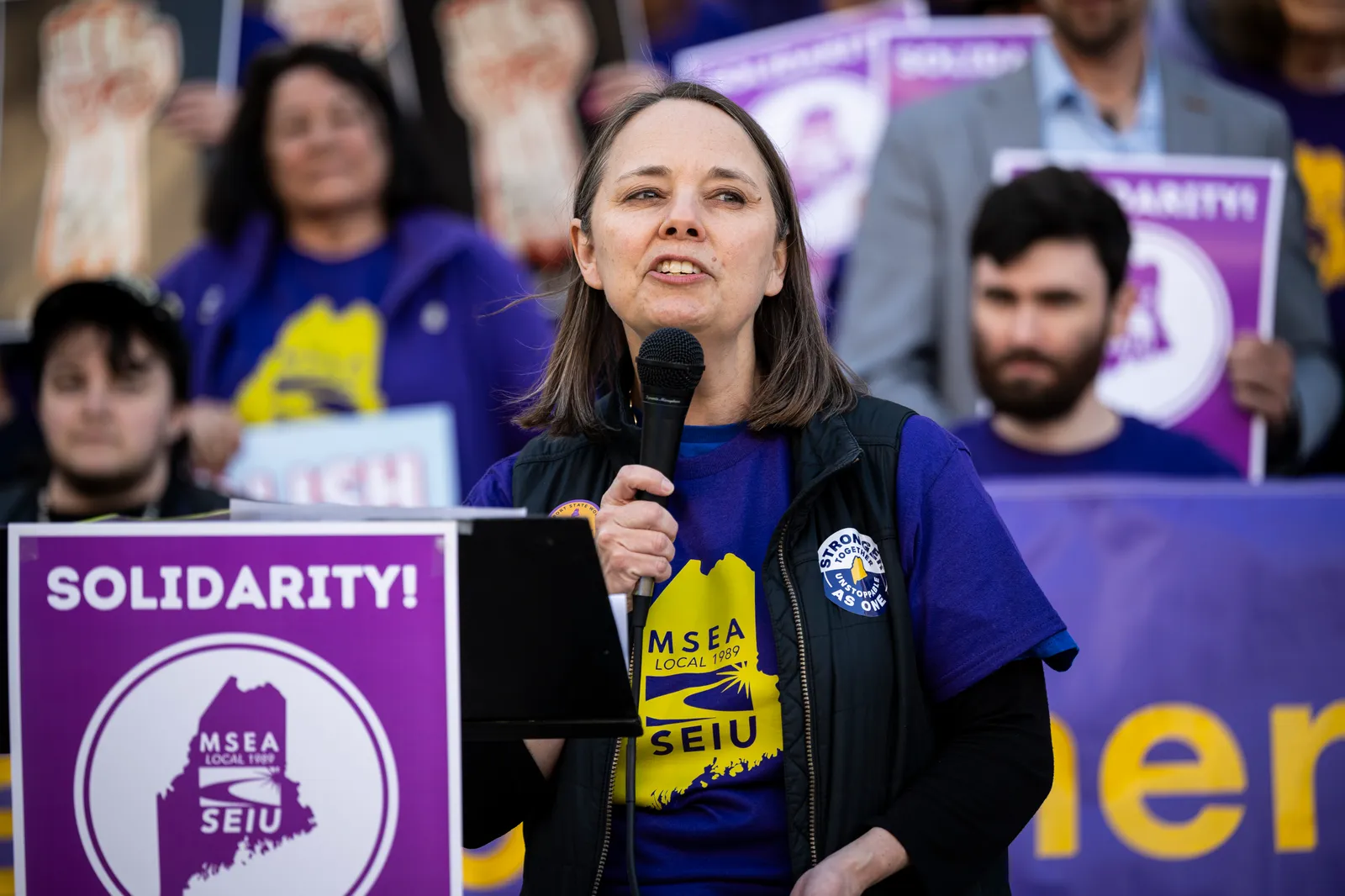
Maine Democrats are racing to replace Graham Platner after his resignation, with Troy Jackson, Shenna Bellows, and Nirav Shah each courting Platner supporters alongside a crowded field. The consequence: the delegates at a late-July Bangor convention will decide who can best unite the progressive base to unseat Sen. Susan Collins.
Maine Democrats have a problem that is both political and logistical: Graham Platner’s progressive base is splintering across multiple newly announced Senate candidates instead of coalescing behind a single successor. That confusion matters because Democrats will replace their nominee at a convention in Bangor in just 11 days, and this weekend they will select the 600 delegates who will pick the candidate. With the Senate race for 2026 already framed nationally as essential to taking back control of the chamber, the question is not “who shares Platner’s politics?” It’s “who can turn Platner’s followers into a unified delegate count fast.”
The candidates making that bid are moving quickly, and some are borrowing directly from Platner’s playbook while trying not to tie themselves too closely to him, in the wake of the report that led to his forced resignation. Platner won the Democratic Senate primary last month with nearly three quarters of the vote and built a zealous core during the campaign. But many of those voters are not moving in a block. “People who were vocal supporters of Platner’s have moved to other candidates, and it doesn’t look to me like they moved in a block, that everyone agrees who's the best next candidate from that movement,” said David Farmer, a Maine Democratic political strategist not involved with the Senate campaign. In a truncated process, he added, “that’s to be expected.”
At the center of one camp is Troy Jackson, a former Maine Senate President. Labor organizations and Our Revolution are backing Jackson, and he has the endorsement of Sen. Bernie Sanders for his unsuccessful gubernatorial campaign earlier this year. Jackson also campaigned with Platner during the primary. Rep. Ro Khanna (D-Calif.), a former Platner surrogate, is behind Jackson as well, along with dozens of current and former state lawmakers. Unions, described in the story as a key Platner booster, have largely gone to Jackson, with the Maine AFL-CIO endorsing him over the weekend. The AFL-CIO cited his support of workers’ issues in the Maine legislature and his record of winning over rural and working-class voters.
But support is not cleanly lining up along labor versus non-labor lines. Some state legislators and local activists who backed Platner are instead flocking to Maine Secretary of State Shenna Bellows, who similarly ran as a progressive in the gubernatorial primary. That includes state Rep. Valli Geiger, who said in a Facebook post that Bellows’ track record of standing up to President Donald Trump as secretary of state is a reason for her support, and she also pointed to timing, arguing Bellows “did not declare as a candidate until after Graham Platner announced he was withdrawing from the race unlike the unseemly rush of so many ambitious men.” Another former Platner endorser, state Rep. Gary Friedmann, said he is all-in for Bellows, calling Jackson’s association with Sanders and Our Revolution “very compelling,” but signaling a concern about how messages land in public. Friedmann said Shenna is “extremely articulate and compelling,” and argued that “having a woman to voice that platform is gonna be very important.”
Then there’s Nirav Shah, a former public health official touting more progressive policy positions than he ran on during his 2022 gubernatorial bid, as part of an effort to peel off some Platner supporters. Behind the scenes, Shah’s campaign is working to recruit former organizers from Platner’s campaign, according to two people familiar with the strategy, granted anonymity to discuss it. Shah is also making the pitch in public: he wrote on social media shortly after launching his candidacy last week that “I want all former Platner supporters to know: you have a place in this campaign.” The story also describes a letter that circulated among former Platner volunteers, collecting hundreds of signatures by Tuesday, calling for the replacement candidate to adopt progressive commitments on health care, housing, and ending “forever wars.” Jackson and Bellows signed onto that letter.
This is where the process gets tense. Candidates have to walk a tightrope between two realities: they need to reassure Platner’s supporters that the fight spirit and advocacy will continue, while also keeping distance from the personal scandal that forced his exit. Platner has denied an allegation that The candidates are therefore expected to make their case directly during a debate scheduled for Thursday night, as they compete for a yet-to-be-selected bloc of 600 delegates. The internal logic is straightforward: delegates will decide the nominee, not general election voters, so campaigns are building organization and loyalty inside the party as much as they are building policy platforms.
Our Revolution is treating this moment like a training exercise for a bigger fight. Joseph Geevarghese, who runs Our Revolution, called on the movement Platner emboldened to get involved in the delegate process outlined by the Maine Democratic Party, saying, on a virtual rally hosted by Our Revolution on Monday, it was a “perfect opportunity” to organize and win “within the system that they created.” Jackson, speaking on the call, acknowledged “real pain, anger, disappointment,” while telling Platner’s supporters to rally behind him without mentioning Platner by name. He said, “this movement has always been bigger than one person,” framing the goal as “taking on a system rigged against working people.” Meanwhile, a person close to Bellows, granted anonymity to discuss internal strategy, described the challenge for candidates as “a really delicate dance to walk,” adding that Bellows is not trying to be Platner, but can serve as a “bridge” for people disheartened by what happened, while still extremely angry about Susan Collins and the Senate majority.
The strategic stakes here extend beyond Maine messaging. Unseating Sen. Susan Collins (R-Maine) is described as an essential part of the party’s plan to take back control of the Senate this fall, and Platner’s broad primary win suggested enthusiasm that Democrats now have to convert into a delegate coalition quickly. The story also notes that Maine politics was rocked on Monday by ICE agents’ shooting of a 26-year-old man in Biddeford, with potential Senate candidates rallying around getting the federal agency out of Maine. That kind of flashpoint can sharpen voters, but delegate selection still demands coordination, not just outrage. Even when supporters split, the endgame is unity against Collins, and Democratic State Rep. Morgan Rielly, a former Platner supporter, put it plainly in a text: while he told Jackson he would support him in the primary, “more important” was defeating Collins in the fall. “[The Democratic nominee] will have my full support and I will be working hard to get them elected,” Rielly said. “It’s absolutely crucial we are united and Senator Collins loses on election day.” In other words, Maine Democrats may be arguing about successors now, but they are preparing for a single, high-consequence fight later.
This story's Key Insights and Take-aways are locked.
Create a free account to unlock Executive Actions for one credit.
Register to UnlockAlways free for Executives Club members. Join the Club
More in Politics

LA County: DOJ's 20,000 'noncitizen' voter list is 'unreliable,' includes U.S.-born
Preliminary review by Los Angeles County election officials finds errors in the federal list, raising the stakes for voter roll integrity ahead of November.

Trump's $1.5B Pentagon chip investment lands in North Carolina
A $1.5 billion defense infusion for North Carolina chipmaking signals a new era of Pentagon-backed reshoring - here's what it means for the industry.

Nigeria confirms first Ebola case in Abuja, a woman just off a Uganda flight
Health Minister Muhammad Ali Pate says the patient flew in from Uganda, putting Africa's latest outbreak on Nigeria's doorstep.