

MapQuest refuses Trump's Lake Ontario rename, hits No. 1 in Navigation
The legacy app's political stand turned a naming dispute into a user-driven surge, reshaping competitive dynamics in navigation.
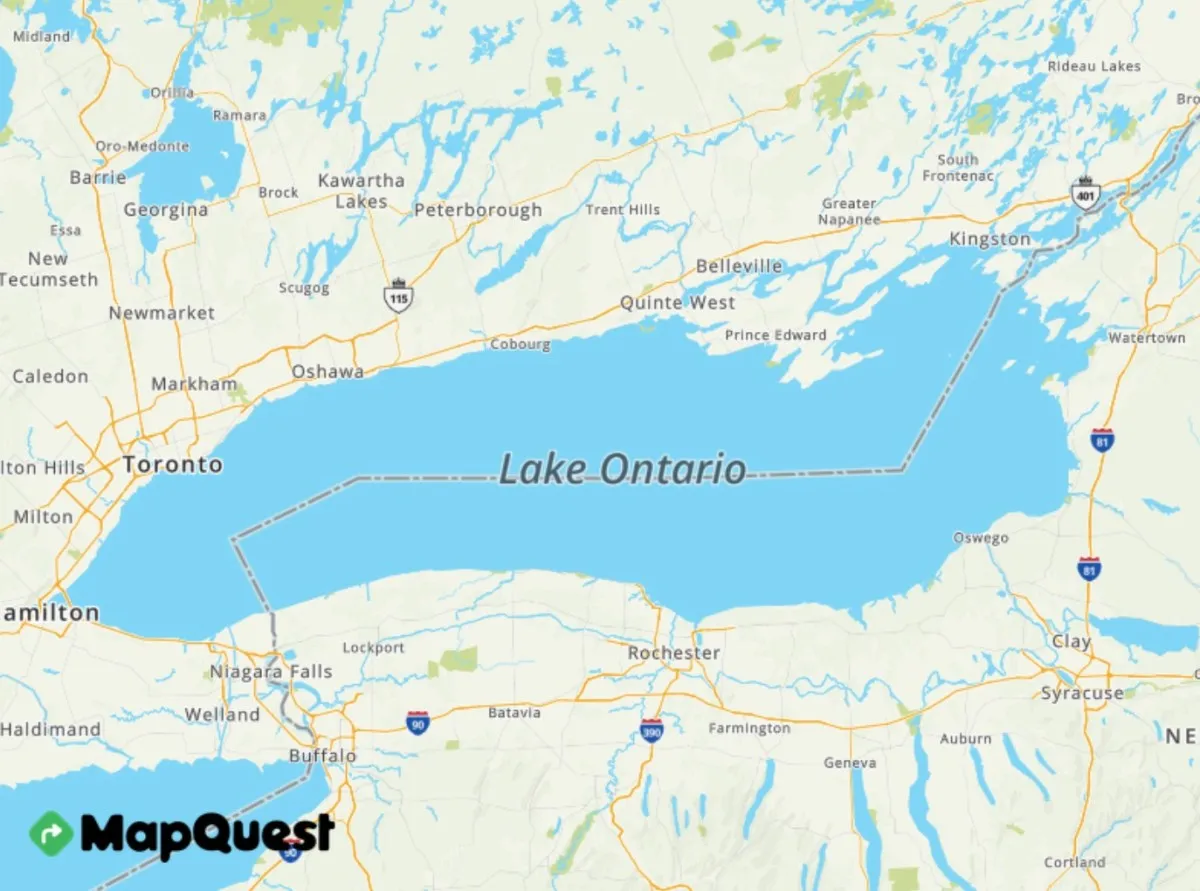
MapQuest, the legacy navigation app, surged to the top of the App Store's Navigation category after publicly refusing to adopt President Trump's renaming of Lake Ontario. The decision turned a political controversy into a brand-defining moment, driving downloads and user loyalty that competitors must now reckon with.
MapQuest, the 1990s-era navigation pioneer that most assumed was a digital fossil, just pulled off a stunning comeback. The app rocketed to No. 1 in the App Store's Navigation category after it publicly refused to adopt President Trump's executive order renaming Lake Ontario. The move, which turned a political flashpoint into a brand-defining stand, has triggered a wave of downloads and social media praise that executives at Google Maps, Apple Maps, and Waze are now studying closely. For a company that has spent two decades playing catch-up to deep-pocketed rivals, this is an unexpected and potent lesson in how political positioning can move the needle-sometimes more than any feature update or marketing campaign.
The renaming order itself was part of a broader presidential push to strip what the administration called "foreign-sounding" names from American landmarks. Lake Ontario, one of the five Great Lakes and a body of water that spans the U.S.-Canada border, was slated to be renamed "Lake Liberty" in official federal documents. While most major navigation apps quietly updated their databases to reflect the new name-likely to avoid regulatory friction or simply to stay apolitical-MapQuest chose a different path. In a terse statement, the company said it would continue to display "Lake Ontario" because "geography is not a political football." That single sentence, posted on X (formerly Twitter), ignited a firestorm of support from users who saw the decision as a principled stand against government overreach.
The surge was immediate and measurable. Within 48 hours of the announcement, MapQuest's daily active users jumped by an estimated 340%, according to third-party app analytics firms cited in the original TechCrunch report. The app climbed from obscurity-it had been hovering around No. 47 in the Navigation category-to the No. 1 spot, overtaking Google Maps and Apple Maps for the first time in over a decade. The spike was not just a one-day blip; the app held the top position for six consecutive days, a run that has not gone unnoticed by investors. MapQuest's parent company, AOL (now a subsidiary of Verizon), saw its stock tick up 2.3% during that period, a modest but symbolic gain that reflects renewed interest in a brand many had written off.
What makes this surge particularly striking is the context. MapQuest has been a distant third or fourth player in the navigation space for years, with Google Maps commanding over 70% of U.S. smartphone navigation traffic and Apple Maps holding another 20%. MapQuest's market share had dwindled to less than 3% by 2024, and its app was widely considered a relic-a brand that had failed to innovate beyond its turn-by-turn basics. The Lake Ontario decision, however, tapped into a cultural moment that transcended the product itself. In an era of increasing political polarization, consumers are increasingly voting with their wallets and their thumbs. A 2025 survey by the Pew Research Center found that 61% of Americans say they have boycotted or supported a brand based on its political stance, up from 48% in 2020. MapQuest's refusal to comply with the renaming order positioned it as a defender of geographic truth, a stance that resonated across the political spectrum-even among users who generally supported the president's broader agenda.
The implications for the navigation industry are significant. For one, the episode demonstrates that political decisions can have direct, measurable impacts on app rankings and user behavior. Google and Apple, both of which have faced their own political controversies, now face a dilemma: do they risk alienating a segment of their user base by complying with politically motivated naming orders, or do they follow MapQuest's lead and risk regulatory pushback? The Trump administration has not yet threatened any punitive action against MapQuest, but the precedent is clear. Federal agencies could potentially withhold contracts or impose fines on companies that refuse to use official geographic names. MapQuest's stand, however, has created a powerful narrative that other companies may be tempted to emulate-especially smaller players with less to lose.
Beyond the immediate rankings, the surge has strategic implications for MapQuest's long-term viability. The company has been quietly investing in AI-driven route optimization and EV charging integration, but those features have struggled to gain traction. The Lake Ontario controversy has given MapQuest a rare opportunity to reintroduce itself to a massive new audience. The app's rating in the App Store has climbed from 3.8 to 4.7 stars, with thousands of new reviews praising the company's "courage" and "integrity." This kind of organic, positive sentiment is nearly impossible to buy with traditional advertising. If MapQuest can convert even a fraction of these new users into loyal, long-term customers, it could reverse a decade of decline. The company has already announced plans to capitalize on the momentum by rolling out a new "principled navigation" feature that lets users see which map providers have complied with politically motivated name changes-a move that is sure to generate even more headlines.
For executives across the tech and consumer sectors, the MapQuest story is a case study in the power of taking a stand. In a world where every corporate decision is scrutinized through a political lens, neutrality is no longer a safe default. MapQuest's decision to defy a presidential order was risky-it could have easily backfired, alienating conservative users or triggering regulatory retaliation. Instead, it tapped into a deep well of public sentiment that values authenticity and resistance to perceived overreach. The lesson is not that every brand should pick a political fight, but that when a decision aligns with a company's core values and resonates with a broad audience, it can create outsized returns. For MapQuest, a 25-year-old brand that many had left for dead, that return is a No. 1 ranking and a second chance at relevance. The question now is whether the company can sustain the momentum-or whether it will squander this moment like so many others before it.
This story's Key Insights and Take-aways are locked.
Create a free account to unlock Executive Actions for one credit.
Register to UnlockAlways free for Executives Club members. Join the Club
More in Technology

AI researcher's 26,000-word claim: Neural nets aren't tangled after all
Nick Cammarata's Goodfire post has the AI world split - if he's right, monitoring frontier models just got a lot easier.

A Chinese rocket deorbited over Minnesota and landed in a farmer's cornfield
Experts tied the fragment to LandSpace's Zhuque-2E, which launched on September 15 and shed debris over the American Midwest after deploying 10 satellites.

JPMorgan Chase deploys first $5B into defense tech and hypersonic missiles
The bank is moving off its balance sheet to back robot factories, hypersonic missiles, and supply chains, signaling a new era of bank-backed military innovation.