
Mark Cuban tells AI firms to spend billions on cities hit by job losses
His argument: companies can fund compute and models, but they still have to win trust from displaced communities.
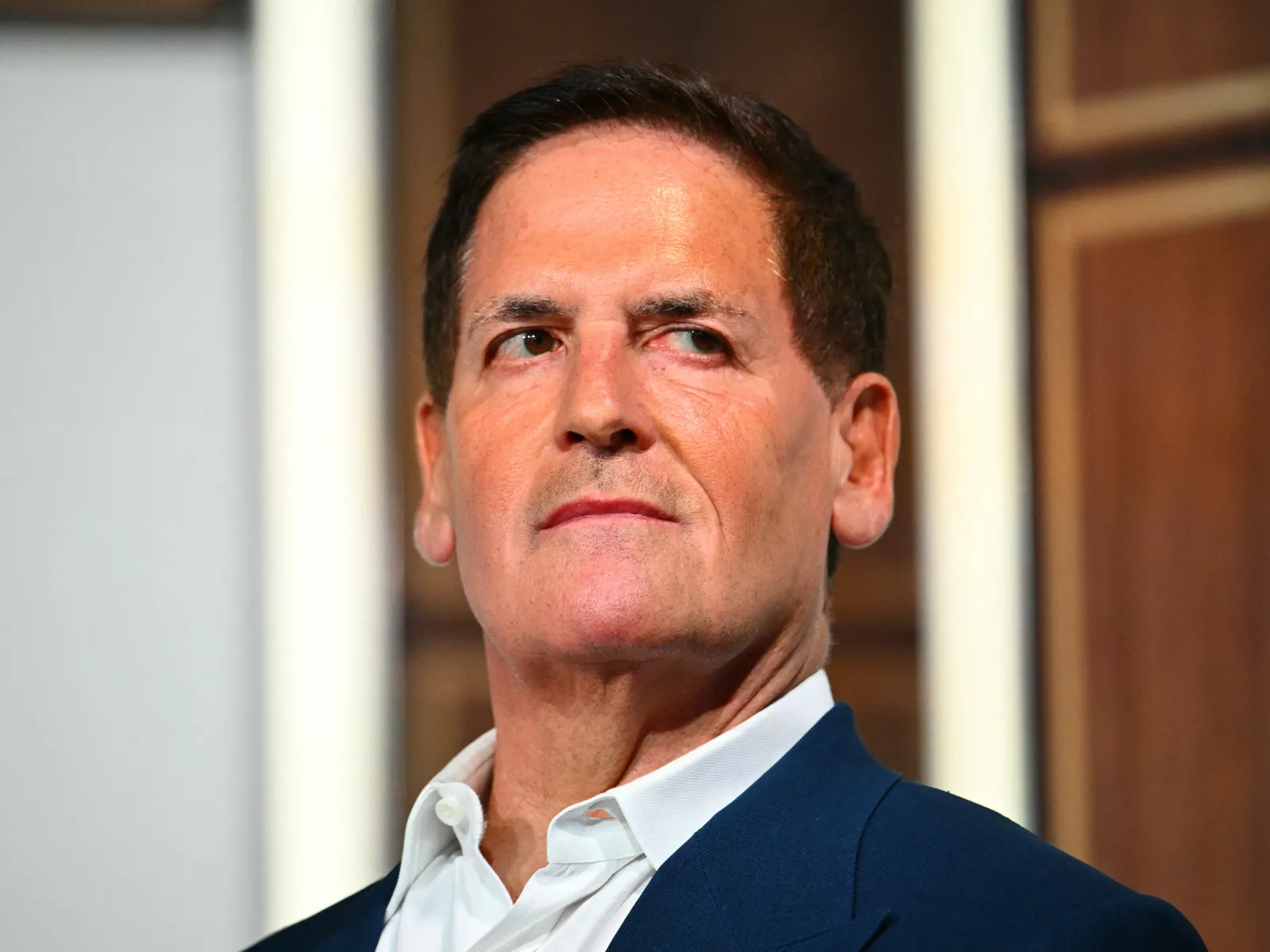
Mark Cuban, the billionaire former "Shark Tank" investor, said in a Thursday X post that AI firms should spend billions to support towns and cities facing AI-linked job losses. He added that major AI companies "all suck at putting people first," and argued creatives need face-to-face support rather than celebrity endorsements.
Mark Cuban says AI companies should spend billions on towns and cities that may be impacted by job losses, calling it the “cost of doing business” for firms losing a PR battle with the public. In a Thursday post on X, the billionaire former "Shark Tank" investor argued that big AI companies have to stop treating people like an afterthought and start courting communities that feel the impact first.
Cuban’s blunt framing is the whole point: “Billions of dollars is a lot of money across towns and city programs. Across the major LLMs, it's a cost of doing business,” he said. He followed it with a personal business lesson, adding, “One thing I have learned is being hated is not good for business,” and then landing on his core criticism: big AI companies “all suck at putting people first.” For executives watching adoption accelerate and headlines turn harsher, that is not a soft suggestion. It is a reminder that legitimacy is not free, even when your model weights are.
So what is Cuban really pointing at? In his view, the friction is not only about layoffs or productivity gains, but about how AI companies narrate themselves to the people affected by their deployment. When he says companies are losing a PR battle with the masses, he is basically describing a trust deficit that can show up everywhere: local politics, hiring pipelines, public sentiment, and potentially the operating environment. The immediate actions he describes are specific. He says AI companies need to spend money “to help towns and cities that may be impacted by job losses.” That is a very different posture than, say, donating narrowly to tech education while displaced workers get no meaningful support. It is also a very different posture than assuming the public will rationally accept disruption as a side effect of innovation.
Cuban also widens the lens beyond job losses to another group he says is largely affected by AI: creatives. He claims that every creative he knows is terrified about what AI will do to their profession, and he argues AI companies should go directly to artists in LA and NYC. His prescription is operational and relationship-based: “You must meet them face to face and basically do what they say,” he wrote. In other words, for Cuban, the trust problem is not solved by messaging. It is solved by direct engagement and financial or creative support that answers how people actually experience the change.
That is why he derides another approach he calls “dumb”: paying famous people to endorse AI activities. Cuban frames the issue as more than optics. “Given the number of data centers and power that is needed, today and going forward, if you don't kiss the asses of the people that go to work every day, and are just trying to pay their bills, you will fall far far short of the capacity you need to make your business work,” he wrote. The line is colorful, but the underlying idea is executive-relevant: when your business depends on large-scale infrastructure and human labor, you are exposed to social backlash that can translate into resistance, recruitment issues, and friction around expansion.
This matters because the context Cuban cited is already real. The Business Insider summary notes that AI-linked job losses have skyrocketed this year, with at least 16 companies in the US announcing layoffs tied to AI-affiliated job redundancies. It names Snap, Cisco, and Coinbase among those companies. Outside the boardroom, the source also points to backlash at college graduation ceremonies, with speakers who mention AI getting booed. None of that is a policy debate in the abstract. It is a signal that AI is being judged, publicly and emotionally, against the lived experience of workers and students.
From a governance and capital perspective, there is a second-order risk here that boards and investors often underestimate: public sentiment can become a bottleneck. If AI companies are perceived as extracting value while ignoring disruption costs, they can face pressure that hits adoption and regulation at the same time. Cuban’s language about being hated is not just rhetorical. In the real world, reputational damage can translate into tougher scrutiny, slower partnerships, and more political attention. That is why his “cost of doing business” framing is important. It implies that the price of trust is not optional, and that avoiding it can be more expensive later.
For executives in adjacent roles, the takeaway is straightforward. You might be building the next generation of LLMs and still get punished for how people feel about the outcomes. Cuban’s post is essentially a playbook for reducing friction: invest directly in communities impacted by job changes, engage creatives face to face in LA and NYC, and avoid relying on celebrity endorsements as a substitute for support. If you treat PR as a marketing problem instead of a stakeholder problem, his warning lands harder: being hated is not good for business. And in 2026, the market is increasingly deciding that in public, not in private.
This story's Key Insights and Take-aways are locked.
Create a free account to unlock Executive Actions for one credit.
Register to UnlockAlways free for Executives Club members. Join the Club
More in Business

Bungie cuts most Destiny 2 staff as Sony says Marathon still matters
Herman Hulst confirms layoffs affecting most Destiny and some Marathon teams after Bungie admits Destiny fell short.

SK Hynix jumps 11% after seeking up to $29.4B in Nasdaq listing
The chip giant filed for a Nasdaq listing plan that could raise $29.4 billion, instantly reshaping investor expectations.
Micron revenue hits nearly $42B as AI memory lifts gross margins above 81%
Fiscal Q3 results crush estimates, prove AI memory is rewriting Micron's margins, and change the momentum math for the whole chip stack.