

Mark Tatum oversees NBA business hitting $14B+ revenue, spotlighting five executive leaders
For boards and operators, the NBA's top business operator reveals the leadership bench behind a $14B-plus machine.
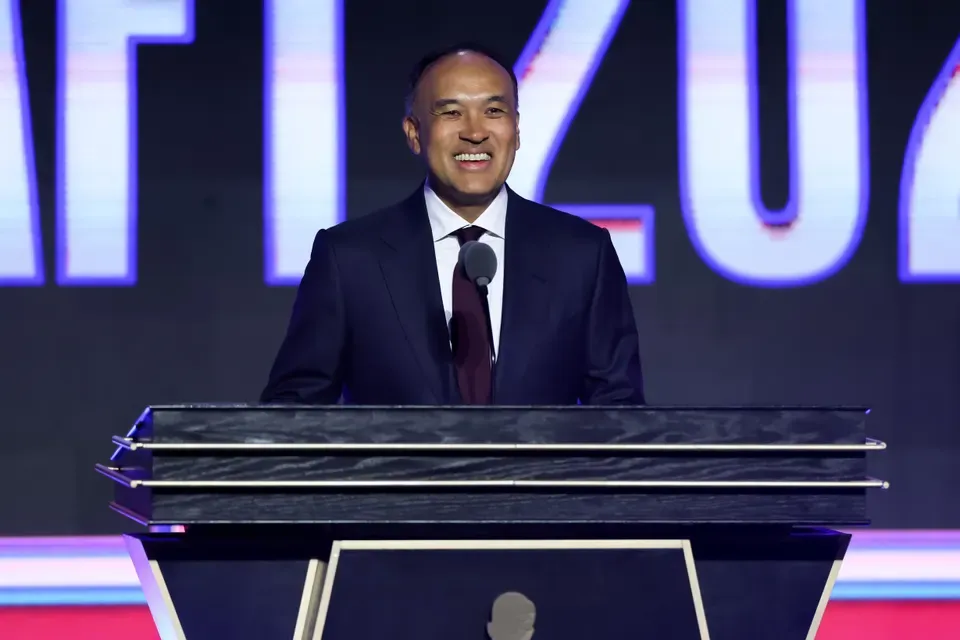
NBA Deputy Commissioner Mark Tatum runs the league’s business operations that generate more than $14 billion in revenue. Forbes highlights five business leaders who inspire him.
Mark Tatum is the NBA Deputy Commissioner whose job is not about jump shots, but about the economics that make the league function like a modern entertainment and sports platform. In this Forbes Business profile, Tatum is described as running the NBA’s business operations, the engine behind more than $14 billion in revenue.
That $14B-plus number matters because it is not a branding claim. It is the scale of the league’s commercial operations, and it defines how decisions get made across rights, partnerships, media distribution, and operational execution. The profile also frames something else executives should notice: Tatum is inspired by five business leaders. In other words, Forbes is not just naming a high-ranking official, it is pointing to the specific leadership influence shaping how one of the world’s biggest sports businesses gets run.
To understand why this is relevant beyond NBA fans, zoom out for a second on how sports leagues typically behave at this level. Leagues are complicated multi-party ecosystems: teams, players, broadcasters, sponsors, venues, and regulators all have different incentives, different timelines, and different leverage. At the top of that web sits business leadership, the group responsible for turning messy stakeholder demands into coherent, profitable operations. When the operations are “more than $14 billion in revenue,” the tolerance for operational drift drops dramatically. A small percentage swing in deal terms or distribution strategy can become a very big dollar swing.
From an operator standpoint, the NBA’s business success also depends on steady execution in areas where regulatory and policy questions can pop up. Even when day-to-day reporting focuses on media rights or sponsorship dollars, sports governance routinely intersects with compliance, labor and eligibility rules, consumer protection norms, and competition policy questions in different jurisdictions. The practical implication is simple: the business leaders who “inspire” someone running league operations are likely the ones who can navigate complexity without creating chaos. In markets like sports media and digital distribution, where technology changes fast and contracts are long, that kind of discipline tends to be the difference between durable revenue and expensive disruption.
Board members and senior finance leaders should also think about what it means that Forbes frames this as inspiration. Inspiration can sound fluffy, but in executive terms it signals who a top operator looks to for operating principles, not just career anecdotes. For a Deputy Commissioner managing business operations, the leadership model matters because a league is effectively a governing company with a product made of other companies and human performers. You need leaders who can coordinate across teams, align commercial goals, and manage the politics of incentives, all while keeping revenue growing.
The second-order effect for executives in adjacent industries is this: when a league’s business operations are generating more than $14 billion, leadership development at the top becomes a strategic system. It is not just about who sits in the corner office. It is about how leadership talent is identified, how best practices get absorbed, and how decision-makers replicate success across deal cycles and operational initiatives. That is why Forbes linking Tatum to five business leaders is more than a roster of names. It is a window into the leadership lineage behind the league’s current commercial posture.
For decision-makers, the stakes are straightforward. Whether you are running a sports organization, an entertainment network, or any platform business with many stakeholders, the question is how you build a management pipeline that can handle scale and complexity at the same time. Mark Tatum oversees business operations at a scale of more than $14 billion in revenue, and Forbes highlights the five business leaders who inspire him. The strategic takeaway is that at this level, leadership and execution are inseparable, and revenue scale magnifies every governance and commercial decision you make.
This story's Key Insights and Take-aways are locked.
Create a free account to unlock Executive Actions for one credit.
Register to UnlockAlways free for Executives Club members. Join the Club
More in Business

Leopold Aschenbrenner’s $45B AI hedge fund plunged, losing most value in days
Former OpenAI researcher Leopold Aschenbrenner watched Situational Awareness unravel quickly, forcing AI fund managers to ask what risk they missed.

Anthropic’s Levant Alpöge cracks the Jacobian conjecture after 87 years
A Harvard valedictorian used Claude to hit a 1939 breakthrough, but the missing “why” is the real problem.

Uber buys Delivery Hero for nearly $15B, vaulting to top food delivery outside China
The deal doubles Uber's dual-services footprint and pushes a ride-and-eats bundling play into 50 more markets.